
इस ज़मीन पर किसी का हक़ तो नहीं?
The encumbrance question: is a loan or a court order already on the land?
Understand what can be sitting on a plot that looks clean, what an encumbrance certificate does and does not show, and where the second search happens.
On this page
- A claim that rides on the land, not on the person
- What can be sitting on it
- The common miss: a sale deed proves he bought it
- Why it is your problem: the law assumes you looked
- So how do you look: the encumbrance certificate
- Two records, two searches
- Where the colony's record stops and the plot's search begins
Yes, it can. A plot that looks completely clean from the gate can carry a mortgage, a charge, a court attachment, a pending suit or unpaid public dues, and every one of them stays with the land when the owner changes. An encumbrance certificate is how you look, but it is a list, not a clearance, and it has two limits worth knowing.
A claim that rides on the land, not on the person
The Transfer of Property Act calls it a charge. Where immovable property is made security for money owed to somebody else, and the arrangement is not a mortgage, that somebody has a charge on the property. The point that matters to a buyer is in the word "property". The charge was never on the seller. It was on the land. Sell the plot, and the charge is still on the plot.
मालिक बदल जाता है। कर्ज़ वहीं का वहीं रहता है।
Maalik badal jaata hai. Karz wahin ka wahin rehta hai.
What can be sitting on it
Not all of them are loans. Five things, each with a statute behind it.
| What | What it means for you | Where the law says so |
|---|---|---|
| A mortgage | The plot itself pledged as security for money borrowed against it | Transfer of Property Act, s. 58 |
| A charge | Money secured on the property without the arrangement being a mortgage | Transfer of Property Act, s. 100 |
| A court attachment | Once property is attached, a private sale of it is void against the claims being enforced | Code of Civil Procedure, s. 64 |
| A pending suit | Buy while a case over the property is running and you take it subject to the decree | Transfer of Property Act, s. 52 |
| Arrears | Public charges and rent accrued on the property, which the seller must clear up to the date of sale | Transfer of Property Act, s. 55(1)(g) |
The last row deserves a second look. The seller's duty to clear arrears is a duty on him. It is not a receipt in your hand. Ask for the receipts.
The common miss: a sale deed proves he bought it
Across the table is the seller's deed. Clean paper, correct stamp, his name on it. All of that can be true, and it tells you only that he bought the plot. It says nothing about what he did with it afterwards.
A mortgage is its own registered entry against the same property, made later and kept separately. It is not in the deed file, because it did not exist when the deed was made.
Why it is your problem: the law assumes you looked
A charge cannot be enforced against someone who paid for the property and had no notice of it. That sounds like protection, and it is, up to a point.
The point is registration. Where a document has to be registered, the fact of its registration is itself notice, to everyone, from the date it was registered. Once a charge is on the register, "nobody told me" is not a position you can take. The law treats you as having looked, whether or not you did.
So how do you look: the encumbrance certificate
An encumbrance certificate is the sub-registrar's list of the registered transactions against one property, for a period you name. It is a search, written down and certified.
The Registration Act keeps Book No. 1 and its indexes open to inspection by any person on payment of the fee, and requires copies of the entries to be given to anyone who applies. Those copies are signed and sealed, and admissible to prove what the originals said. That is what makes the search possible at all.
The certificate refers to deeds. It does not create title and it does not confer one. So the useful question is never "is the EC clean". It is: clean over what.
Limit one: it answers only for the years you asked about
A short search covers twelve years. A full search covers thirty. Indian conveyancing practice traces the chain of title back thirty years because that is the outer limitation period within which a stale claim can still be brought. A mortgage created in year thirteen is simply not in a twelve-year certificate, and nothing on the paper tells you it is missing.
Limit two: some loans never reach the register at all
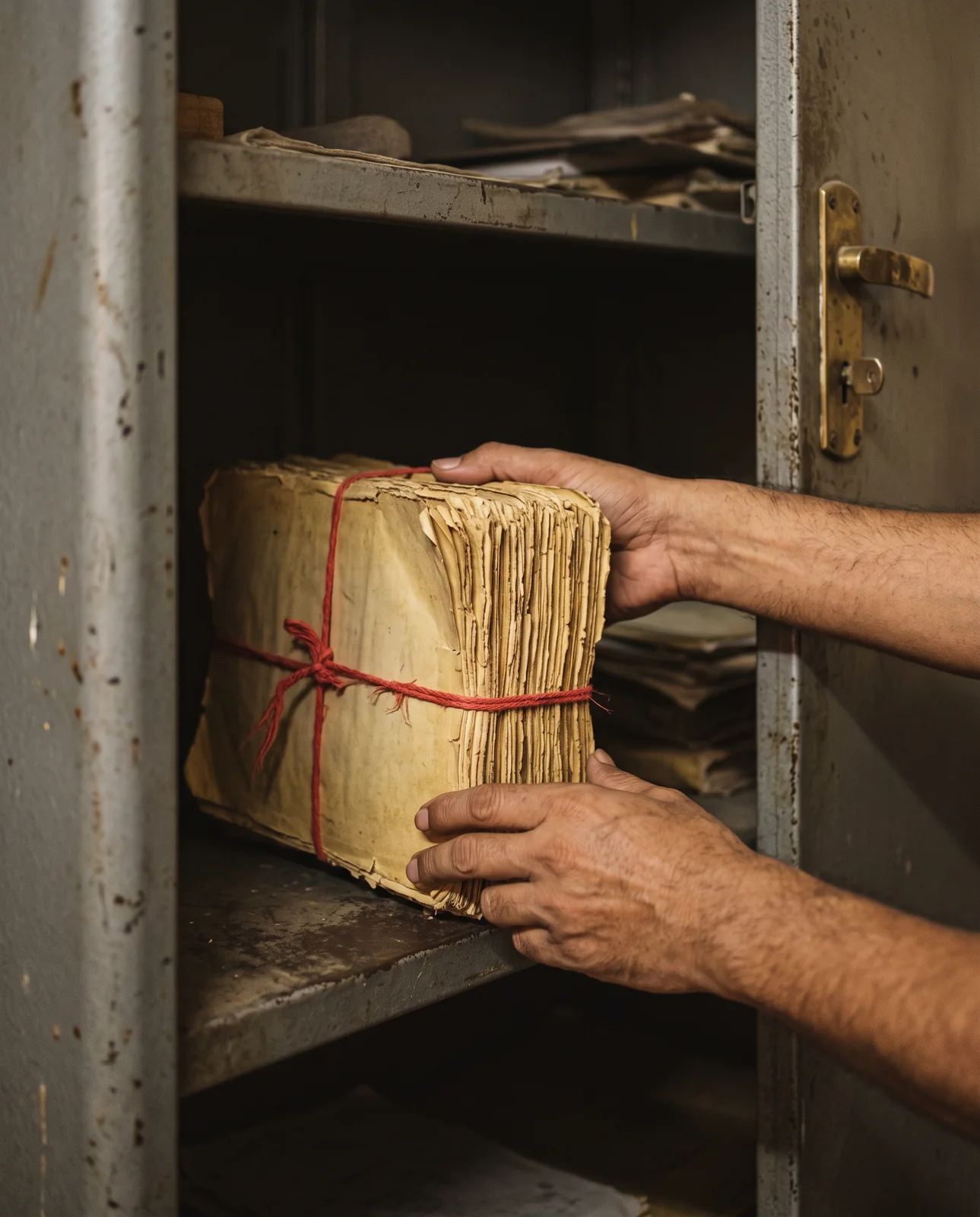
Hand your original title papers to a lender, intending them as security, and that is a mortgage: complete, enforceable, and needing no registered document to exist. It leaves the sub-registrar nothing to list. A certificate from that office is not wrong about such a loan. The loan is outside the certificate's subject altogether.
Two records, two searches
There is a second register for exactly this gap, and neither search substitutes for the other.
The sub-registrar: registered deeds. In Madhya Pradesh the registration department's SAMPADA portal carries a document search, and certified copies of registered deeds can be downloaded online on payment of the fee.
The central registry: CERSAI. A national registry of security interests, set up under the SARFAESI Act and operational since 2011, made for precisely the mortgage that is registered nowhere else. Its public search runs by asset and by borrower.
A nil result on either says nothing about the other.
Where the colony's record stops and the plot's search begins
The colony is public. Its registration, its sanctioned layout, its master-plan zone and the documents on file are the colony's record, and they are the same for every plot inside it. A charge is different. It sits on one plot, in a different office, and only a search against that plot names it. The platform publishes the first. The second is yours to commission.
पूछ लेना महँगा नहीं पड़ता। न पूछना पड़ता है।
Poochh lena mehenga nahin padta. Na poochhna padta hai.
See it for yourself on the map — boundaries, plans and paperwork on one screen.
Start with the colony's public record, then commission the search on the plot →Questions people ask
What is an encumbrance certificate?
The sub-registrar's certified list of registered transactions against one property for a period you specify, drawn from Book No. 1 under the Registration Act. It shows what was registered; it does not certify title.
How many years should an encumbrance certificate cover?
Thirty years is the conventional full search, because that is the outer limitation period for a stale claim. A twelve-year certificate will not show a mortgage created in year thirteen.
Can a plot have a loan on it that does not show in the EC?
Yes. A mortgage by deposit of title deeds needs no registered document, so the sub-registrar has nothing to list. Such loans are searched at CERSAI, the central registry under the SARFAESI Act.
What happens if I buy land that is under a court case?
You take it subject to whatever the court decides. Under s. 52 of the Transfer of Property Act, a transfer during a pending suit does not defeat the rights of the other party to the case.
Is the seller responsible for clearing old dues on the land?
The seller is bound to discharge encumbrances and to clear public charges and rent accrued up to the date of sale, unless the sale is expressly subject to them. That is his duty, not proof that it was done, so ask for the receipts.
Does a clean sale deed mean the land has no mortgage?
No. The deed proves the seller bought the plot. A mortgage made afterwards is a separate registered entry, kept separately, and only a search against the property shows it.
Where the facts come from. The facts and figures in this post come from verified government sources and verified RERA-registered brokers.
Indori Zameen is a private platform. It is not a government body and is not affiliated with one — always confirm a record with the concerned authority before you commit money.
Share this post
Related posts
 Papers & law7 min read
काग़ज़ पूरे हैं?
Papers & law7 min read
काग़ज़ पूरे हैं?
The five documents that decide whether land is safe
The land is usually fine; the paper decides. The five documents that separate a plot you can build on from one you can only argue about, and how to read each.
8 Sep 2025 Papers & law7 min read
टोकन देने से पहले
Papers & law7 min read
टोकन देने से पहले
The token: the agreement that comes before the sale deed
The token is the first money you pay and the moment you have least on paper. Six things to put in the agreement to sell before it moves.
8 Sep 2025 Papers & law8 min read
एक दिन — और ज़िंदगी भर का काग़ज़।
Papers & law8 min read
एक दिन — और ज़िंदगी भर का काग़ज़।
Registry day: what happens, and mutation afterwards
Stamp duty, the four-month clock, Aadhaar at the counter, e-registration from home, and why a registered deed still leaves mutation to be done.
8 Sep 2025 Papers & law7 min read
रजिस्टर्ड है — पर किसका?
Papers & law7 min read
रजिस्टर्ड है — पर किसका?
What RERA does, and what it does not
Who must register with MP RERA, what an agent's number means, and the four checks a registration does not replace: title, ownership, coverage and sanction.
8 Sep 2025Tagged encumbrance, registry, instagram-series, sale-deed, loan.
Read it. Then check it on the map.
Every colony's boundary, its approved layout, its zoning and its paperwork — on one screen. Signing in is free.