
किराया या ख़रीद?
Rent or buy: the costs of owning that never make the sum
How to set renting against buying over the same number of years, with every line of the owner's bill on the page.

On this page
Neither is right by default. Setting this month's rent against next month's EMI is the wrong comparison: it leaves out everything an owner pays that a tenant does not, and what the down payment could have earned. Add up both sides over the years you really expect to stay, on paper, and that period usually decides it.
The sum almost everybody starts with
The conversation usually opens with two numbers. Rent is 18,000 a month; the EMI on a flat nearby would be 22,000. The gap is 4,000, the flat would be yours at the end, so buying looks obvious.
किराया बनाम ईएमआई — ये पूरा हिसाब नहीं है।
Kiraaya banaam EMI — ye poora hisaab nahin hai.
It is not obvious, because those two numbers are not like for like. Rent is close to the whole monthly cost of living somewhere as a tenant. The EMI is only one part of the monthly cost of owning, and the money that went into the down payment has stopped working for you the day you hand it over. Neither arrangement is the responsible one. They are two different deals, with different costs and very different amounts of freedom.
Five costs of owning that never make the sum
1. The one-time cost of buying
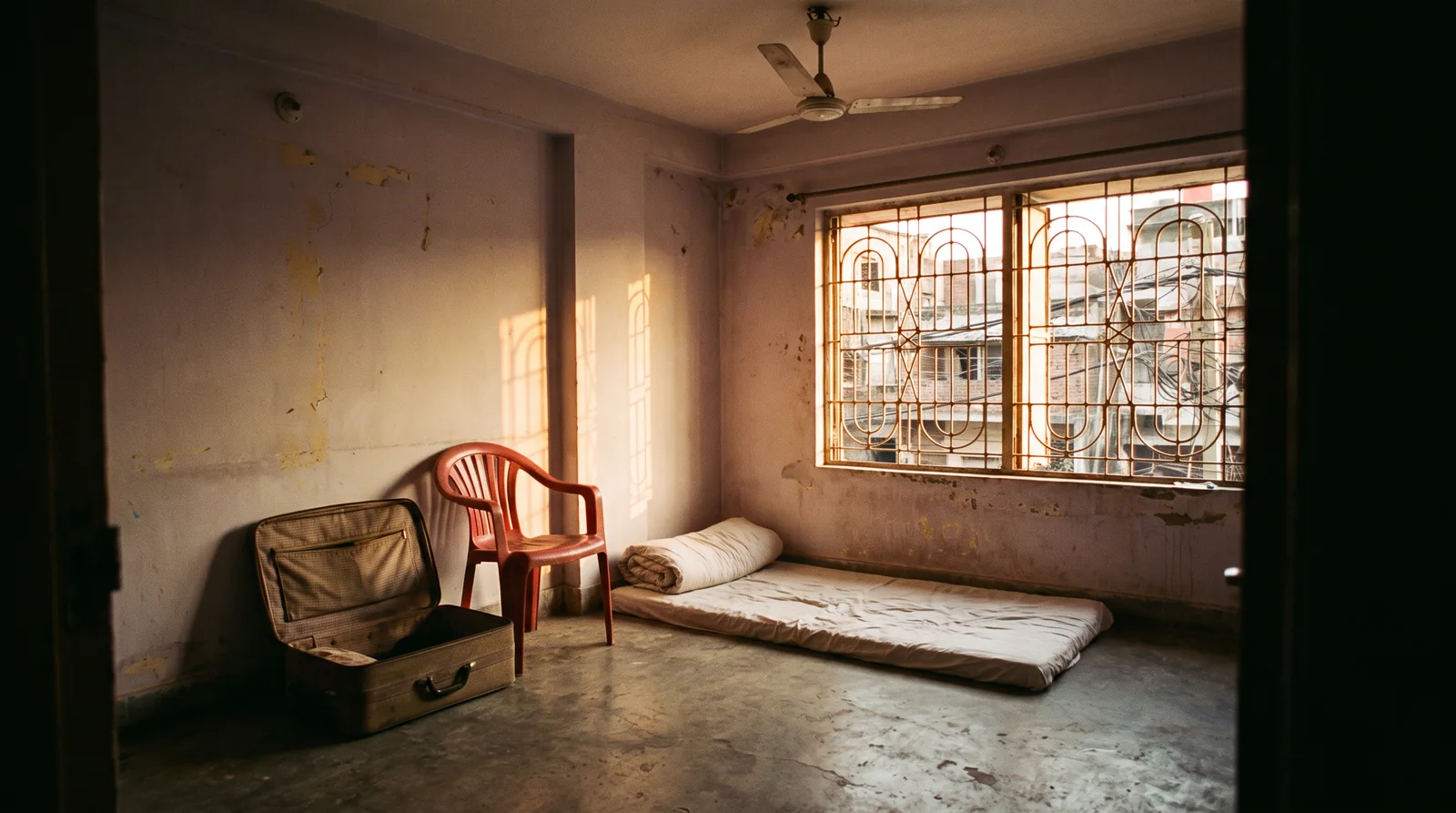
Stamp duty and registration fees are paid when the sale deed is registered, on top of the price. Add the real estate agent's fee and the lawyer's fee for checking the papers. All of it is spent on the day you buy, and none of it comes back when you sell.
2. What the down payment could have earned
This is usually the largest line in the whole comparison, and the one most often left out. Lakhs of rupees moved into a down payment are lakhs no longer earning anything else. A tenant who keeps that money invested has a return the owner gave up. Put a figure on it, using whatever that money would realistically have earned for you, and write it down.
3. Maintenance and society charges
A flat or a gated colony charges every month for common areas, security, lifts and upkeep. The tenant next door may have it folded into the rent; the owner pays it separately, for as long as they own.
4. Property tax, insurance and repairs
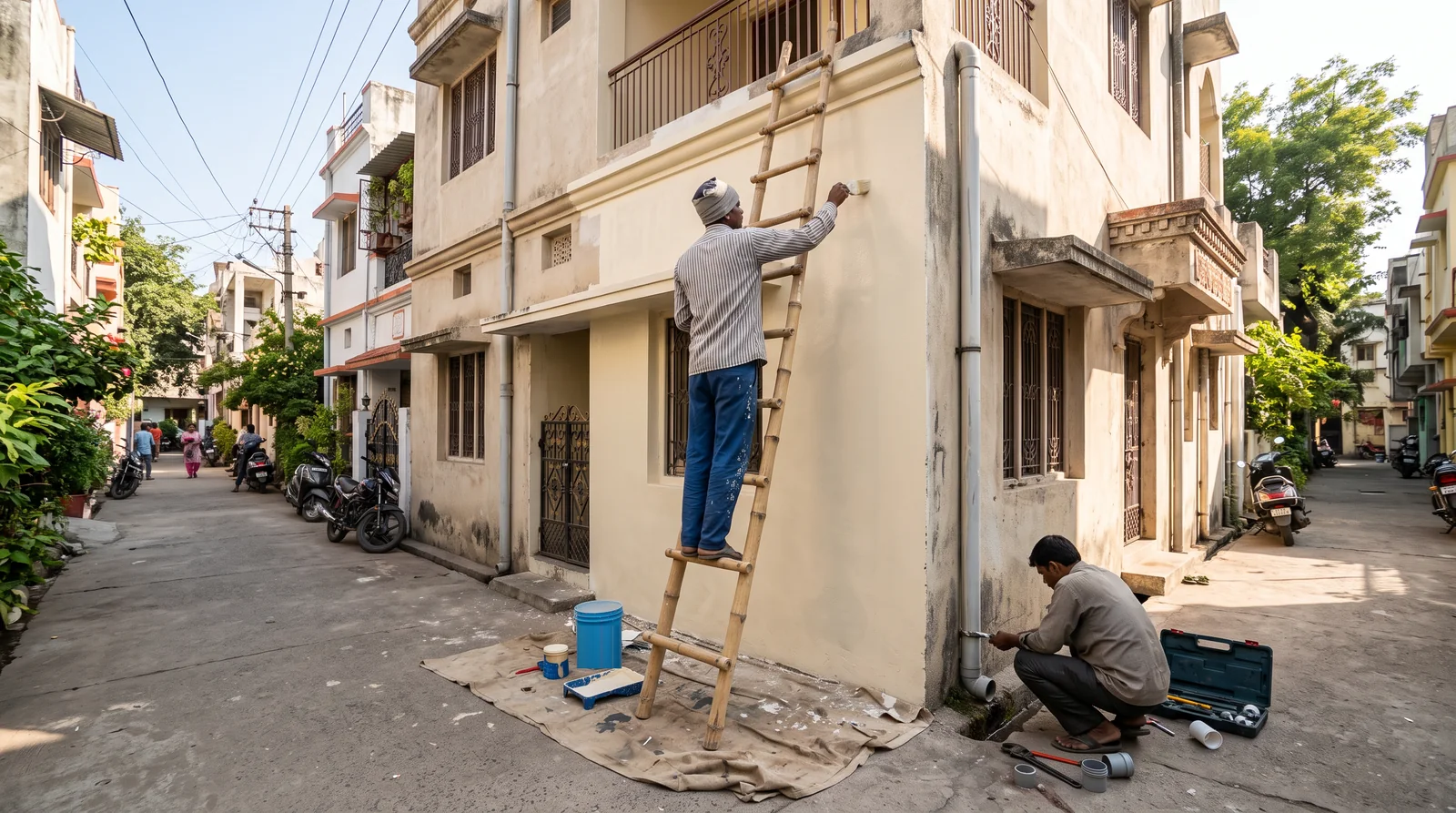
Property tax is levied every year on the owner, not the tenant. Insuring the building is the owner's cost too. Then come repairs: paint, plumbing, waterproofing, the roof after a monsoon. Each one looks small in the year it happens. Over fifteen years they are not small.
5. The cost of not being able to move
A rental agreement ends on a date and you leave. Selling a home takes months, needs a buyer, and carries its own costs. If your job moves city in three years, the owner pays for that in time and money; the tenant gives notice.
Run it over five years, not one month
Compare the total cost of a whole period, the same period on both sides. Five years is a sensible place to start.
| If you rent | If you buy |
|---|---|
| Rent × 60 months | EMI × 60 months |
| plus stamp duty, registration, agent's and lawyer's fees | |
| plus maintenance, property tax, insurance and repairs × 60 months | |
| less what the deposit and your savings earn | less the loan principal you have repaid |
| less (or plus) any change in the property's value |
Two lines on the buying side need explaining. The principal repaid comes off, because that part of each EMI is not a cost: it is money you now hold as a share of the house. The change in value can go either way, so write a cautious figure, not the one in an advertisement.
How long you will stay decides most of it
Because the cost of buying is paid up front, it needs years to be absorbed. That is why the honest answer depends far more on your next five years than on this month's rent.
| Renting tends to suit | Buying tends to suit |
|---|---|
| A job or city you may leave within three or four years | Staying put for a long stretch |
| A down payment that is not yet comfortably spare | A stable income and a down payment that does not empty the account |
| Wanting to try a locality before committing to it | Wanting to build, change or keep something permanently |
| Income that is irregular or newly started | A family reason that has nothing to do with money |
The last line matters. Wanting your parents near, or a house your children grow up in, is a perfectly good reason to buy even when the sum is close. Just know that it is the reason, and that the arithmetic did not decide it.

This is a way of running the comparison, not a recommendation either way. For your own finances, speak to someone qualified to advise you.
If the answer is buy, the questions change
Once the answer is buy, the arithmetic above stops mattering and a different set of questions takes over. Is the colony registered? Is its layout sanctioned? What does the master-plan zone allow on the land? Whose name is on the record? Unlike the rent-or-buy question, these have definite answers, and you can check them before you speak to anyone selling. The guide on the real cost of buying a plot takes the first-day costs line by line.
फ़ैसला हिसाब से, ख़रीद रिकॉर्ड से।
Faisla hisaab se, khareed record se.
See it for yourself on the map — boundaries, plans and paperwork on one screen.
Once you decide to buy, check the colony's registration, layout and zone →Questions people ask
Is it better to rent or buy a house in Indore?
There is no general answer. Compare the total cost of renting and of owning over the number of years you expect to stay, including buying costs, maintenance, tax, repairs and what the down payment could have earned.
If my EMI is close to my rent, should I buy?
Not on that alone. The EMI is only part of what owning costs, and the down payment stops earning the day you pay it. Put every line on paper before deciding.
What costs do people forget when buying a home?
Stamp duty and registration, the agent's and lawyer's fees, maintenance and society charges, property tax, insurance, repairs, and the return the down payment would have earned.
How many years should I stay to make buying worth it?
It depends on your numbers. The one-time buying costs need years to be absorbed, so run the comparison for three, five and fifteen years and see where it changes.
Where the facts come from. The facts and figures in this post come from verified government sources and verified RERA-registered brokers.
Indori Zameen is a private platform. It is not a government body and is not affiliated with one — always confirm a record with the concerned authority before you commit money.
Share this post
Related posts
 Money7 min read
ज़मीन एक। सवाल अलग-अलग।
Money7 min read
ज़मीन एक। सवाल अलग-अलग।
Buying to live vs buying to invest
A home and an investment are different purchases of the same land. Five questions where the answers pull apart, and the one record both of them begin on.
8 Sep 2026 Money7 min read
सौदा बनाम ख़र्च
Money7 min read
सौदा बनाम ख़र्च
The price is not the cost: stamp duty, guideline rate and the real total
On a ₹50 lakh plot you pay ₹55.25 lakh before a brick is laid. How stamp duty and the guideline rate work in Madhya Pradesh, and the four costs that come after.
8 Sep 2026 Buying guides8 min read
दो रास्ते, एक फ़ैसला
Buying guides8 min read
दो रास्ते, एक फ़ैसला
Plot or flat: two products, two checklists
A plot and a flat are different products, not two prices for one thing. What each asks of you, and the five checks that belong to each.
8 Sep 2026 Buying guides7 min read
ज़मीन ख़रीदने से पहले
Buying guides7 min read
ज़मीन ख़रीदने से पहले
Five checks before you buy land in Indore, each with its red flag
Five two-minute checks on any plot in Indore — registration, khasra, zone, proposed roads, sanctioned plan — and the red flag hiding inside each one.
8 Sep 2026Tagged investment, flat, instagram-series, how-to, stamp-duty.
Read it. Then check it on the map.
Every colony's boundary, its approved layout, its zoning and its paperwork — on one screen. Signing in is free.