
मुनाफ़ा
Capital gains tax on selling property or a plot (2026)
The 24-month line, the 12.5 per cent rate, the choice open to anyone who bought before July 2024, and the three ways to reinvest a gain, under the new Income-tax Act.
On this page
When you sell land or a building, the profit is a capital gain. Held for 24 months or less, it is added to your income and taxed at your slab rate. Held longer, it is long-term and taxed at 12.5 per cent, with a cheaper option for some older purchases and three ways to reinvest.
The law was renumbered; the ideas were not
From 1 April 2026 the Income-tax Act, 2025 replaced the Act of 1961. The concepts are familiar; the numbers are new, so your chartered accountant will quote one section and your bank may still say "section 54".
| What it covers | 1961 Act | 2025 Act |
|---|---|---|
| Short-term or long-term: the 24-month line | 2(42A) | 2(101) |
| Working out the gain, and indexation | 48 | 72 |
| Tax on long-term gains | 112 | 197 |
| House sold, house bought | 54 | 82 |
| Gain put into specified bonds | 54EC | 85 |
| Plot sold, house bought | 54F | 86 |
Start with the purchase date
How long you held the property decides the rules, counted from the day it became yours.
- Held 24 months or less: short-term. The gain is added to the rest of your income and taxed at your slab rate. There is no special short-term rate for land or buildings.
- Held more than 24 months: long-term. Taxed at 12.5 per cent, or, for some sellers, at the lower of two calculations.
A few weeks short of the line can cost a great deal. Check the date on your purchase deed before you fix the sale date.
बेचने की तारीख़ तय करने से पहले, ख़रीद की तारीख़ देखिए।
Bechne ki taareekh tay karne se pehle, khareed ki taareekh dekhiye.
The rate, and the choice
The standard rate on a long-term gain is 12.5 per cent, without indexation: you subtract what you paid from what you received, with no adjustment for inflation.
There is a choice for some sellers. If all three of these are true, you may work the tax out both ways and pay the lower figure:
- You are a resident individual or a Hindu undivided family.
- What you are selling is land, a building, or both.
- It became yours before 23 July 2024.
The two are 12.5 per cent without indexation, and 20 per cent after indexation, where the cost is raised by the Cost Inflation Index notified for each year. There is no choice for non-residents, companies or firms, or for property acquired on or after 23 July 2024.
Both ways, worked
| Plot A | Plot B | |
|---|---|---|
| Bought before July 2024 for | ₹20 lakh | ₹20 lakh |
| Sold for | ₹80 lakh | ₹50 lakh |
| Indexed cost (assumed) | ₹40 lakh | ₹36 lakh |
| 12.5% on the plain gain | ₹7.50 lakh (on ₹60 lakh) | ₹3.75 lakh (on ₹30 lakh) |
| 20% on the indexed gain | ₹8.00 lakh (on ₹40 lakh) | ₹2.80 lakh (on ₹14 lakh) |
| Pays | ₹7.50 lakh | ₹2.80 lakh |
These are hypothetical round numbers with an assumed indexed cost. The further the price ran ahead of inflation, the likelier 12.5 per cent is lower; your chartered accountant works both with the real index.
Three ways to reinvest, three clocks
A long-term gain can be reduced or removed by reinvesting within fixed periods. Miss a date and the exemption is lost.
House sold, house bought (section 82, the old 54)
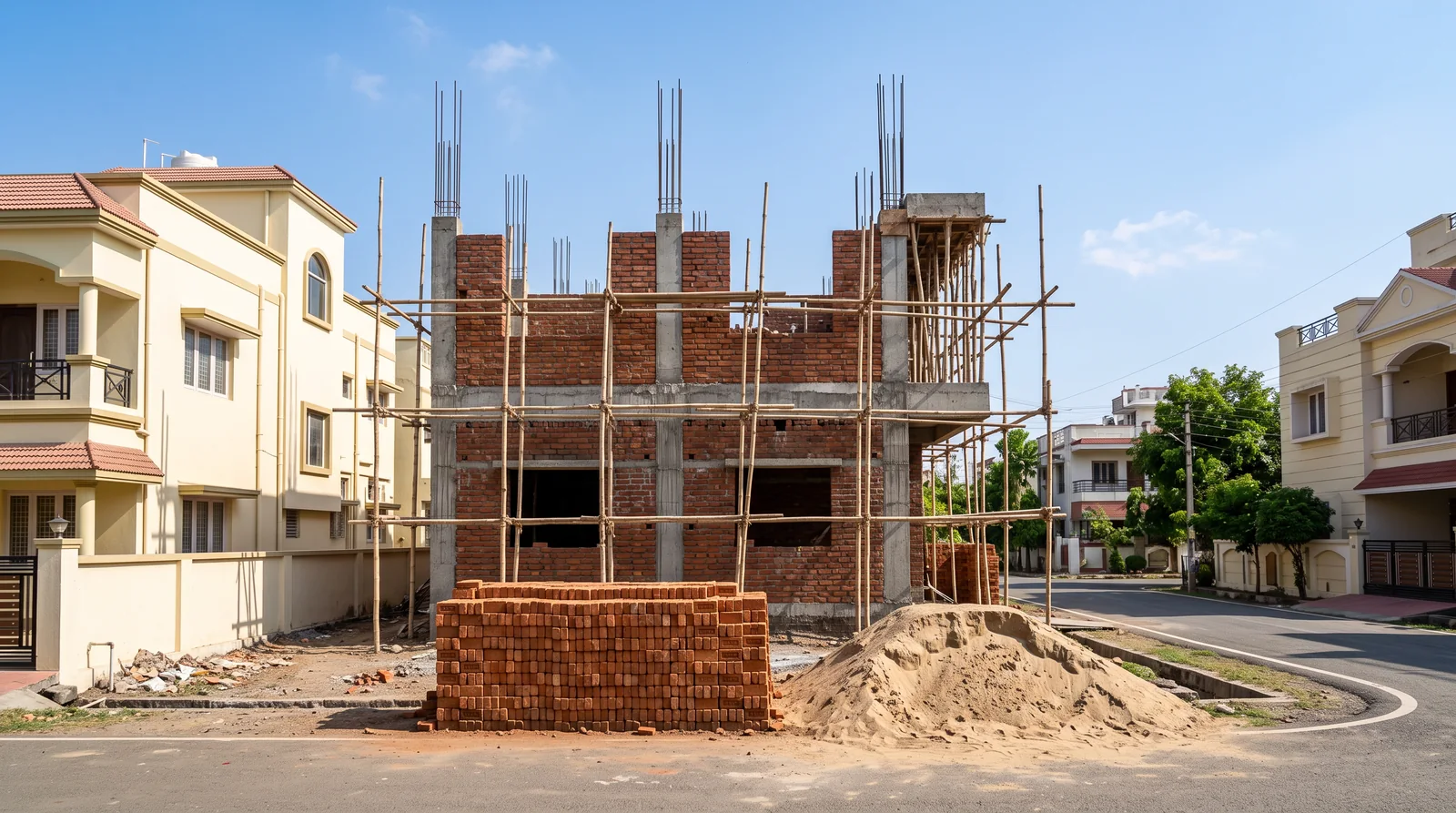
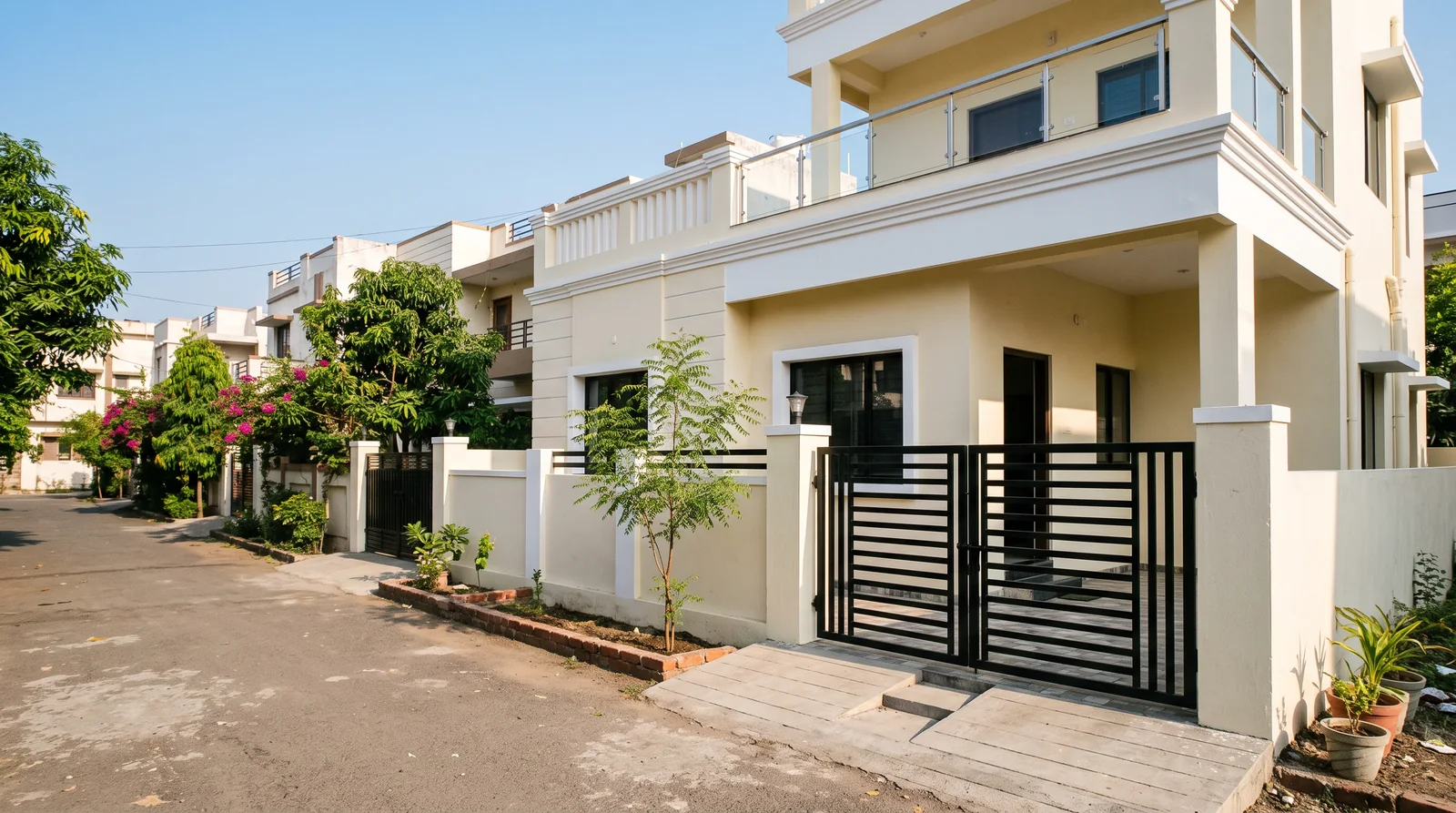
Sell a residential house and put the gain into one residential house in India. Buy it within one year before or two years after the sale, or build it within three years. The cost of the new house counts up to ten crore rupees. Where the gain is two crore rupees or less, it may go into two houses instead of one, but only once in a lifetime.
Plot sold, house bought (section 86, the old 54F)
Sell anything other than a house, a plot for instance, and put the whole net sale price, not just the gain, into one residential house, on the same clocks. Invest part and only that proportion is exempt. The route is closed if, on the date of sale, you already own more than one residential house besides the new one. The cost is capped at ten crore rupees.
Specified bonds (section 85, the old 54EC)
Sell land or a building and put the gain into bonds of the National Highways Authority of India, REC, or others the government notifies, redeemable after five years. You have six months from the sale, the limit is fifty lakh rupees, and the bonds must be held for five years. Cash them in early and the exempted gain is taxed in that year.
तीन रास्ते, तीन घड़ियाँ — तारीख़ें याद रखिए।
Teen raaste, teen ghadiyaan — taareekhein yaad rakhiye.
When the house is not ready by filing time
- Deposit the amount you have not yet spent in the Capital Gains Accounts Scheme at an authorised bank, before the due date of your return.
- File proof of the deposit with the return; the law treats the deposit as invested.
- Spend it on the house within the time limit. Whatever is still unused when the three years end is taxed in that year.
This bridge serves the two house routes only.
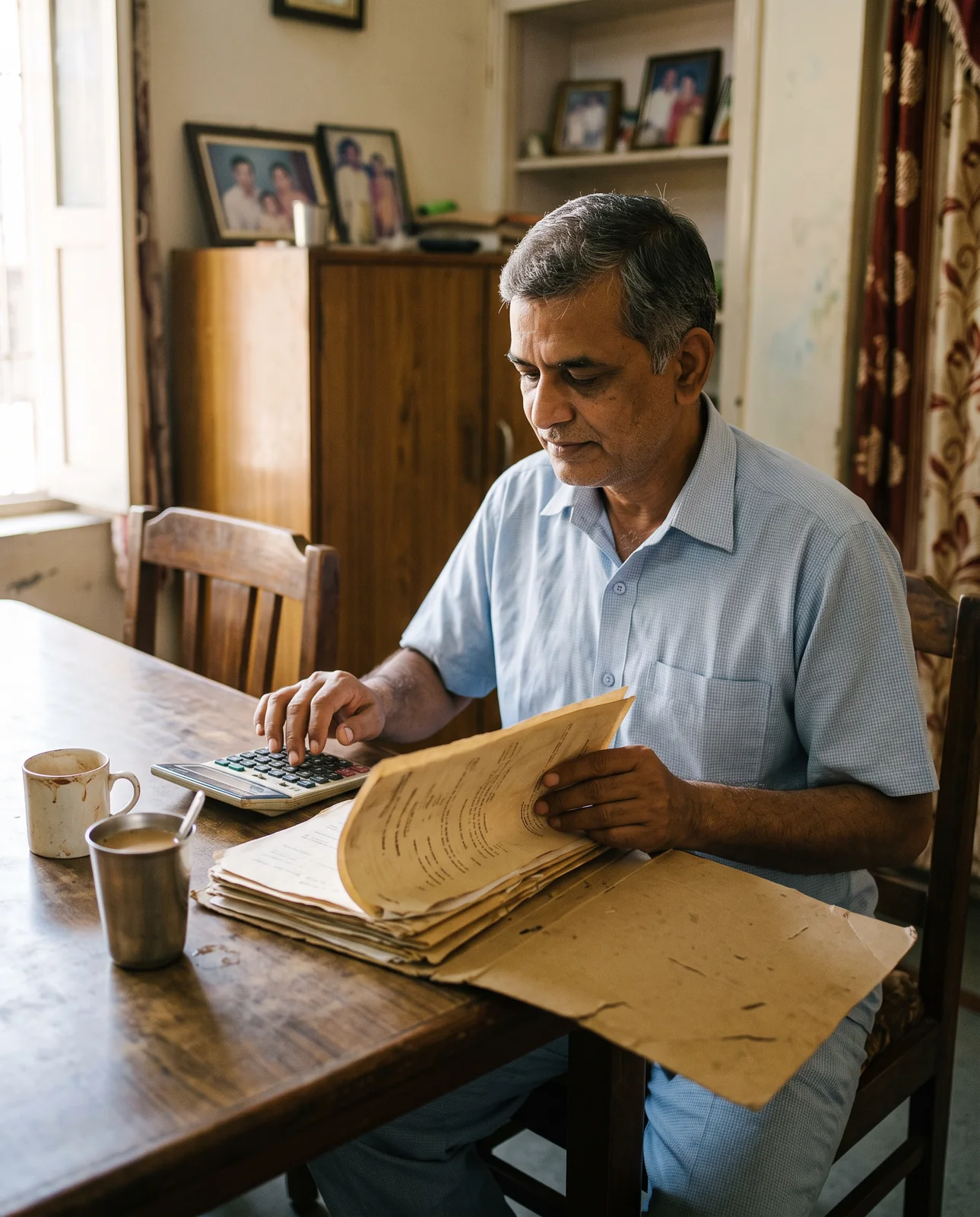
The file to keep: your cost is only what you can prove
- The purchase deed. It proves your cost and the date the 24 months are counted from.
- Bills for improvements. A floor added, a boundary wall: they add to your cost.
- The sale deed and its stamp value. If the stamp duty value is more than 10 per cent above your price, the stamp duty value is taken as your sale price.
- What selling cost you. Brokerage and legal fees come off the sale price.
- The TDS your buyer deducted. Check it is credited against your PAN before you file; the TDS guide explains how it works.
Before you list it
Your buyer will check the colony's record and sanctioned layout; see them first. This is general information, not tax advice, as of October 2026. Check your own figures with a chartered accountant before selling or reinvesting.
See it for yourself on the map — boundaries, plans and paperwork on one screen.
Look up your colony's record and layout before you list the plot →Questions people ask
What is the capital gains tax rate on sale of property?
For land or a building held more than 24 months, the gain is long-term and taxed at 12.5 per cent without indexation. Held 24 months or less, the gain is short-term, added to the rest of your income and taxed at your slab rate. There is no special short-term rate for land or buildings.
Is indexation available on property sale?
Only as a choice for some sellers. A resident individual or HUF selling land or a building acquired before 23 July 2024 may work the tax both ways, 12.5 per cent without indexation or 20 per cent with it, and pay the lower. Non-residents, companies, firms and later purchases have no choice.
How to save capital gains tax on sale of property?
Reinvest within fixed periods. Sell a house and buy or build one residential house (old section 54, now 82). Sell a plot and put the whole net sale price into one house (old 54F, now 86). Or put the gain into specified bonds within six months, up to fifty lakh rupees (old 54EC, now 85).
What is section 54 called in the new Income-tax Act 2025?
From 1 April 2026 the Income-tax Act, 2025 replaced the 1961 Act. The house-for-house exemption, old section 54, is now section 82. The old 54F, plot sold and house bought, is section 86, and the old 54EC bond exemption is section 85. The concepts are familiar; the numbers are new.
How long do I have to buy a new house to save capital gains tax?
Buy within one year before or two years after the sale, or build within three years. If the house is not bought by your return's due date, deposit the unspent amount in the Capital Gains Accounts Scheme before that date. Whatever is still unused when the three years end is taxed then.
Where the facts come from. The facts and figures in this post are drawn from public government records and from practising Indore brokers; confirm any record with the concerned authority.
Indori Zameen is a private platform. It is not a government body and is not affiliated with one — always confirm a record with the concerned authority before you commit money.
More on this topic: Tax on property
Share this post
Related posts
 Money9 min read
टीडीएस काटना ख़रीदार का काम है।
TDS on property: the one per cent the buyer must deduct
Buying property for ₹50 lakh or more? One per cent of the price is the seller's tax, and deducting it is your job. What to file, by when, and the NRI exception.
3 Oct 2026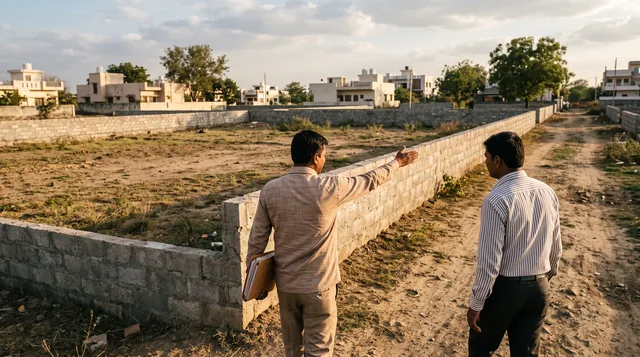 Money8 min read
अपना प्लॉट किस भाव बेचें?
How to price and sell your plot in Indore
A plot's price is built, not chosen: the guideline rate, real sales nearby, the plot itself and the state of its papers. How to put the four together.
3 Oct 2026 Money7 min read
बेचते वक़्त
Selling a plot: the documents and questions your buyer will ask, answered now
One day you are the seller, and every gap in your file becomes a discount. The five things to get in order years before you list a plot.
8 Sep 2026 Money8 min read
ज़मीन एक। सवाल अलग-अलग।
Buying a plot to live on or as an investment: decide first
A home and an investment are different purchases of the same land. Five questions where the answers pull apart, and the one record both of them begin on.
8 Sep 2026Tagged resale, investment, plot, checklist, instagram-series. Updated 15 Nov 2026.
Read it. Then check it on the map.
Every colony's boundary, its layout plan on record, its zoning and its paperwork — on one screen. Signing in is free.