
अपना प्लॉट किस भाव बेचें?
Pricing your plot when you sell
Four inputs build the asking price of a plot, in a fixed order, and the last of them is the only one entirely in the seller's hands.
On this page
A plot's price is built from four inputs, in this order: the collector guideline rate for that locality, what has actually sold nearby recently, what this particular plot has or lacks, and how complete its paperwork is. Only the last is fully in your control, and it decides whether a buyer negotiates with you or walks away.
For once, the seller's side
Most of what is written about land in Indore is for the buyer, who carries most of the risk. But every sale has a seller, with a question nobody answers well: what should I ask for?
The usual method is to hear what a neighbour got, add a little for luck, and see what happens. It produces two kinds of failure. Ask too much and the plot sits for a year while the buyers who might have paid a fair price buy elsewhere. Ask too little and the money is gone the day the deed is registered. A better method is to build the number from the four inputs below and to know, before the first visit, which of them a buyer will push on.
अपना प्लॉट किस भाव बेचें?
Apna plot kis bhaav bechein?
1. The guideline rate: the floor everyone can see
The state publishes a collector guideline rate for each locality. Stamp duty on a sale deed is charged on the agreed price or the guideline value, whichever is higher, so the guideline rate works as the floor the registry starts from. Anyone can look it up, and a serious buyer will have done so before calling you.
Two things follow for a seller.
A buyer will not pay duty on money they did not pay you. If your asking price is below the guideline value, the buyer still pays stamp duty on the guideline value. A low price below the floor is less attractive than it looks.
Selling well below the guideline value can cost you tax as well. For working out your capital gain, where the stamp duty value is more than 110 per cent of the price you received, the stamp duty value is treated as your sale price. You can be taxed on money you never received.
2. What actually sold nearby, and how long it took
The guideline rate is a floor. The market is the evidence above it, and the evidence is in sales that closed, not in prices that were asked.
Asking prices are the loudest numbers in any colony and the least reliable. A plot advertised at a figure for eighteen months tells you that figure did not sell. What you want is the price at which comparable plots in the same pocket actually changed hands in the recent past, and how long each took to find its buyer. A plot that sold at a high number after a year on the market and one that sold at a modest number in three weeks are telling you different things about the same street.
Ask the people who would know: a real estate agent who works that pocket and can tell you what closed, not what is listed; neighbours who sold recently; and the buyers who come to see your plot, who will tell you, if you listen, what else they have been shown.
3. What this plot has, or lacks
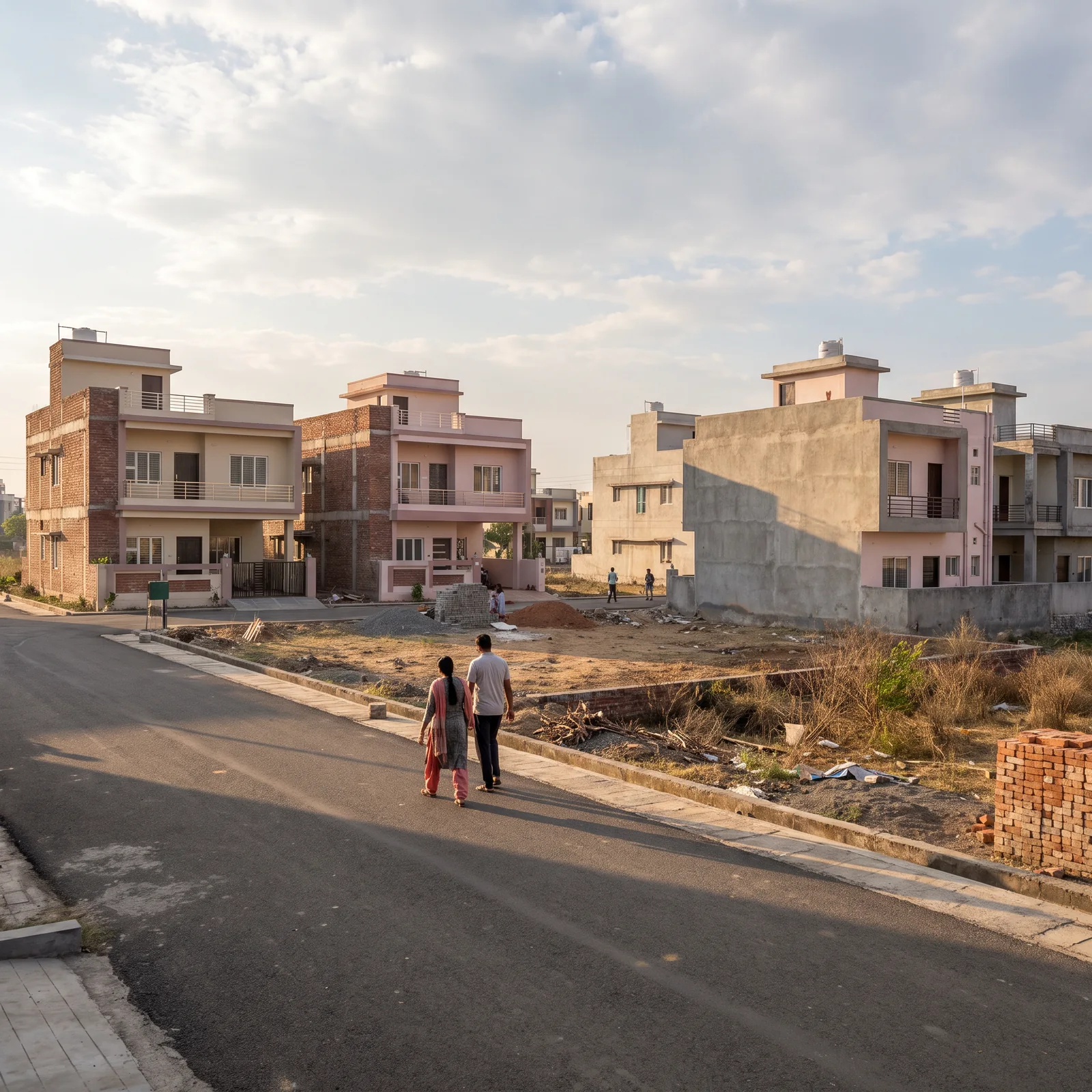
Two plots of the same size in the same colony are not the same plot. These are the differences buyers notice and price:
- Road width. The road in front decides access, and often what can be built.
- Corner or not. Two road frontages, more light and air, and in some layouts more setbacks. It cuts both ways.
- Facing. Many buyers in Indore care which way the front faces, whatever you think of the reasons.
- Level. A plot below the road takes filling before anything else, and buyers subtract the cost.
- Services already laid. Water, drainage and power at the boundary rather than promised.
- A boundary wall. A walled plot is easier to show and easier to defend.
Write the plot's case on one honest page. Name what it lacks before the buyer finds it.
4. How complete the paperwork is
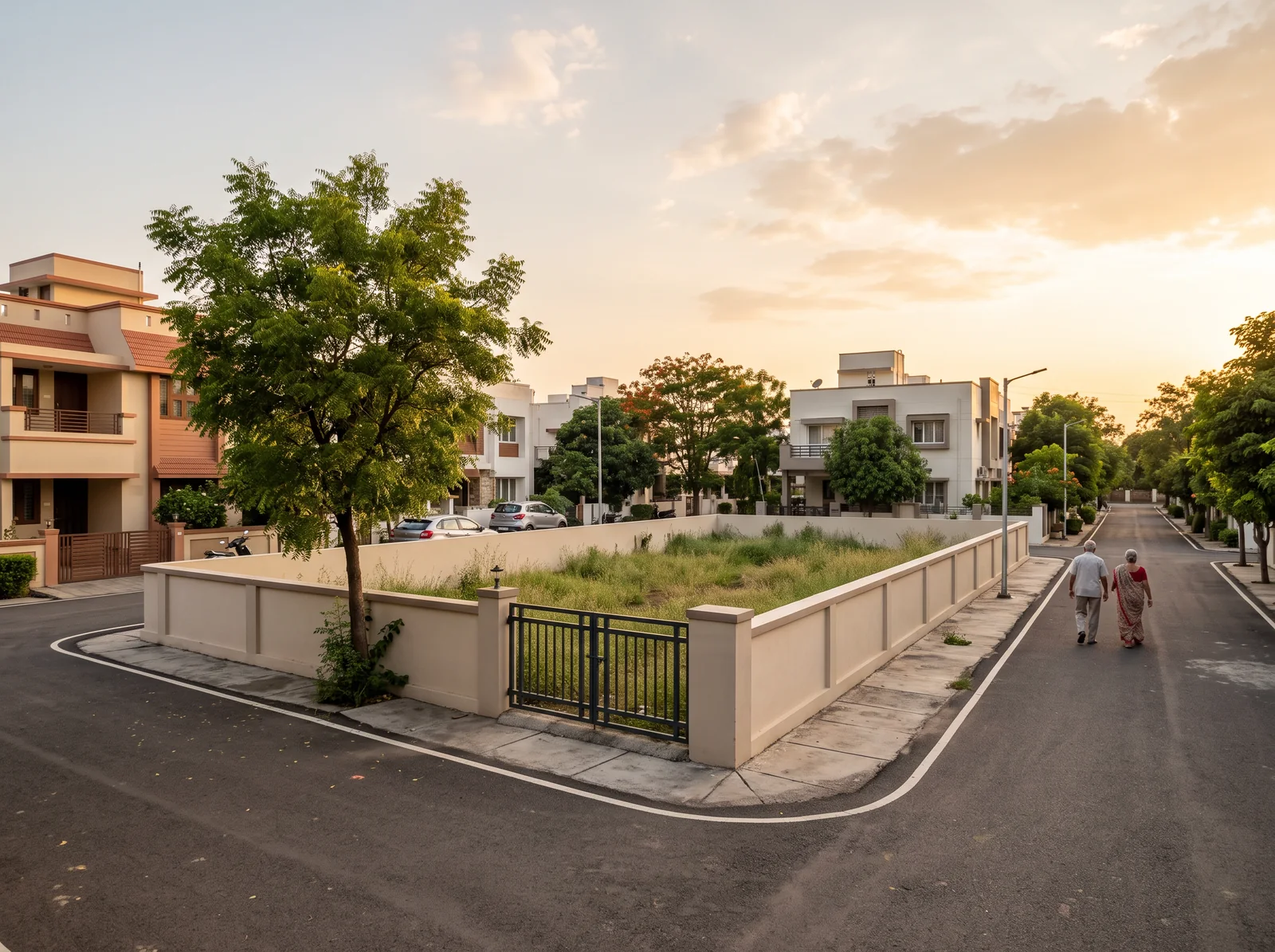
This is the input you control, and the one that most often decides the outcome. Each question you cannot answer on the spot turns into a lower offer, because the buyer prices in the risk you could not rule out. "Woh bhi mil jayega" is a phrase that costs sellers more than any other.
A seller who arrives at the first visit with the colony's record, the sanctioned layout showing the plot, and a clean set of title documents is negotiating from a different position altogether. The buyer's doubts have nowhere to grow. Getting the file in order costs a few weeks of effort, and it holds a price better than any argument. The questions your buyer will bring are set out in the questions your buyer will ask you, asked now.

काग़ज़ पूरे हों, तो भाव गिराना नहीं पड़ता।
Kaagaz poore hon, to bhaav girana nahin padta.
Two numbers to work out before you quote
What you will actually receive. On a sale of fifty lakh rupees or more, the buyer must deduct one per cent of the price or the stamp duty value, whichever is higher, and deposit it against your PAN. You receive ninety-nine per cent in hand and claim the one per cent in your own return.
What you will keep after tax. The gain on the sale is taxed, and how depends on how long you have held the plot and when you bought it. Work it out with a chartered accountant before you fix the price, not after the token; the capital gains guide explains the rules.
What this guide does not do
Nothing here is valuation or financial advice. It gives you the order in which a price is built, so you can defend your number line by line.
See it for yourself on the map — boundaries, plans and paperwork on one screen.
Find your colony and show the buyer its record and sanctioned layout →Questions people ask
How do I decide the selling price of my plot?
Start from the collector guideline rate for the locality, look at what comparable plots nearby actually sold for recently, adjust for this plot's road, corner, facing, level and services, and have every document ready before the first visit.
Can I sell my plot below the guideline rate?
You can agree any price, but stamp duty is charged on the guideline value if it is higher, and for your capital gain the stamp duty value is treated as the price where it is more than 110 per cent of what you received.
Does the buyer deduct TDS when I sell my plot?
Yes, on a sale of fifty lakh rupees or more. The buyer deducts one per cent and deposits it against your PAN; you claim it in your return.
What documents should I keep ready to sell a plot?
Your sale deed and the earlier chain, the current land record, the sanctioned layout showing your plot, the latest property tax receipt and your PAN.
Where the facts come from. The facts and figures in this post come from verified government sources and verified RERA-registered brokers.
Indori Zameen is a private platform. It is not a government body and is not affiliated with one — always confirm a record with the concerned authority before you commit money.
Share this post
Related posts
 Money7 min read
बेचते वक़्त
Money7 min read
बेचते वक़्त
The questions your own buyer will ask you, asked now
One day you are the seller, and every gap in your file becomes a discount. The five things to get in order years before you list a plot.
8 Sep 2026 Money7 min read
सौदा बनाम ख़र्च
Money7 min read
सौदा बनाम ख़र्च
The price is not the cost: stamp duty, guideline rate and the real total
On a ₹50 lakh plot you pay ₹55.25 lakh before a brick is laid. How stamp duty and the guideline rate work in Madhya Pradesh, and the four costs that come after.
8 Sep 2026 Money8 min read
मुनाफ़ा
Money8 min read
मुनाफ़ा
Capital gains when you sell property
Selling a plot or house in 2026? The 24-month rule, the 12.5% rate, the pre-July 2024 choice and three ways to reinvest the gain, under the 2025 Act.
3 Oct 2026 Money7 min read
टीडीएस काटना ख़रीदार का काम है।
Money7 min read
टीडीएस काटना ख़रीदार का काम है।
TDS on property: the one per cent the buyer must deduct
Buying property for ₹50 lakh or more? One per cent of the price is the seller's tax, and deducting it is your job. What to file, by when, and the NRI exception.
3 Oct 2026Tagged resale, guideline-rate, checklist, stamp-duty, instagram-series.
Read it. Then check it on the map.
Every colony's boundary, its approved layout, its zoning and its paperwork — on one screen. Signing in is free.