
ज़मीन दीजिए, विकसित प्लॉट वापस लीजिए। पर पूरा हिसाब समझिए।
Land pooling on the Indore-Pithampur Economic Corridor
How the corridor's land pooling works, what the 60 per cent actually measures, and the five papers a buyer should see before paying for a pooled plot.
On this page
On the Indore-Pithampur Economic Corridor, most land is being pooled, not bought. An owner signs a consent, puts the field into one re-planned scheme, and gets developed plots back: 60 per cent of the developed land, not of the field. A buyer of such a plot needs the allotment, the final scheme and a fresh mutation.
The corridor in brief
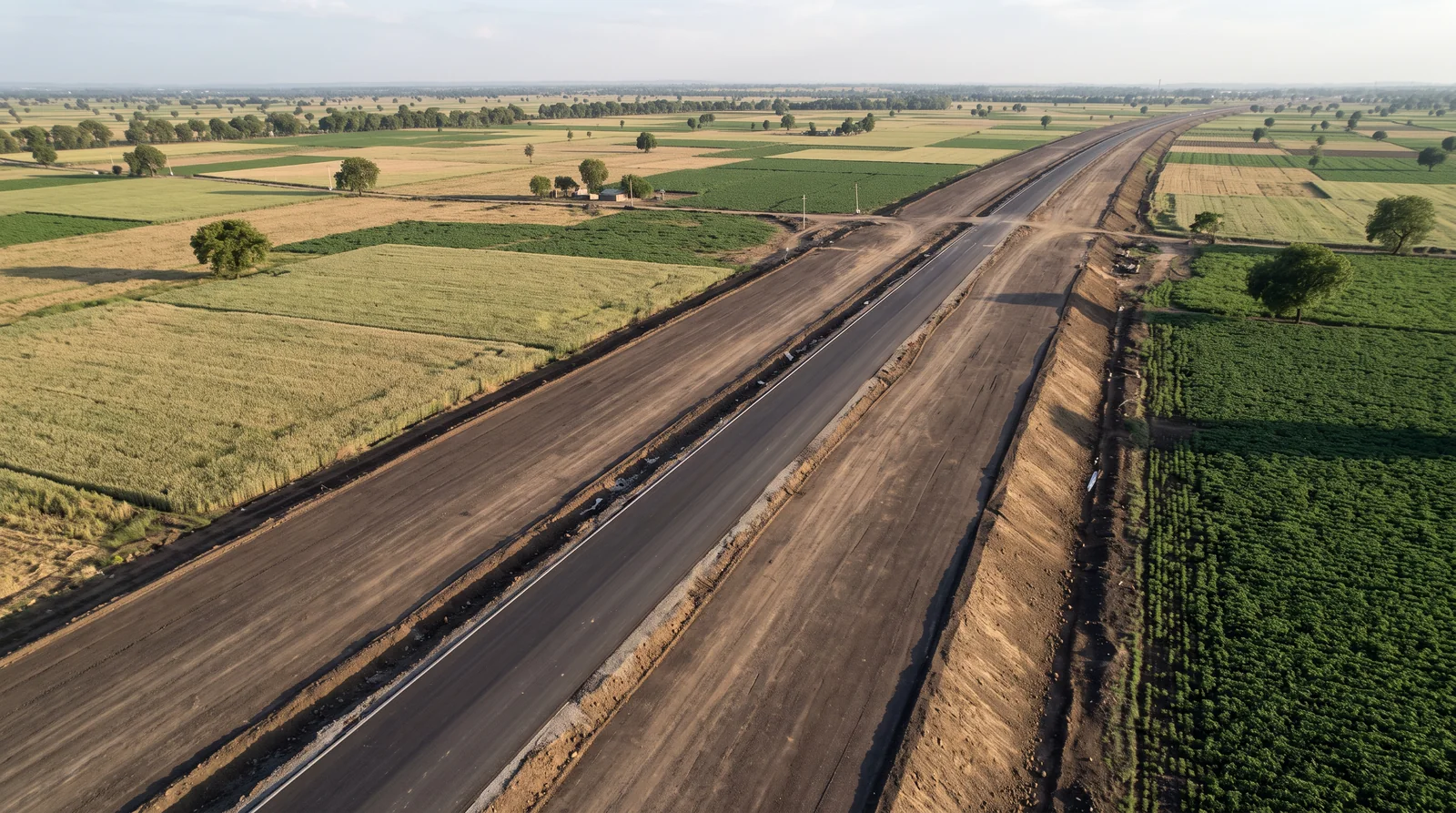
The state's industrial development corporation, MPIDC, is assembling land for a new road of about 20 km, 75 metres wide, linking the Super Corridor near Indore airport with Pithampur. A development zone of 300 metres runs along each side of the road, and land from 17 villages falls inside the scheme. The estimated cost is ₹2,360 crore. Phase 1, estimated at ₹326.51 crore, was begun on 3 May 2026.
Acquisition takes the land. Pooling trades it.
| Acquisition under the 2013 Act | Pooling on this corridor | |
|---|---|---|
| What happens | The state takes the land and pays money | The owner puts land in and takes plots out |
| Is it voluntary? | Compulsory once notified for a public purpose | Voluntary; each owner signs a consent |
| Payment | Compensation in money, plus a solatium equal to 100 per cent of it | Paid in land: 60 per cent of the developed land, up from the usual 50 per cent |
| Owners' consent | Needed only for private (80 per cent) or PPP (70 per cent) projects | Each owner's own |
| Other option | — | A cash option for owners who want money instead |
Pooling keeps the owner in the deal: less land back, but serviced and plotted. Whether that trade is good depends on the numbers.
Sixty per cent of what?
साठ प्रतिशत — आपकी ज़मीन का, या बने हुए प्लॉटों का?
Saath pratishat — aapki zameen ka, ya bane hue plotton ka?
The corridor's 60 per cent has been reported as a share of the developed land, meaning the plots that remain once roads and services are laid out. It is not 60 per cent of the field an owner gave. The difference is large.
Take 100 acres. Suppose 40 go to roads, drains, power lines and open space, and 60 are left as plots. Sixty per cent of those 60 acres is 36 acres, returned to the owners as plots. The other 24 acres of plots stay with MPIDC. An owner who gave 10 acres would get back about 3.6 acres of plots, not 6.
The plot that comes back is not the old field
Once land is pooled, the old field boundaries disappear. The whole area is re-planned as one layout, with new roads and new plot numbers. That redrawing is called reconstitution. The plots are placed where the layout puts them, which may not be on the land the owner gave at all.
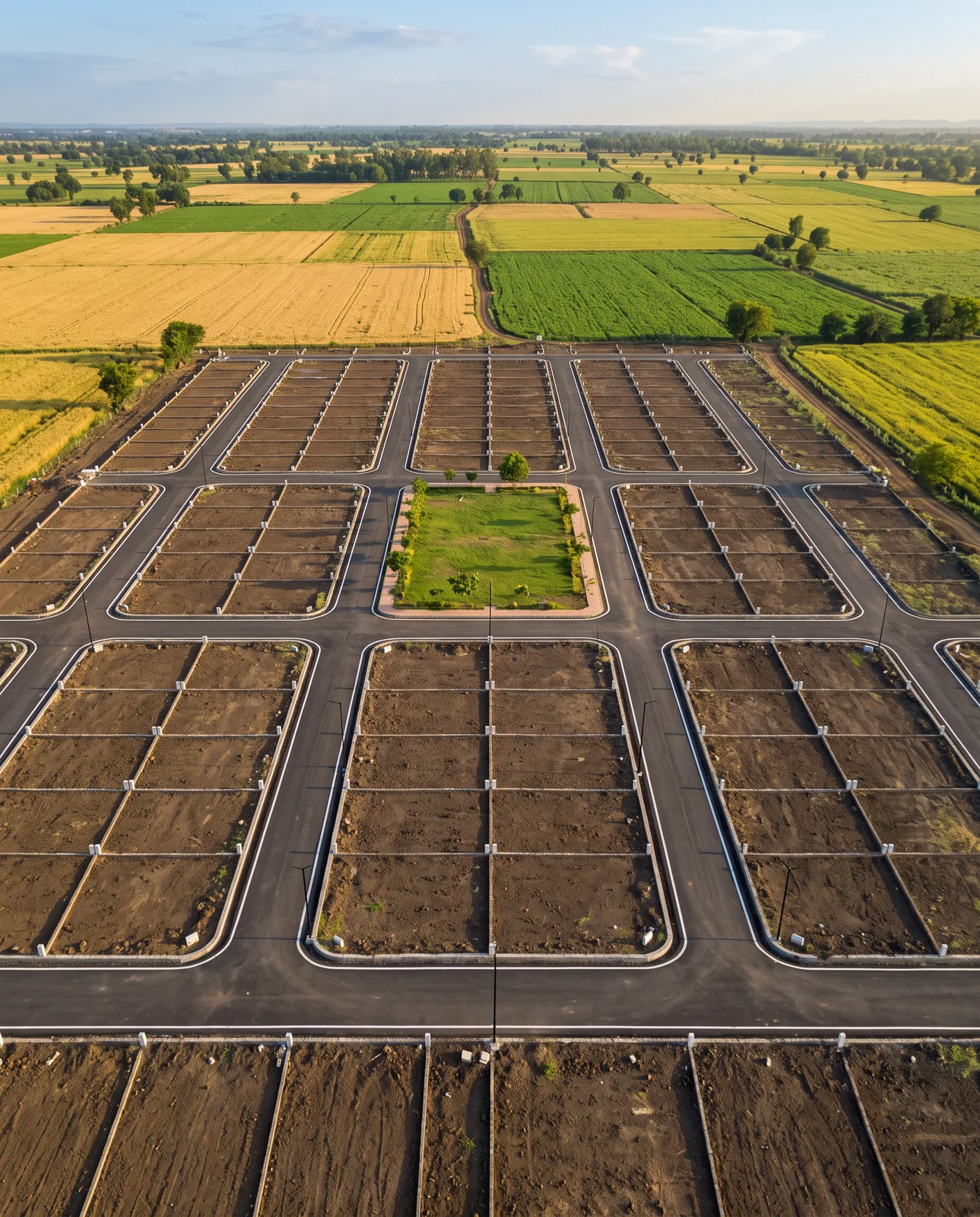
MPIDC has done this before. In its 2019 land pooling scheme for Pithampur Sector 7, land went into an industrial park and owners were paid mostly in developed residential plots elsewhere in the scheme.
Where the other 40 per cent goes
The land that is not returned pays for what turns a field into a plot: the 75-metre spine and the lanes inside the scheme, storm-water drains and supply lines, power lines to each plot, and parks and land for common services.
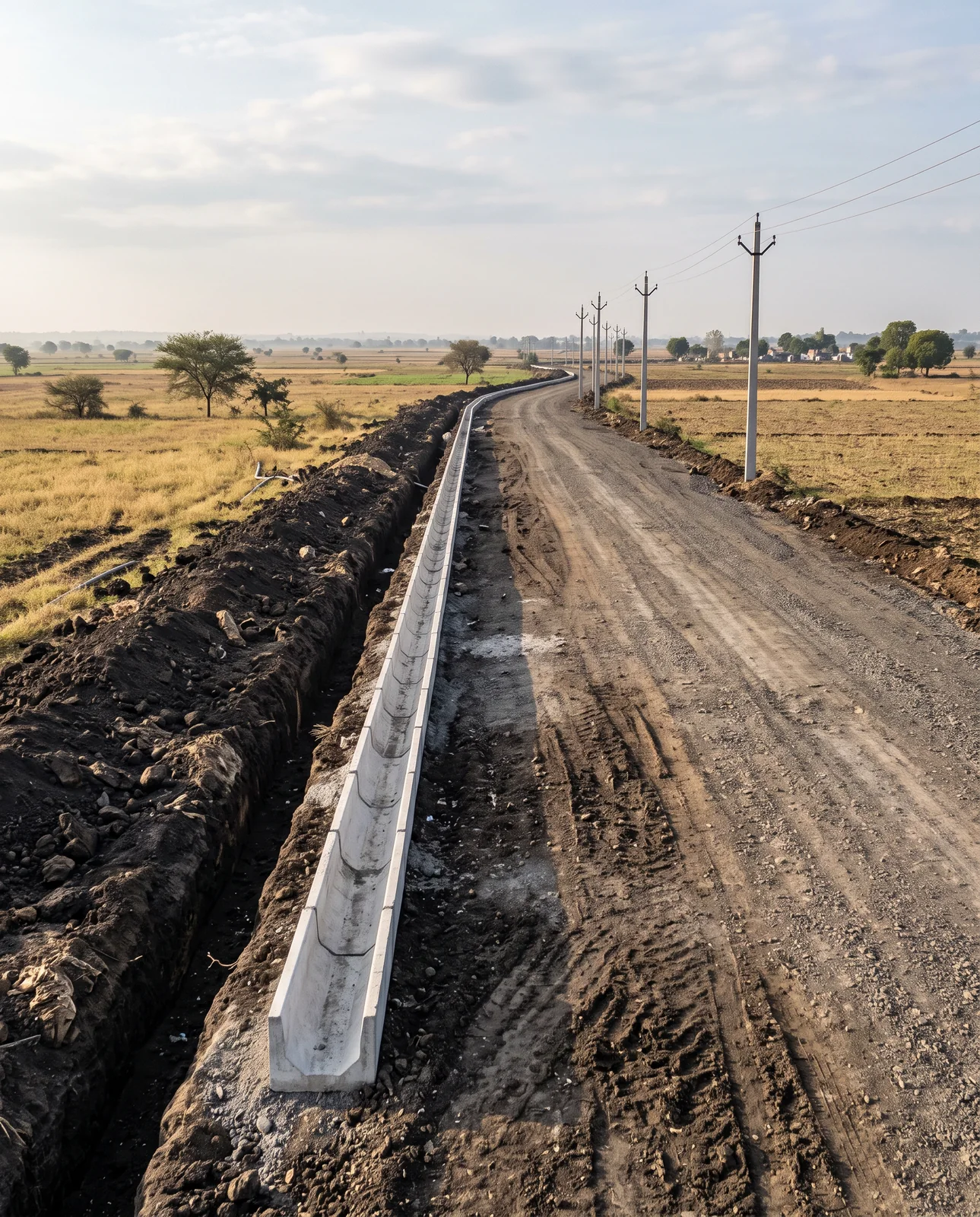
सड़क, नाली, बिजली — ये भी उसी ज़मीन से बनती हैं।
Sadak, naali, bijli — ye bhi usi zameen se banti hain.
That is the general pattern of any pooling scheme. Building it costs money as well as land: phase 1 of this corridor alone was estimated at ₹326.51 crore.
If you are the buyer: five papers before the token
Pooled plots will be offered for sale, sometimes before anything is built. See these five first:
- The allotment. The plot number, the area in square metres and the permitted use, matching the scheme's layout.
- The scheme's final notification, and whether any objections or appeals on that land are still pending.
- Mutation after reconstitution. The land records should show the new plot in the seller's name, not only the old field.
- The terms of transfer. Whether the allotment allows the plot to be sold on, and on what conditions.
- What is built, not drawn. The road, the drain and the power line at this plot: built, tendered, or only on paper.
For what mutation is and why it matters, see Registry day: what happens, and mutation afterwards.
Know which step the scheme has reached
A scheme is a sequence, and a road with a row of pegs is a start, not a colony. These are the steps reported so far; the latest we could confirm, as of October 2026, is phase 1 being begun in May 2026.
| When | Step |
|---|---|
| February 2025 | Draft scheme published; claims and objections invited |
| July 2025 | Final publication of the khasra numbers |
| By November 2025 | First registries with MPIDC, covering 5.58 hectares |
| December 2025 | Consents received for 295 of 954 hectares of private land |
| 3 May 2026 | Phase 1 begun at Nainod |
Ask which phase a plot is in, and whether its road is built, tendered or only drawn. Scheme terms can change; confirm them with MPIDC and a lawyer. This is not legal or financial advice.
See it for yourself on the map — boundaries, plans and paperwork on one screen.
Check what is mapped and sanctioned near the corridor before anyone shows you a plot →Questions people ask
What is land pooling in Indore Pithampur corridor?
Instead of buying land outright, MPIDC asks owners to put their land into one re-planned scheme along the corridor and returns developed plots to them. Each owner signs a consent, and a cash option has been reported for those who want money instead.
How much land do farmers get back in land pooling on the corridor?
The share has been reported as 60 per cent of the developed land, up from the usual 50 per cent. Because roads and services take land first, that can be far less than 60 per cent of the field an owner gave. Ask for the area in square metres, in writing.
Is land pooling the same as land acquisition?
No. Under the 2013 Act the state takes land compulsorily and pays money with a solatium. Pooling is voluntary and pays mainly in developed plots.
Is it safe to buy a land pooling plot?
Only once the papers are in place: the allotment, the final scheme notification with no pending appeals on that land, mutation of the new plot in the seller's name, transfer terms that allow resale, and services actually built.
Where the facts come from. The facts and figures in this post come from verified government sources and verified RERA-registered brokers.
Indori Zameen is a private platform. It is not a government body and is not affiliated with one — always confirm a record with the concerned authority before you commit money.
Share this post
Related posts
 Papers & law9 min read
खेत से प्लॉट तक
Papers & law9 min read
खेत से प्लॉट तक
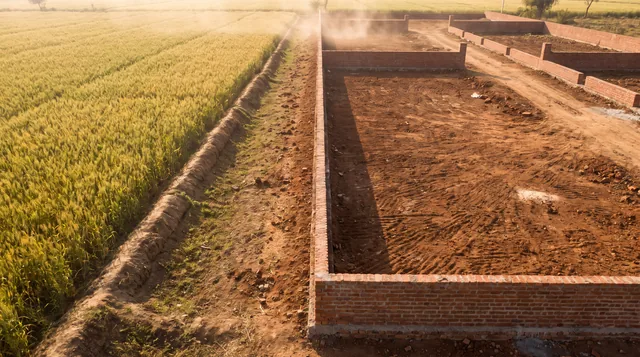
Farmland to plots: what diversion changes, and what it does not
Diversion only changes what a parcel is assessed for on the revenue record. The two permissions that must follow, and which paper to ask for by date.
8 Sep 2026 Papers & law8 min read
एक दिन — और ज़िंदगी भर का काग़ज़।
Papers & law8 min read
एक दिन — और ज़िंदगी भर का काग़ज़।
Registry day: what happens, and mutation afterwards
Stamp duty, the four-month clock, Aadhaar at the counter, e-registration from home, and why a registered deed still leaves mutation to be done.
8 Sep 2026 Papers & law7 min read
काग़ज़ पूरे हैं?
Papers & law7 min read
काग़ज़ पूरे हैं?
The five documents that decide whether land is safe
The land is usually fine; the paper decides. The five documents that separate a plot you can build on from one you can only argue about, and how to read each.
8 Sep 2026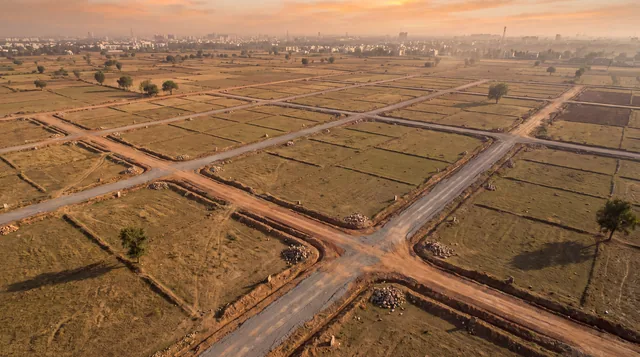 Money7 min read
ज़मीन एक। सवाल अलग-अलग।
Money7 min read
ज़मीन एक। सवाल अलग-अलग।
Buying to live vs buying to invest
A home and an investment are different purchases of the same land. Five questions where the answers pull apart, and the one record both of them begin on.
8 Sep 2026Tagged investment, plot, instagram-series, mutation, layout-plan, checklist.
Read it. Then check it on the map.
Every colony's boundary, its approved layout, its zoning and its paperwork — on one screen. Signing in is free.