
गिफ़्ट, वसीयत, या बैनामा?
Gift, will or sale: moving property inside a family
Three legal routes for passing land to a child, a spouse or a sibling, what each one does on the day it is signed, and the questions to settle before choosing.

On this page
There are three ways to pass land to someone in your family. A gift deed transfers it now and cannot casually be undone. A will transfers it only on your death and can be rewritten until then. A sale deed is a real transaction with real payment. Pick on who keeps control, not on which costs least.
Three routes, three different clocks
Families talk about "the house going to my son" as one idea. In law there are three different acts, and the biggest difference is timing.
Gift deed (दान-पत्र)
A gift is a transfer made voluntarily and without payment. For land or a house, it must be made by a registered instrument, signed by the person giving it and attested by at least two witnesses. The person receiving has to accept it while the giver is alive. From that moment the property belongs to the receiver. The Act allows a gift to be undone only in narrow cases, such as a condition both sides agreed at the time; it is not something to reverse because the family mood has changed.
Will (वसीयत)
A will says what should happen to your property after your death. Until then nothing moves, and you can change your mind and write a new will as often as you like; the last valid one counts. It must be signed by you and attested by two or more witnesses. Registering a will is optional, but a registered will is much harder for anyone to dispute later, because the registration office has recorded that you appeared and executed it.
Sale deed (बैनामा)
A sale between relatives is still a sale. The price has to be real and actually paid, and the deed records how. It is usually the most expensive of the three to execute, but it is also the easiest to prove years later, because there is a payment trail as well as a registered document.
Side by side
| Question | Gift deed | Will | Sale deed |
|---|---|---|---|
| When does ownership change? | At once | On death | At once |
| Can you change it later? | No, except in narrow cases | Yes, any time | No |
| Registration needed? | Yes | Optional | Yes |
| Does money change hands? | No | No | Yes |
| Do you keep control meanwhile? | No | Yes | No |
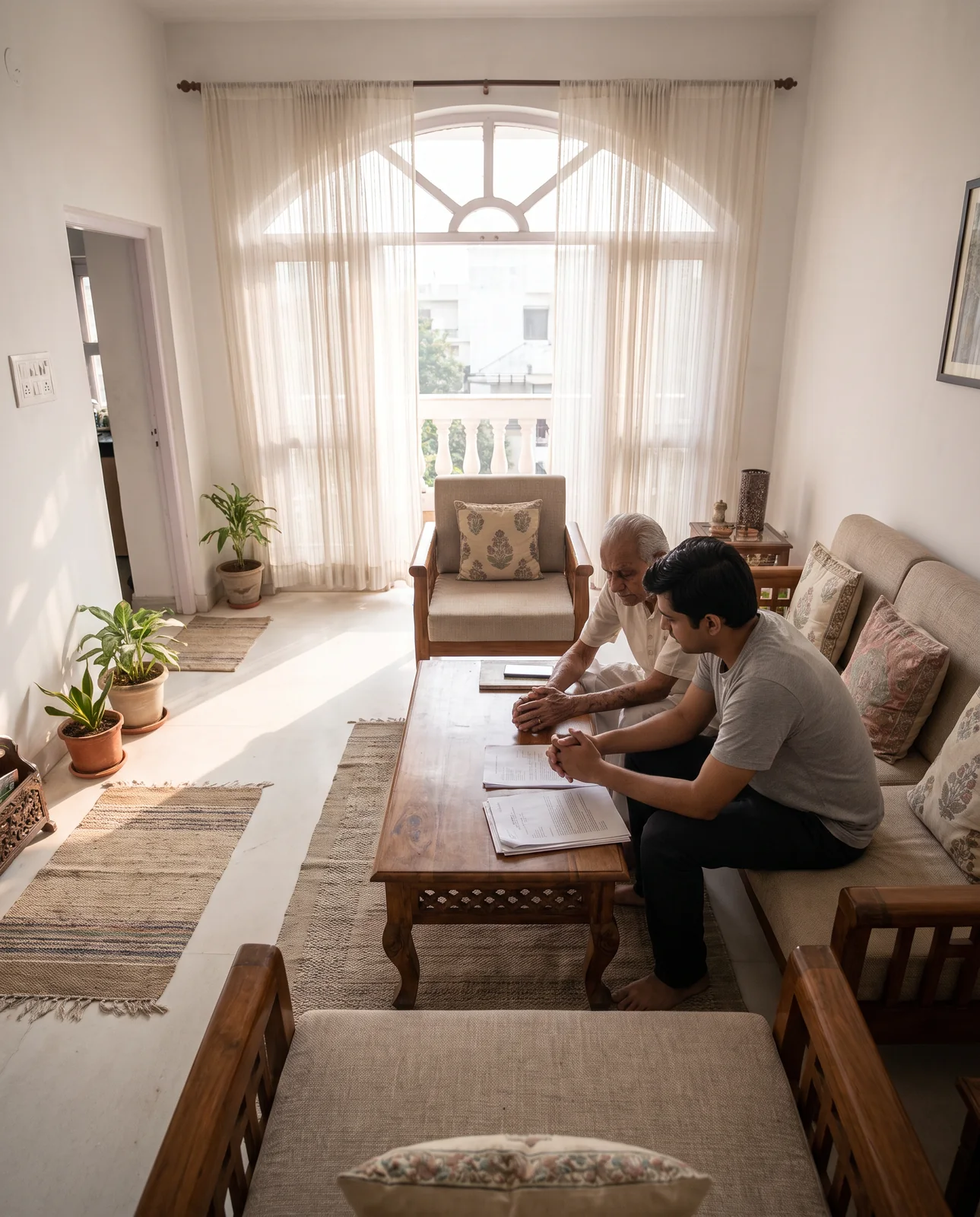
The last row is the one that decides most family cases. A parent who gifts the house today has given it away, including the right to sell it, mortgage it or change their mind. A parent who writes a will keeps all of that until the end. Neither is better in general. The right choice depends on whether the person giving wants certainty for the receiver now or control for themselves later.
The cost question, asked this year
Stamp duty is where most families start, and where the most outdated advice circulates. Many states charge a lower duty when property is gifted between certain close relatives, but the list of relatives who qualify is defined narrowly, and both the rate and the list can change in a single budget.
So this guide gives no figure. A number from a cousin's deal three years ago or a forum may be wrong on the day you sign. Ask the sub-registrar's office or a lawyer what applies on the date you intend to execute, and confirm that your relationship actually appears in the current schedule rather than assuming it does.
दर हर साल बदलती है — सुनी हुई बात पर मत चलिए।
Dar har saal badalti hai — suni hui baat par mat chaliye.
Three familiar mistakes
1. A will nobody knows about
A will that cannot be found does not help anyone. If it sits in a cupboard and no one is told, the family may proceed as if there were no will at all. Tell at least one trusted person where it is, and consider registering it so that its existence is on record.
2. A gift promised out loud
"This plot is yours" said at a family function transfers nothing. Immovable property passes by a registered instrument, not by words, however sincere. Years later the promise becomes one person's memory against another's.

3. A sale deed for a token rupee
Some families dress a gift up as a sale for a nominal price, hoping to save duty. It rarely works and often backfires. A sale with no real payment behind it invites exactly the challenge it was meant to avoid: was this really a sale, and was the duty right? Choose the instrument that describes what is actually happening.
After the deed: the record still has to change
Whichever route you take, the land record and the municipal record do not update by themselves. After a registered gift or sale, the person receiving the property should apply for mutation so the revenue and municipal records show the new owner. Under a will, that step comes after the death, on the strength of the will. Until mutation is done, the old name stays on the record that banks, buyers and tax offices look at first.
The one thing to do this month
Say what you have decided, out loud, to the people it affects, and then put it on the right paper. Almost every property fight inside a family begins as a decision that each person understood differently and nobody recorded. Explaining your reasons while you are here to explain them is worth more than the cleverest choice of instrument.
जो तय किया है, वो कह भी दीजिए — और लिख भी दीजिए।
Jo tay kiya hai, vo keh bhi dijiye — aur likh bhi dijiye.
Before you decide who gets the property, be sure what the property is: its boundary, its sanctioned layout and its master-plan zone. This guide is general information, not legal advice; succession and stamp duty vary by personal law, by state and by year.
See it for yourself on the map — boundaries, plans and paperwork on one screen.
Check the colony's boundary, layout and zone before you decide who receives it →Questions people ask
Which is better for transferring property to children, gift deed or will?
It depends on control. A gift deed transfers ownership immediately and cannot casually be undone; a will takes effect only on death and can be changed until then. Take your own case to a lawyer.
Is registration of a gift deed compulsory?
Yes. A gift of immovable property must be made by a registered instrument, signed by the donor and attested by at least two witnesses, and accepted during the donor's lifetime.
Is it necessary to register a will?
No, registration of a will is optional. A registered will is, however, much harder to dispute.
Can a gift deed be cancelled later?
Only in narrow cases the Transfer of Property Act sets out, such as a condition both sides agreed when the gift was made. It is not undone simply because someone changes their mind.
What is the stamp duty on a gift deed to a family member in MP?
Concessional rates for certain relatives exist in many states, but the rate and the list of relatives change. Confirm the current figure with the sub-registrar's office or a lawyer for the date you intend to sign.
Where the facts come from. The facts and figures in this post come from verified government sources and verified RERA-registered brokers.
Indori Zameen is a private platform. It is not a government body and is not affiliated with one — always confirm a record with the concerned authority before you commit money.
Share this post
Related posts
 Papers & law8 min read
नाम किसके?
Papers & law8 min read
नाम किसके?
Whose name goes on the sale deed
Who paid and whose name is on the deed are two different questions. What the choice changes, and why to settle it at home, weeks early, not at the desk.
8 Sep 2026 Papers & law8 min read
एक वारिस छूट गया, तो सौदा अधूरा है।
Papers & law8 min read
एक वारिस छूट गया, तो सौदा अधूरा है।
Inherited land: why every heir has to sign
Buy inherited land from four heirs out of six and you own four-sixths, not the plot. Who counts as an heir, and the papers that settle every share.
3 Oct 2026 Papers & law8 min read
मुख़्तारनामा मालिकाना हक़ नहीं है।
Papers & law8 min read
मुख़्तारनामा मालिकाना हक़ नहीं है।
Power of attorney, agreement to sell, will: why none of them transfers land
An agreement to sell, a power of attorney, a will and a receipt can fill a file and still leave the land in the seller's name. Here is why, and what to ask.
3 Oct 2026 Papers & law8 min read
एक दिन — और ज़िंदगी भर का काग़ज़।
Papers & law8 min read
एक दिन — और ज़िंदगी भर का काग़ज़।
Registry day: what happens, and mutation afterwards
Stamp duty, the four-month clock, Aadhaar at the counter, e-registration from home, and why a registered deed still leaves mutation to be done.
8 Sep 2026Tagged sale-deed, stamp-duty, mutation, instagram-series, registry.
Read it. Then check it on the map.
Every colony's boundary, its approved layout, its zoning and its paperwork — on one screen. Signing in is free.