
मुख़्तारनामा मालिकाना हक़ नहीं है।
Power of attorney, agreement to sell, will: why none of them transfers land
What each paper in a 'GPA sale' bundle really does, why the Supreme Court said none of them makes you the owner, and the three questions to ask before any money moves.

On this page
- The bundle, and what each paper really says
- The Supreme Court settled this in 2011
- The only route: one deed, stamped and registered
- There is always a reason the deed is not being written
- What you do not get with a bundle
- To be fair: a power of attorney is a normal thing
- Three questions to put before any money moves
- Check the colony before you check the bundle
None of them makes you the owner. In India, land worth a hundred rupees or more passes to a new owner only through a stamped, registered sale deed. An agreement to sell, a general power of attorney, a will and a receipt can share one file and still leave the title with the seller.
The bundle, and what each paper really says
The offer usually arrives as a set. Instead of a registration date you are handed four documents that, you are told, amount to the same thing. Each is genuine and each does a job. None of them does the job of a sale.
| Paper | What it does | What it does not do |
|---|---|---|
| Agreement to sell | Records a promise to sell later, on stated terms | Create any interest in the land |
| General power of attorney | Lets one person act on the owner's behalf | Make the attorney, or you, the owner |
| Will | Says what should happen to the owner's property after death | Take effect while the owner lives; it can be changed until then |
| Receipt | Shows that money was paid | Show that land was transferred |
The law is specific about the first one. The Transfer of Property Act says in terms that a contract for the sale of immovable property does not, by itself, create any interest in or charge on that property. A will can be revoked or altered by the person who made it at any time while they are competent to do so, which means the plot you paid for can be left to somebody else by a later will you will never see.
The Supreme Court settled this in 2011
This is not one lawyer's caution. In Suraj Lamp & Industries v. State of Haryana, decided on 11 October 2011, the Supreme Court held that a sale agreement, a general power of attorney and a will do not transfer immovable property and convey no title, whether they are used one at a time or all together. Land worth one hundred rupees or more moves only by a registered deed of conveyance.
The court was frank about why the practice spread: it let property change hands off the record and without the stamp duty that a proper deed attracts. It also said such papers are not worthless. They can still support a claim to have the sale completed, or a defence to protect possession already given under a contract. What they cannot do is make the holder the owner.
चार काग़ज़ जोड़ दो, तब भी रजिस्ट्री नहीं बनती।
Chaar kaagaz jod do, tab bhi registry nahin banti.
The only route: one deed, stamped and registered
The rule comes from two Acts read together. The Transfer of Property Act says a sale of immovable property worth one hundred rupees or more can be made only by a registered instrument. The Registration Act lists that instrument among the documents that must be registered, and adds the consequence: a document that had to be registered and was not does not affect the property it describes.
So the test is short. At the end of the process, is there a sale deed in your name, stamped, signed before the sub-registrar and entered in the register? If yes, you bought land. If not, you bought paper.
There is always a reason the deed is not being written
Nobody skips registration by accident. When a seller offers papers instead of a deed, one of three things is usually true.
- The stamp duty is being avoided. The seller, and sometimes the buyer, saves money today. The cost of that saving falls on whoever holds the bundle, and it never expires.
- The title would not survive a search. A missing heir, an old dispute, a name on the revenue record that does not match the seller. A registered deed invites scrutiny; a private bundle avoids it.
- The land cannot lawfully be sold to you. Allotted, restricted or ceiling land, where a straight sale deed would be refused at the registration desk.
What you do not get with a bundle

You may be standing on the plot, with a wall around it, and still be locked out of everything that ownership is for.
- No mutation. In Madhya Pradesh the revenue record changes when somebody reports a lawful acquisition of a right in land and the tehsildar orders the entry. A bundle gives you no acquisition to report, so the record keeps the old owner's name.
- No loan against it. A bank lends against title. You have none to mortgage.
- No clean resale. Whoever buys from you inherits the same gap, knows it, and pays you less for it.
- It can end with the owner's life. An agency comes to an end when the person who granted it dies or becomes of unsound mind. The power of attorney in your file may already be dead paper.
To be fair: a power of attorney is a normal thing
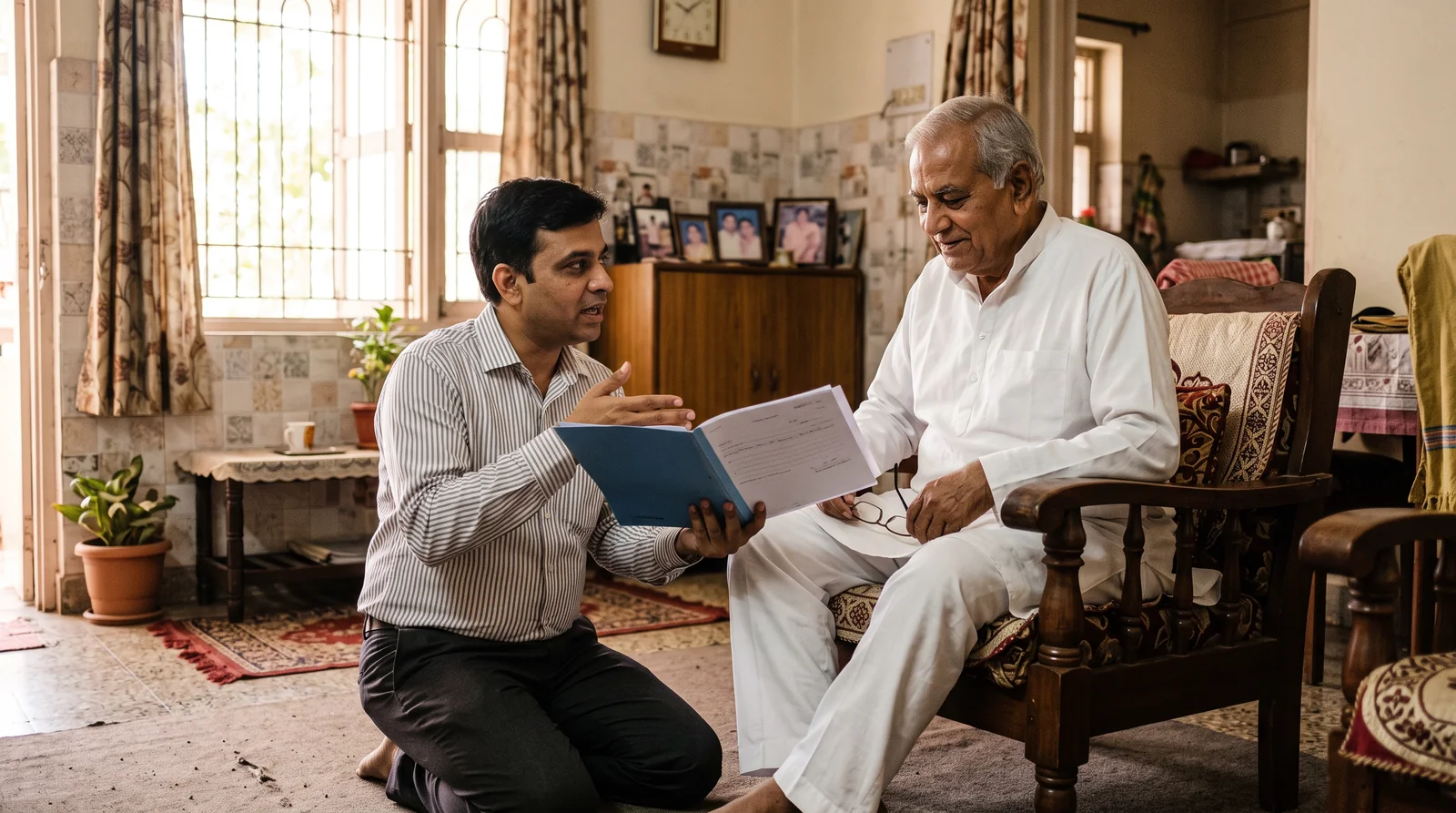
The document is not the villain. An owner living in Dubai uses one to have a relative sign the sale of a plot in Indore. An elderly parent uses one so that a son can complete a registration without the parent sitting in a crowded office. The Supreme Court's 2011 judgment itself recognised such genuine uses. In every one of them, the attorney signs on the owner's behalf and a registered sale deed still comes out at the end.
The trouble starts only when the power of attorney is the last paper in the file instead of a step towards the right one.
Three questions to put before any money moves

Say these out loud, to the seller and to the real estate agent, in the same sitting.
- "Will I get a registered sale deed in my name?" A clear yes is the only answer that matters. A long explanation is also an answer.
- "Whose name is on the revenue record today?" Then look it up yourself rather than accepting a printout.
- "If there will be no deed, why not?" There is always a reason, and you are entitled to hear it before you pay for it.
जो रजिस्ट्री से बच रहा है, वो पैसे नहीं, कोई बात छिपा रहा है।
Jo registry se bach raha hai, vo paise nahin, koi baat chhipa raha hai.
Check the colony before you check the bundle
Before any of these conversations, look at the colony itself: its recorded boundary, its sanctioned layout and its zone.
See it for yourself on the map — boundaries, plans and paperwork on one screen.
Check the colony's boundary, sanctioned layout and zone before you look at any bundle →Questions people ask
Is a GPA sale valid in India?
Not as a transfer of ownership. The Supreme Court held in 2011 that a sale agreement, a general power of attorney and a will, singly or together, convey no title. Only a registered sale deed does.
Can I get mutation done on the basis of a power of attorney?
Mutation records a lawful acquisition of a right in land. A power of attorney only lets someone act for the owner, so it gives you no acquisition to record.
Does a power of attorney end when the owner dies?
Yes. Under the Indian Contract Act an agency ends on the death or unsoundness of mind of the person who granted it.
Is an agreement to sell proof of ownership?
No. The Transfer of Property Act says a contract for sale does not by itself create any interest in the land. It is a promise to sell, not the sale.
Can a bank give a loan on a plot bought through GPA and agreement?
A bank lends against title, and these papers do not give you title. Expect a refusal until a registered sale deed is in your name.
Where the facts come from. The facts and figures in this post come from verified government sources and verified RERA-registered brokers.
Indori Zameen is a private platform. It is not a government body and is not affiliated with one — always confirm a record with the concerned authority before you commit money.
Share this post
Related posts
 Papers & law7 min read
टोकन देने से पहले
Papers & law7 min read
टोकन देने से पहले
The token: the agreement that comes before the sale deed
The token is the first money you pay and the moment you have least on paper. Six things to put in the agreement to sell before it moves.
8 Sep 2026 Papers & law7 min read
साफ़ टाइटल एक ज़ंजीर है।
Papers & law7 min read
साफ़ टाइटल एक ज़ंजीर है।
Clear title is not a certificate: how to read the chain of title
Nobody issues a certificate saying your land is fine. Clear title is a chain of owners with no gap, traced back thirty years. How to read it, and its limits.
3 Oct 2026 Papers & law8 min read
एक दिन — और ज़िंदगी भर का काग़ज़।
Papers & law8 min read
एक दिन — और ज़िंदगी भर का काग़ज़।
Registry day: what happens, and mutation afterwards
Stamp duty, the four-month clock, Aadhaar at the counter, e-registration from home, and why a registered deed still leaves mutation to be done.
8 Sep 2026 Papers & law8 min read
गिफ़्ट, वसीयत, या बैनामा?
Papers & law8 min read
गिफ़्ट, वसीयत, या बैनामा?
Gift, will or sale: moving property inside a family
A gift deed works today, a will on death, a sale deed only with real payment. How to choose between them, and the three family mistakes to avoid.
3 Oct 2026Tagged sale-deed, registry, myths, instagram-series, mutation, checklist.
Read it. Then check it on the map.
Every colony's boundary, its approved layout, its zoning and its paperwork — on one screen. Signing in is free.