
एक वारिस छूट गया, तो सौदा अधूरा है।
Inherited land: why every heir has to sign
Who counts as an heir, which papers prove that every share is accounted for, and the four registered ways a family sale is put right before you pay.

On this page
Because each heir owns a share, and nobody can sell a share that is not theirs. If family land was never formally divided, every person with a share must sign the sale deed, or first give up or separate that share by a registered document. Otherwise you buy only the shares of those who signed.
Usually not fraud, just family
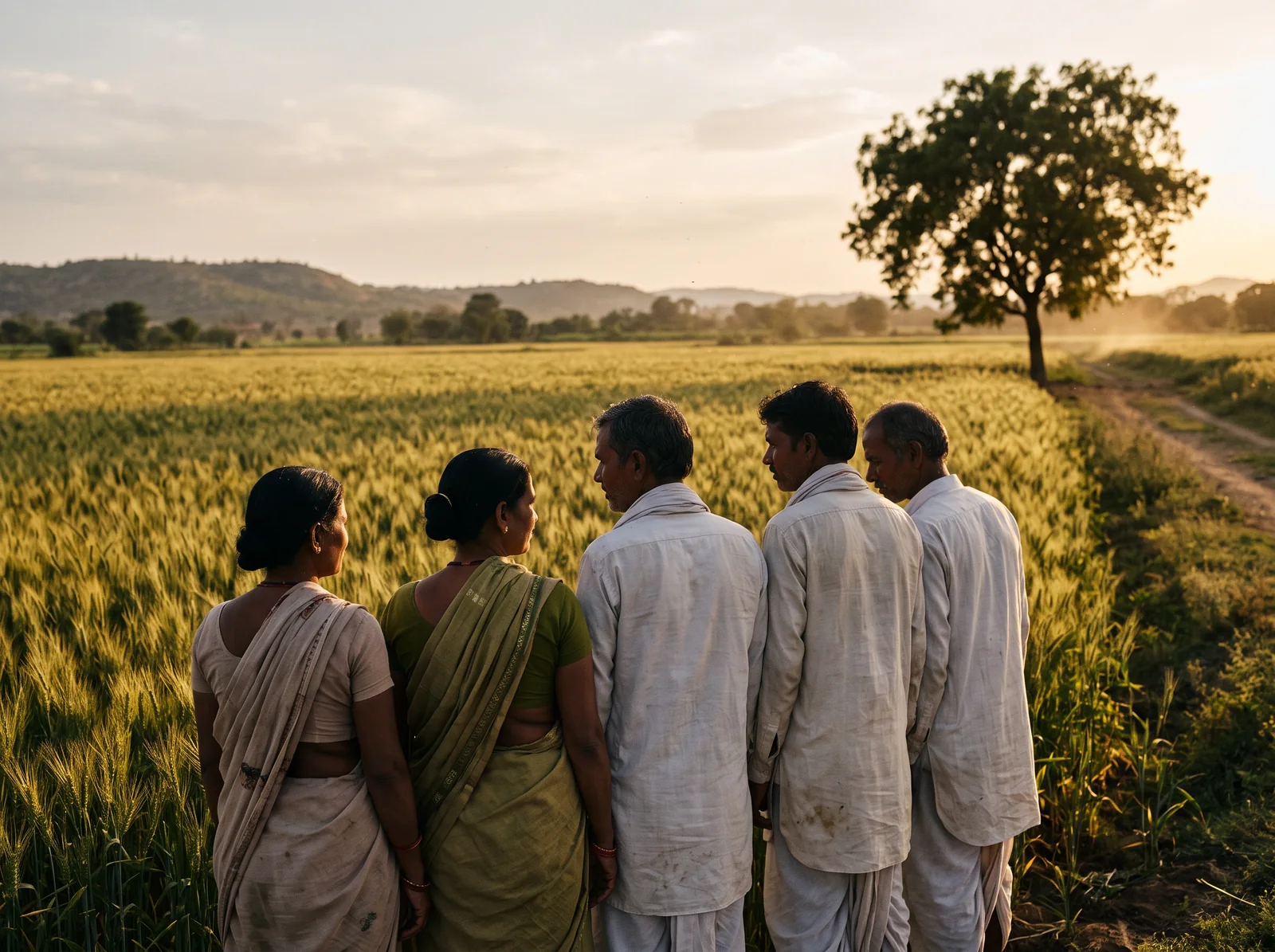
The pattern is familiar across Indore's edges. One brother has farmed the land for twenty years, paid the tax and dealt with the tenants. Everybody calls it his. Another brother lives in Pune, a sister married and moved to Bhopal, and nobody thought to ask them. The revenue record still names a grandfather who died decades ago, and the land has never been divided on paper.
Nobody here set out to cheat a buyer. The family simply never sat down and counted. But a sale does not care about habit. It cares about who holds a share.
Who counts as an heir: a longer list than people think
For Hindu families, the Hindu Succession Act names the first circle of heirs, called Class I. When a man dies without a will, they inherit together, ahead of anyone else. The list includes:
- Sons, who are always counted.
- Daughters, who are the heirs most often left out of the conversation.
- The widow, an heir in her own right, not a formality.
- The mother, also in Class I.
- Children of a son or daughter who died earlier, who step into their parent's share.
- Anyone named in a valid will, because a will, where one exists, can change the whole picture.
Since the 2005 amendment, a daughter in a joint Hindu family is a coparcener by birth, with the same rights in that property as a son. In 2020 the Supreme Court made clear this holds whether or not her father was alive on 9 September 2005, when the amendment came into force.
Read the gap in the file
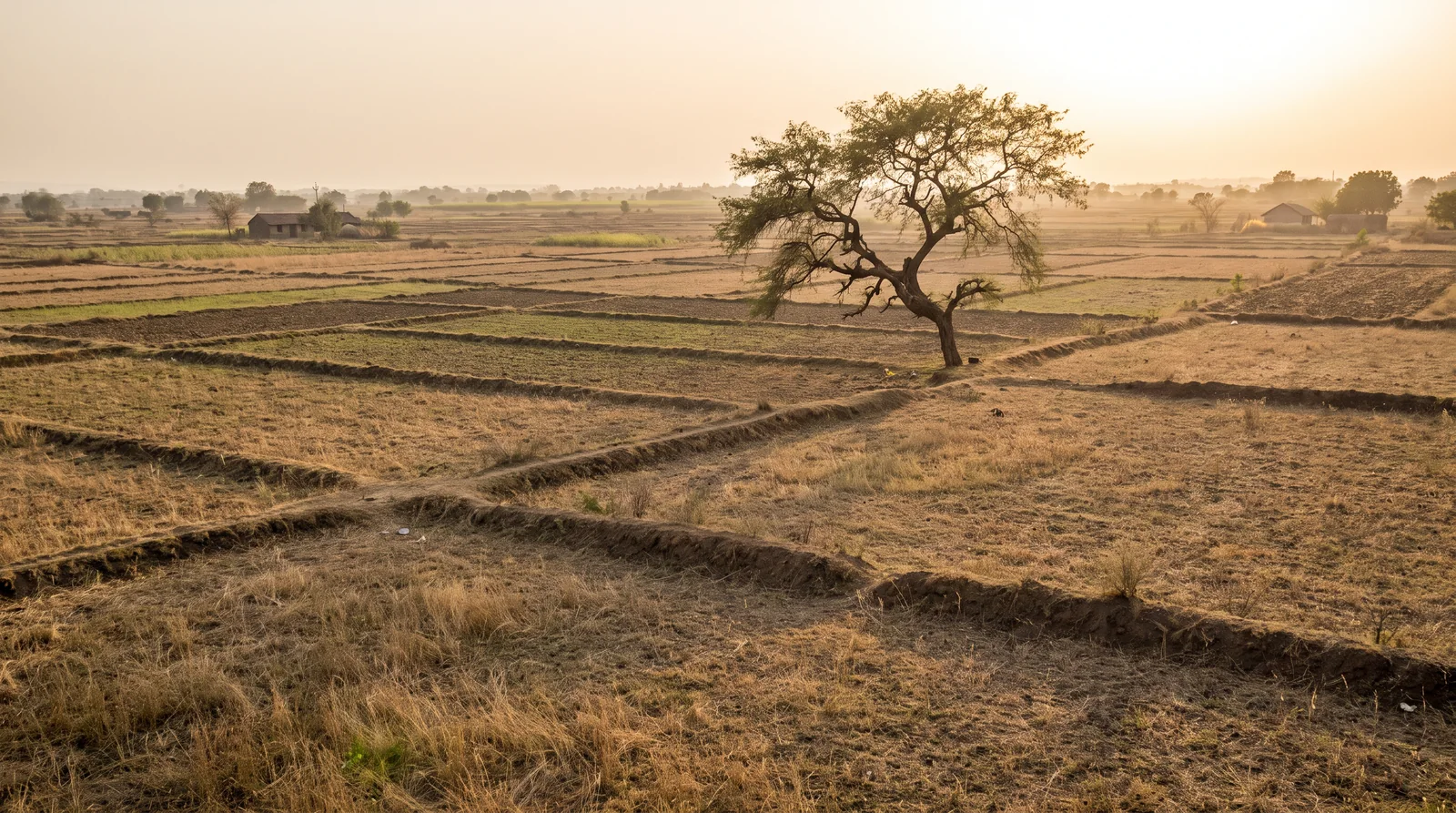
The file you are shown is rarely wrong. It is incomplete. Put what is on the table beside what usually is not.
| Usually shown | Usually missing |
|---|---|
| The old sale deed in the grandfather's name | Any document dividing the land between the heirs |
| A death certificate | A registered release from the heirs who are not selling |
| The revenue record, with several names | Anything that mentions a daughter's share |
| Property tax receipts in one person's name | A legal heir certificate that lists everyone |
Tax receipts and possession show who has been looking after the land. They do not show who owns it. The papers in the right-hand column are the ones that answer the question you are paying to have answered.
जो काग़ज़ मेज़ पर नहीं आया, असली सवाल उसी में है।
Jo kaagaz mez par nahin aaya, asli sawaal usi mein hai.
How it is properly cured: four routes
The problem is fixable. It is just not fixable by a promise. Each of these routes leaves a registered or court record behind.
- Every heir signs the sale deed. All of them join as sellers on the same registered document. This is the simplest route when everyone agrees.
- A registered release before the sale. The heirs who are not selling give up their share in favour of those who are. A document that gives up a right in land worth one hundred rupees or more must be registered.
- A registered partition first. The land is formally divided, and you buy one defined portion. For agricultural holdings in Madhya Pradesh, a co-owner can also ask the tehsildar to partition the holding. If a question of title comes up, the tehsildar pauses the case so it can go to a civil court.
- A court settles it. Where the family cannot agree, or an heir cannot be traced, a civil court decides who holds what. It is slower, but it ends in a record.
After the sale, mutation in Madhya Pradesh follows a report of the new right to the patwari, and the tehsildar then orders the entry. A record that lists every heir makes that step straightforward. A record that has skipped one makes it the first place the gap shows.
If you buy anyway
A seller can sell only what is theirs. When one co-owner sells their share, the buyer steps into that co-owner's position and nothing more. Buy from four heirs out of six and you hold four-sixths of an undivided property, not the plot you walked.
The other two can ask for their share at any point. Their claim does not weaken because you paid in good faith. It rarely comes up on the day of the sale. It comes up when you try to build, borrow against the land or sell it to someone whose lawyer counts the names.
Ask it kindly, ask it anyway

"इस ज़मीन में और किस-किसका हक़ है?"
"Is zameen mein aur kis-kiska haq hai?"
The question about other heirs is not an accusation. In most families, nobody has ever counted. Asking on day one costs nothing. If the answer is a name and a shrug, you have learned on day one what a lawyer would have told you in week three.
A lawyer is still worth paying here. Succession depends on the family's personal law, on whether there was a will, and on facts only the family knows. This guide gives you the questions. The answers for a particular family are a legal opinion.
Check the colony first
Before you count the heirs, check the land itself. Its recorded boundary, its sanctioned layout and its master-plan zone tell you whether the plot is worth this effort in the first place.
See it for yourself on the map — boundaries, plans and paperwork on one screen.
Check the colony's boundary, sanctioned layout and zone before you count the heirs →Questions people ask
Can one heir sell ancestral property without the consent of the others?
One heir can sell only their own share. The buyer steps into that heir's position as a co-owner and does not get the whole property.
Do daughters have a share in ancestral property after marriage?
Yes. Since the 2005 amendment to the Hindu Succession Act, a daughter is a coparcener by birth, and the Supreme Court confirmed in 2020 that this applies whether or not her father was alive in 2005.
Does a relinquishment deed need to be registered?
Yes. A document that gives up a right in immovable property worth one hundred rupees or more must be registered under the Registration Act.
What documents should I ask for when buying inherited land?
The title deed of the person who died, a legal heir certificate listing everyone, and either all heirs as sellers on the deed or a registered release or partition from the heirs who are not selling.
What happens if one legal heir did not sign the sale deed?
Their share did not pass to you. They can claim it later, and good faith on your part does not cancel their right.
Where the facts come from. The facts and figures in this post come from verified government sources and verified RERA-registered brokers.
Indori Zameen is a private platform. It is not a government body and is not affiliated with one — always confirm a record with the concerned authority before you commit money.
Share this post
Related posts
 Papers & law7 min read
साफ़ टाइटल एक ज़ंजीर है।
Papers & law7 min read
साफ़ टाइटल एक ज़ंजीर है।
Clear title is not a certificate: how to read the chain of title
Nobody issues a certificate saying your land is fine. Clear title is a chain of owners with no gap, traced back thirty years. How to read it, and its limits.
3 Oct 2026 Papers & law8 min read
गिफ़्ट, वसीयत, या बैनामा?
Papers & law8 min read
गिफ़्ट, वसीयत, या बैनामा?
Gift, will or sale: moving property inside a family
A gift deed works today, a will on death, a sale deed only with real payment. How to choose between them, and the three family mistakes to avoid.
3 Oct 2026 Papers & law8 min read
एक दिन — और ज़िंदगी भर का काग़ज़।
Papers & law8 min read
एक दिन — और ज़िंदगी भर का काग़ज़।
Registry day: what happens, and mutation afterwards
Stamp duty, the four-month clock, Aadhaar at the counter, e-registration from home, and why a registered deed still leaves mutation to be done.
8 Sep 2026 Papers & law8 min read
नाम किसके?
Papers & law8 min read
नाम किसके?
Whose name goes on the sale deed
Who paid and whose name is on the deed are two different questions. What the choice changes, and why to settle it at home, weeks early, not at the desk.
8 Sep 2026Tagged sale-deed, mutation, resale, instagram-series, registry, checklist.
Read it. Then check it on the map.
Every colony's boundary, its approved layout, its zoning and its paperwork — on one screen. Signing in is free.