
होम लोन से टैक्स बचेगा? पहले रीजीम देखिए।
Home loan tax benefits: interest, principal and the regime you choose
What a home loan does to your income tax under the Income-tax Act, 2025, which regime allows it, and the papers each claim rests on.

On this page
- First, the regime
- A house you live in: two limits, two parts of the EMI
- A house you let out: the interest follows the rent
- Two co-owners, two borrowers, two limits
- Bought under construction: the interest waits for the keys
- One year, worked through
- Five papers, one folder
- A deduction is only as good as the house behind it
Only under the old tax regime. For a house you live in, the Income-tax Act, 2025 allows up to ₹2,00,000 a year of loan interest and puts the principal inside the shared ₹1,50,000 limit, but the new regime, now the default, allows neither. For a house you let out, the interest is set against the rent in both regimes.
First, the regime
The Income-tax Act, 2025 replaced the 1961 Act on 1 April 2026 and renumbered almost everything: section 24(b) is now section 22, 80C is now 123, and 115BAC is now 202.
The new regime applies unless you opt out; a salaried taxpayer with no business income chooses afresh in each year's return. Which regime suits you depends on your whole return, not the loan alone, and this guide recommends neither.
लोन एक है, पर हिसाब रीजीम से तय होता है।
Loan ek hai, par hisaab regime se tay hota hai.
| Deduction | Old regime | New regime (default) |
|---|---|---|
| Interest on a house you live in | Up to ₹2,00,000 a year, s. 22(2) | Not allowed, s. 202(2)(a) |
| Principal repaid | Inside the ₹1,50,000 limit, s. 123 | Not allowed, s. 202(2)(a) |
| Interest on a house you let out | Deducted from the rent, s. 22(1)(b) | Deducted from the rent, s. 22(1)(b) |
| A let-out loss set against salary | Up to ₹2,00,000 a year, s. 109(1)(b) | Not allowed, s. 202(2)(b) |
A house you live in: two limits, two parts of the EMI
Every EMI has two parts, treated separately.
The interest. Up to ₹2,00,000 a year, for a house you bought or built with the loan and live in. Up to two houses you live in can count as self-occupied.
The principal. It shares one ₹1,50,000 limit with provident fund, life insurance premiums and the rest of that list.
Both deductions are old-regime only.
A house you let out: the interest follows the rent
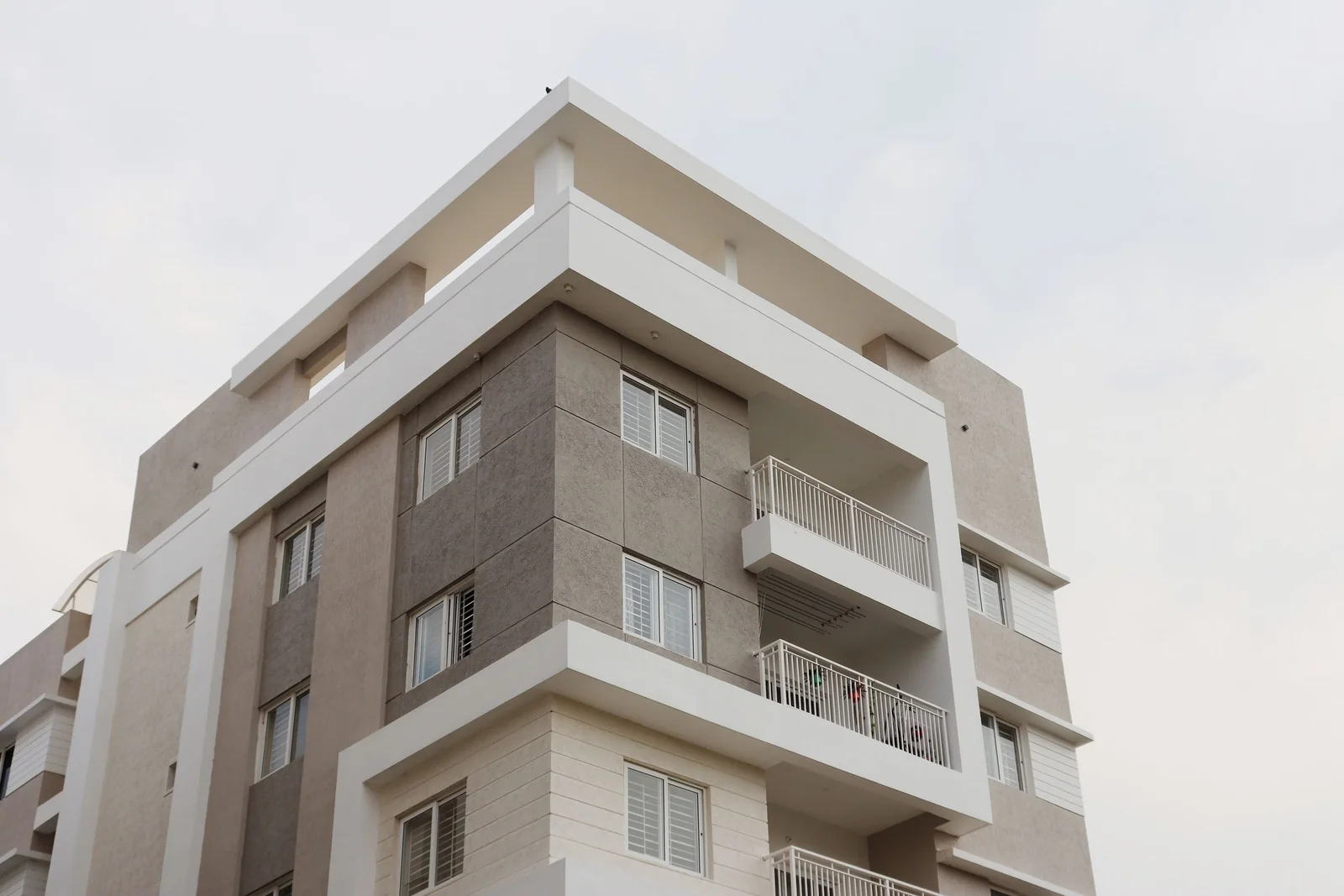
- In both regimes, the interest is deducted from the rent. There is no ₹2 lakh ceiling on the interest itself. The rent is income, and 30 per cent of its annual value is deducted as a flat allowance for upkeep.
- Old regime: a loss can reduce your salary income. If the interest is more than the rent, up to ₹2,00,000 of that loss a year comes off your other income. The rest is carried forward for up to eight years, and can then be set only against rent.
- New regime: the loss stays inside the house. It cannot be set against salary or any other income.
Two co-owners, two borrowers, two limits
When two people are both on the sale deed and the loan, and each pays their share of the EMI, each is assessed on their own share, with their own ₹2,00,000 and ₹1,50,000 limits. On a house they live in, that is up to ₹4,00,000 of interest a year between them, under the old regime, each claiming their own share.
The arrangement depends on both names being on both papers, which is one more reason to decide whose name goes on the sale deed before the registration day. Where one person is an owner but not a borrower, or the other way round, take the question to a chartered accountant.
Bought under construction: the interest waits for the keys
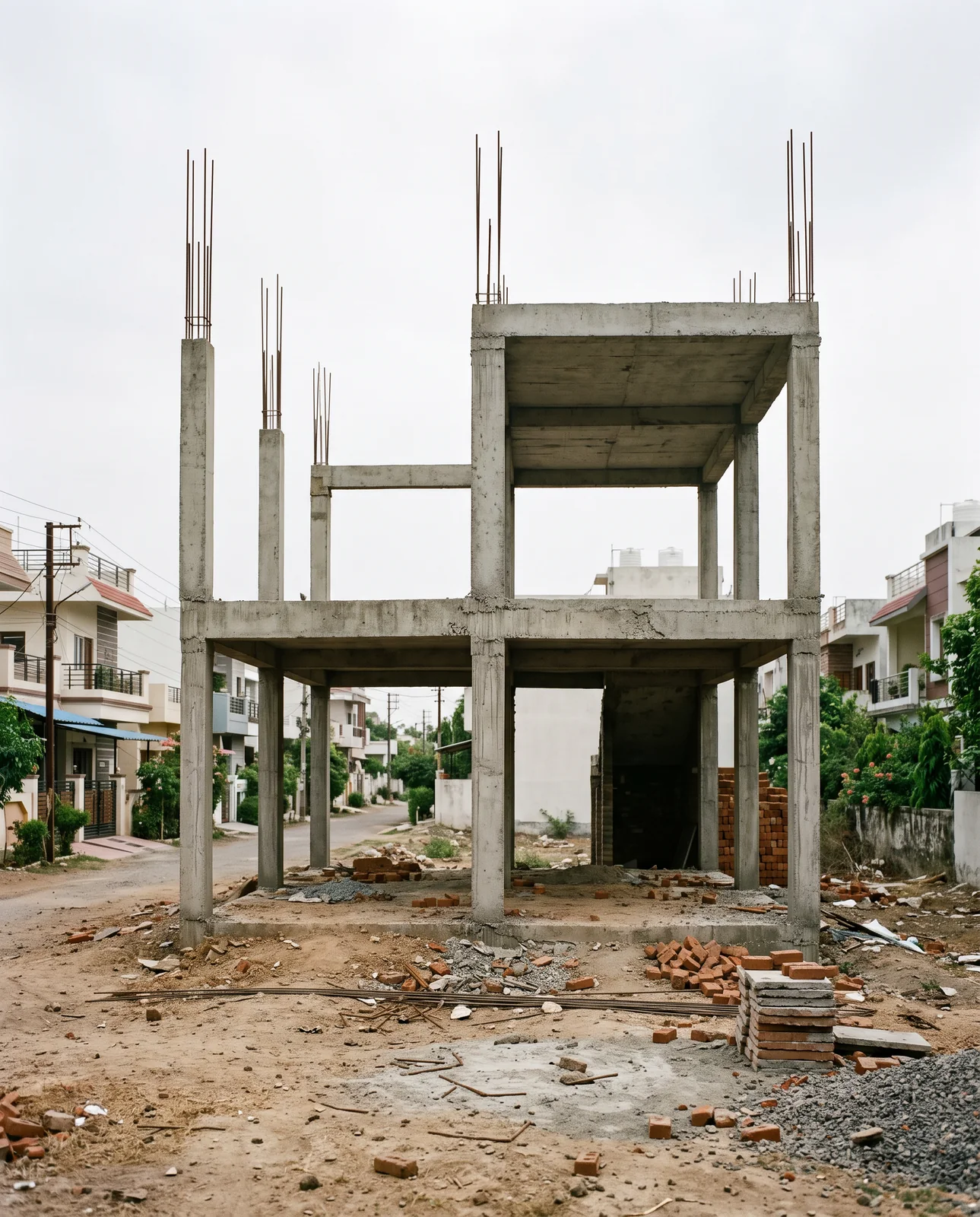
Interest paid during construction cannot be claimed in those years. It waits.
- Five equal instalments. The total is claimed in five equal parts, starting from the tax year the house is bought or completed, and the four years after it.
- Inside the same ₹2,00,000. For a house you live in, that year's interest and the one-fifth share together sit under one cap. The Finance Act, 2026 amended section 22(2) to say so from 1 April 2026.
- Five years to finish. If the house is not completed within five years from the end of the tax year you borrowed in, the cap for a house you live in falls to ₹30,000.
घर बना नहीं, तो ब्याज का फ़ायदा अभी रुका है।
Ghar bana nahin, to byaaj ka faayda abhi ruka hai.
One year, worked through

Invented round numbers, old regime, a house the owners live in, the year the keys arrive.
| Amount | |
|---|---|
| Interest paid while it was being built | ₹3,00,000 |
| One-fifth of it, claimed this year | ₹60,000 |
| Interest paid this year | ₹1,80,000 |
| Total interest for the year | ₹2,40,000 |
| One owner, one borrower: deduction | ₹2,00,000 (₹40,000 goes unclaimed) |
| Two co-owners, 50:50, both borrowers | ₹1,20,000 each, both inside their own cap |
Interest deducted is not tax saved; that depends on your slab and your whole return.
Five papers, one folder
Every claim rests on a document.
- The lender's interest certificate, every year. The Act asks for it before allowing the ₹2 lakh limit.
- A statement of interest paid before completion: the total you will divide by five.
- The completion or possession date, in writing. It starts the five instalments and decides the five-year test.
- The sale deed with each co-owner's share, and the loan agreement naming every co-borrower.
- If it is let out: the rent agreement and the receipts. The rent is the income the interest is set against.
A deduction is only as good as the house behind it
The relief follows the loan, and the loan follows a house the bank can check. Check it yourself first: is the colony registered, the layout sanctioned, and what does the master plan allow? This is general information, not tax advice; take your case to a chartered accountant.
See it for yourself on the map — boundaries, plans and paperwork on one screen.
Check the colony's registration, sanctioned layout and zone before you borrow →Questions people ask
Can I claim home loan interest in the new tax regime?
Not for a house you live in. Section 202 of the Income-tax Act, 2025 disallows the self-occupied interest deduction in the new regime. For a let-out house, interest is still deducted from the rent.
What is section 24(b) called in the new Income-tax Act 2025?
The interest deduction is now in section 22. The ₹2,00,000 cap for a house you live in is section 22(2); the principal, once section 80C, is section 123.
Can both husband and wife claim home loan tax benefit?
Yes, if both are owners on the sale deed and co-borrowers on the loan and each pays their share. Each claims their own ₹2 lakh interest and ₹1.5 lakh limits under the old regime.
How to claim pre-construction interest on a home loan?
Add up the interest paid before completion and claim one-fifth of it each year for five years from the year the house is complete. For a house you live in it shares the ₹2 lakh cap with that year's interest.
Where the facts come from. The facts and figures in this post come from verified government sources and verified RERA-registered brokers.
Share this post
Related posts
 Papers & law8 min read
नाम किसके?
Papers & law8 min read
नाम किसके?
Whose name goes on the sale deed
Who paid and whose name is on the deed are two different questions. What the choice changes, and why to settle it at home, weeks early, not at the desk.
8 Sep 2026 Money8 min read
ब्याज में मदद — पर शर्तें पहले पढ़िए।
Money8 min read
ब्याज में मदद — पर शर्तें पहले पढ़िए।
PMAY-U 2.0: the home-loan interest subsidy, and who qualifies
Up to ₹1.80 lakh off a home loan under PMAY-U 2.0: the income bands, the caps, the pucca-house rule, and how the subsidy is actually paid.
3 Oct 2026 Buying guides7 min read
बन रहा है, या बन चुका है?
Buying guides7 min read
बन रहा है, या बन चुका है?
Under construction or ready to move: two different products
An under-construction flat is not a discounted ready one. It is a different purchase with a different risk. What to settle before you book either.
3 Oct 2026 Papers & law8 min read
किराएदार रखने से पहले — काग़ज़, पुलिस, पैसा।
Papers & law8 min read
किराएदार रखने से पहले — काग़ज़, पुलिस, पैसा।
Renting out your house: agreement, registration, tenant verification
Letting a flat in Indore? The agreement, when registration becomes compulsory, telling the police station, the deposit, and closing it all on paper.
3 Oct 2026Tagged loan, instagram-series, how-to, flat.
Read it. Then check it on the map.
Every colony's boundary, its approved layout, its zoning and its paperwork — on one screen. Signing in is free.