
ब्याज में मदद — पर शर्तें पहले पढ़िए।
PMAY-U 2.0: the home-loan interest subsidy, and who qualifies
Work out in five steps whether your family qualifies for the PMAY-U 2.0 interest subsidy, how much it can be worth, and what to have ready.
On this page
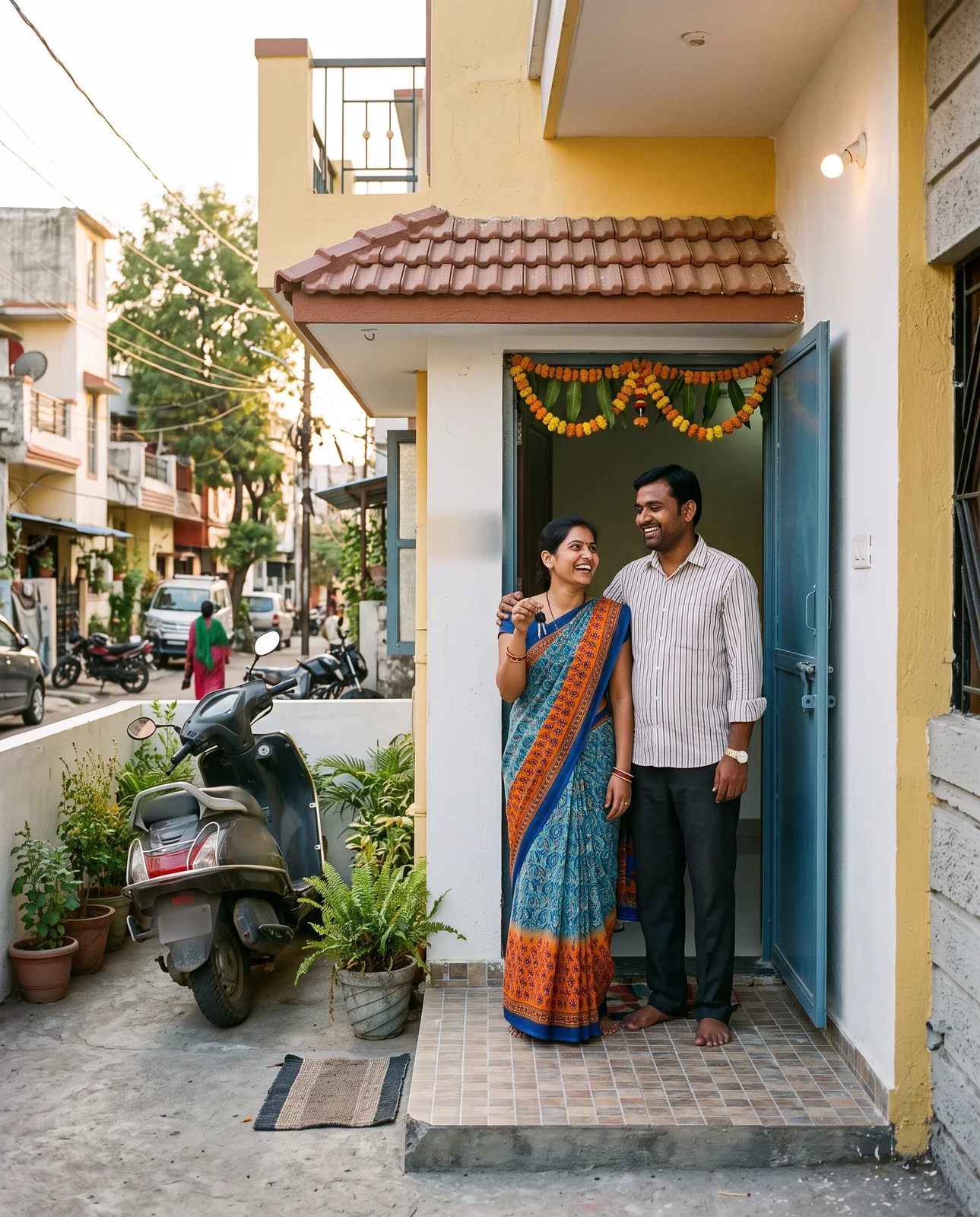
Under PMAY-Urban 2.0's Interest Subsidy Scheme, a family earning up to ₹9 lakh a year can get up to ₹1.80 lakh credited to its home loan in five yearly instalments. The house must cost at most ₹35 lakh, the loan at most ₹25 lakh, and nobody in the family may own a pucca house anywhere in India.
What the scheme is, and how long it runs
PMAY-Urban 2.0 is the Centre's housing mission for urban families, launched in September 2024 and running for five years from 1 September 2024. Of its four parts, the one that touches a home loan is the Interest Subsidy Scheme, run through banks and housing-finance companies. Every figure below is as the official guidelines and portal state them in October 2026. Whether you receive anything is decided by your lender and the portal, so confirm each number with both before you count on it.
Step one: the whole household's income
The first test is the family's total annual income, not just the borrower's salary. It must fall in one of three bands.
| Band | Annual household income |
|---|---|
| EWS | up to ₹3 lakh |
| LIG | ₹3 lakh to ₹6 lakh |
| MIG | ₹6 lakh to ₹9 lakh |
| Above ₹9 lakh | not eligible |
All three bands get exactly the same terms. The band decides whether you are in, not how much you get. For this part of the scheme you declare the income yourself, by a self-certificate or an affidavit, and a false declaration can lead to legal proceedings.
Step two: the house, the loan, and the part that earns subsidy
| Cap | |
|---|---|
| Value of the house | up to ₹35 lakh |
| Home loan | up to ₹25 lakh |
| Carpet area | up to 120 sq m |
| Part of the loan that earns subsidy | the first ₹8 lakh |
The subsidy is 4 per cent a year on the first ₹8 lakh of the loan, for a tenure of up to 12 years, which works out to at most ₹1.80 lakh. The loan may be as large as ₹25 lakh, but anything above ₹8 lakh earns nothing extra. A smaller loan, or a shorter tenure, earns proportionately less.
Step three: the rule to read twice
Who "the family" is. Husband, wife, and their unmarried sons and daughters.
The test. None of them may own a pucca house, in their own name, anywhere in India. Pucca means a roof and walls of durable material (brick, stone, concrete, timber, metal or asbestos sheet), even if the floor is kutcha.
And one more. Nobody may have been allotted a house under any Central, State or local government housing scheme in the last 20 years.
You sign an undertaking that both are true.
देश में कहीं भी पक्का मकान है — तो ये सब्सिडी नहीं।
Desh mein kahin bhi pakka makaan hai — to ye subsidy nahin.
Step four: what the loan is for
The loan must buy or build a home.
| Covered | Not covered |
|---|---|
| Buying a house or flat | A loan for land alone |
| Buying one that has been lived in before | Repair, renovation or extension |
| Building a house | Moving the loan to a new lender |
| A house whose seller already took the subsidy |
Building on your own plot counts; buying the bare plot does not. And a lock-in: the house may not be sold or transferred for five years from the first disbursement of the loan.
How the money arrives
It is not a cheque, and not all at once: five equal yearly instalments, so at most ₹36,000 a year, straight into the home-loan account, where it cuts the principal. From then on you pay EMI on the smaller principal that remains.
Each instalment has conditions. The loan must have been sanctioned and disbursed on or after 1 September 2024, with a tenure of more than five years. At each instalment the loan must be live, not in default, with more than half the principal still outstanding. The house is geo-tagged by the lender or by you, as the payment plan requires.
By the scheme's own arithmetic, ₹1.80 lakh paid over five years is worth at most ₹1.50 lakh in today's money, its net present value at 8.5 per cent. Use that figure, not ₹1.80 lakh, when you compare offers.
Step five: the file, and where it starts

The application starts on the PMAY-U 2.0 portal, under "Apply for PMAY-U 2.0": you register the demand and name your lender, and the application is forwarded to it. Have these ready:
- Aadhaar for every member of the family, or an Aadhaar Virtual ID, not just the borrower's.
- PAN and address proof, as your lender asks for them.
- The income declaration: a self-certificate or affidavit; some lenders also want an income certificate.
- The undertaking: no pucca house anywhere in India, and no housing-scheme benefit in 20 years.
- The property's approved plan: the layout or building plan your state's rules require.
The plan comes before the subsidy
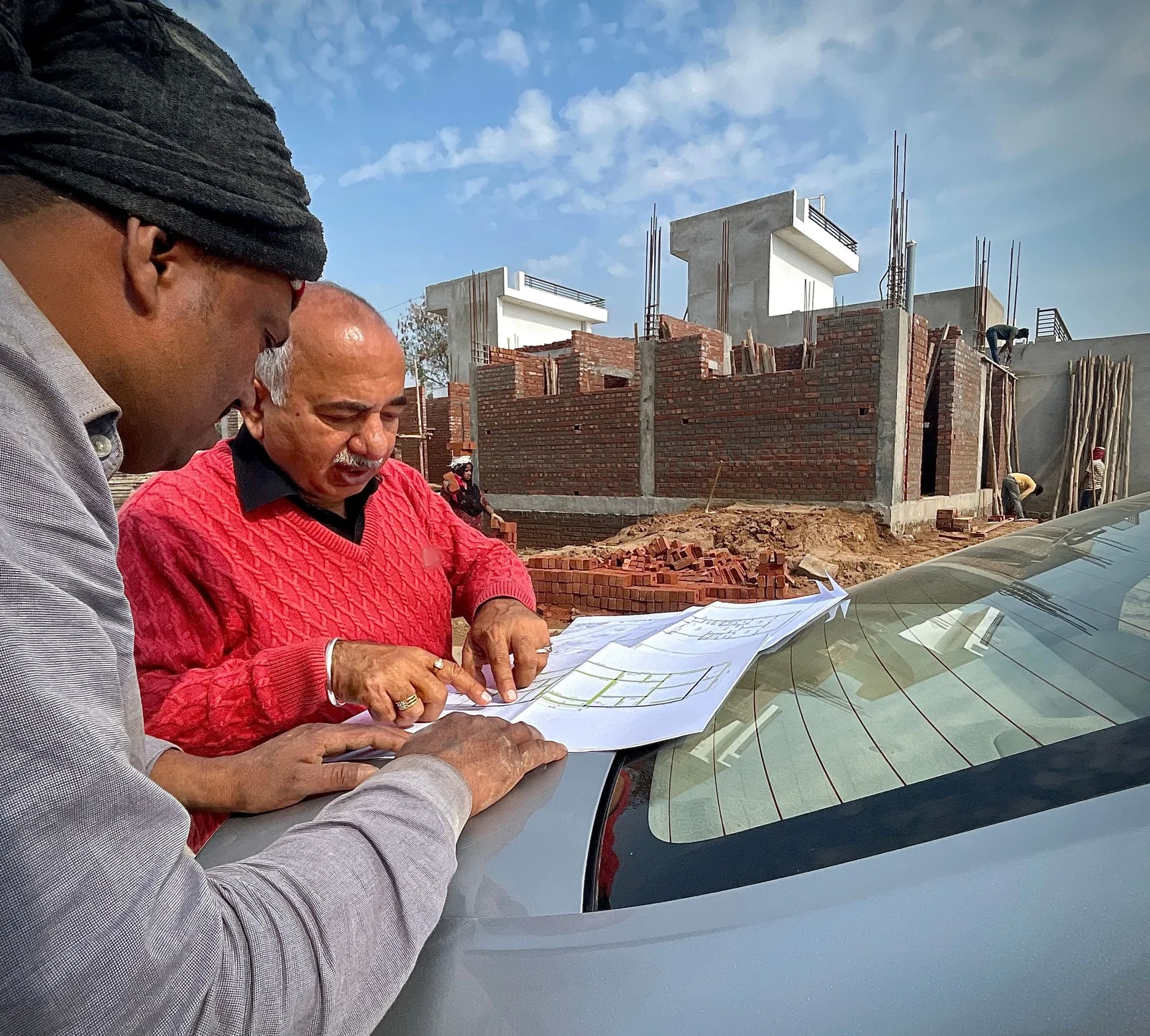
The guidelines give the subsidy to borrowers who have submitted the approved layout plan to the lender, as the state's rules require. The plan need not be insisted on where a state allows deemed approval or a pre-approved building plan. Either way, the property is checked before the subsidy is, and you should check it first.
सब्सिडी बाद में — पहले ज़मीन की जाँच।
Subsidy baad mein — pehle zameen ki jaanch.
This guide promises nobody a subsidy; your lender and the portal decide.
See it for yourself on the map — boundaries, plans and paperwork on one screen.
Check the colony's registration and sanctioned layout before you apply →Questions people ask
Who is eligible for PMAY-U 2.0 home loan subsidy?
Urban families with annual household income up to ₹9 lakh, where no member (husband, wife, unmarried children) owns a pucca house anywhere in India and none was allotted a government scheme house in the last 20 years.
How much subsidy will I get under PMAY-U 2.0?
At most ₹1.80 lakh: 4 per cent a year on the first ₹8 lakh of the loan for up to 12 years. A smaller loan or shorter tenure earns proportionately less.
Is PMAY subsidy available on a plot loan?
No. A loan for land alone is not covered. A loan to build a house, or to buy a house or flat, is.
How is the PMAY-U 2.0 subsidy paid?
In five equal yearly instalments credited to your home-loan account, reducing the principal, while the loan is live and more than half the principal is still outstanding.
Where the facts come from. The facts and figures in this post come from verified government sources and verified RERA-registered brokers.
Indori Zameen is a private platform. It is not a government body and is not affiliated with one — always confirm a record with the concerned authority before you commit money.
Share this post
Related posts
 Money8 min read
होम लोन से टैक्स बचेगा? पहले रीजीम देखिए।
Money8 min read
होम लोन से टैक्स बचेगा? पहले रीजीम देखिए।
Home loan tax benefits: interest, principal and the regime you choose
The ₹2 lakh interest and ₹1.5 lakh principal deductions live only in the old regime. How each works, for joint owners and while a house is built.
3 Oct 2026 Money7 min read
बैंक क्या-क्या जाँचता है?
Money7 min read
बैंक क्या-क्या जाँचता है?
What the bank checks before it lends on a property
Before a home loan, a lawyer and a valuer examine the property at the bank's cost. What each one checks, and why a refusal is information.
3 Oct 2026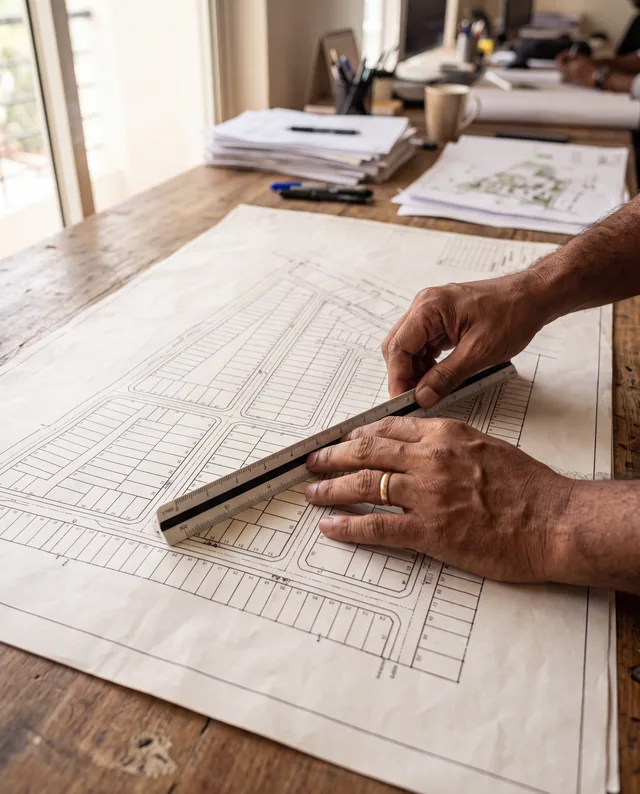 Maps & plans8 min read
नक्शा पढ़ना सीखिए।
Maps & plans8 min read
नक्शा पढ़ना सीखिए।
How to read a sanctioned layout plan
Plot numbers, road widths, open space, the reserved series and boundary lengths: how to read each one off a sanctioned layout plan before you pay.
8 Sep 2026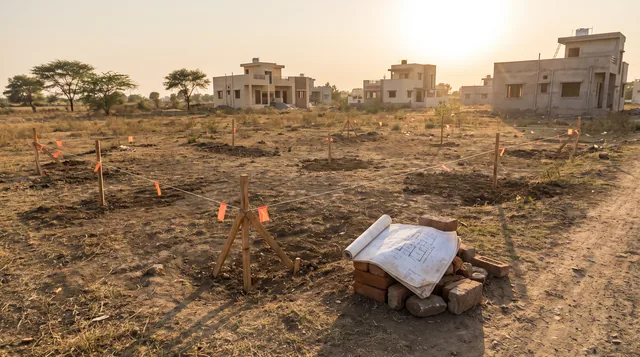 Maps & plans8 min read
नक्शा पास कराए बिना नींव मत डालिए।
Maps & plans8 min read
नक्शा पास कराए बिना नींव मत डालिए।
Building permission: getting the city's approval to build your house
Owning a plot in Indore does not let you build on it. How building permission works on ABPAS, what goes in the file, the fees, and the clock.
3 Oct 2026Tagged loan, instagram-series, how-to, layout-plan.
Read it. Then check it on the map.
Every colony's boundary, its approved layout, its zoning and its paperwork — on one screen. Signing in is free.