
बैंक क्या-क्या जाँचता है?
What the bank checks before it lends on a property
The lender sends a lawyer and a valuer to look at the property you are buying; here is what each one checks, and how to get their findings.

On this page
Before it lends, a bank checks the property as closely as it checks you. Two people do it, independently: an empanelled advocate searches the title, and an empanelled valuer visits the land, measures it and puts a value on it. Both work for the bank, but what they find is exactly what you need to know before you buy.
The bank is checking the property, not only you
Most buyers think of a home-loan application as a test of themselves: salary slips, bank statements, credit score, age. That part is real. But a home loan is secured on the property, and if the loan goes bad the property is what the bank falls back on. So the lender examines the house or plot with the same care it gives your income, through two separate reports.
The Reserve Bank expects every bank to have a board-approved policy for valuing the properties it lends against, with the valuation done by professionally qualified, independent valuers. It also expects approvals from the authorities to be in place before the money is released, and lenders are not to finance property in unauthorised colonies.
| The legal search | The technical valuation | |
|---|---|---|
| Who | An advocate on the lender's panel | A valuer on the lender's panel |
| Question | Does the seller own it cleanly, and can they sell it to you? | Does the property exist as described, and what is it worth today? |
| Where the work happens | In the registry and the papers | On the land itself |
Both reports are commissioned to protect the bank's money, not yours. The findings are still the ones you would otherwise have paid a lawyer and a surveyor for.
The legal search: five questions about the past
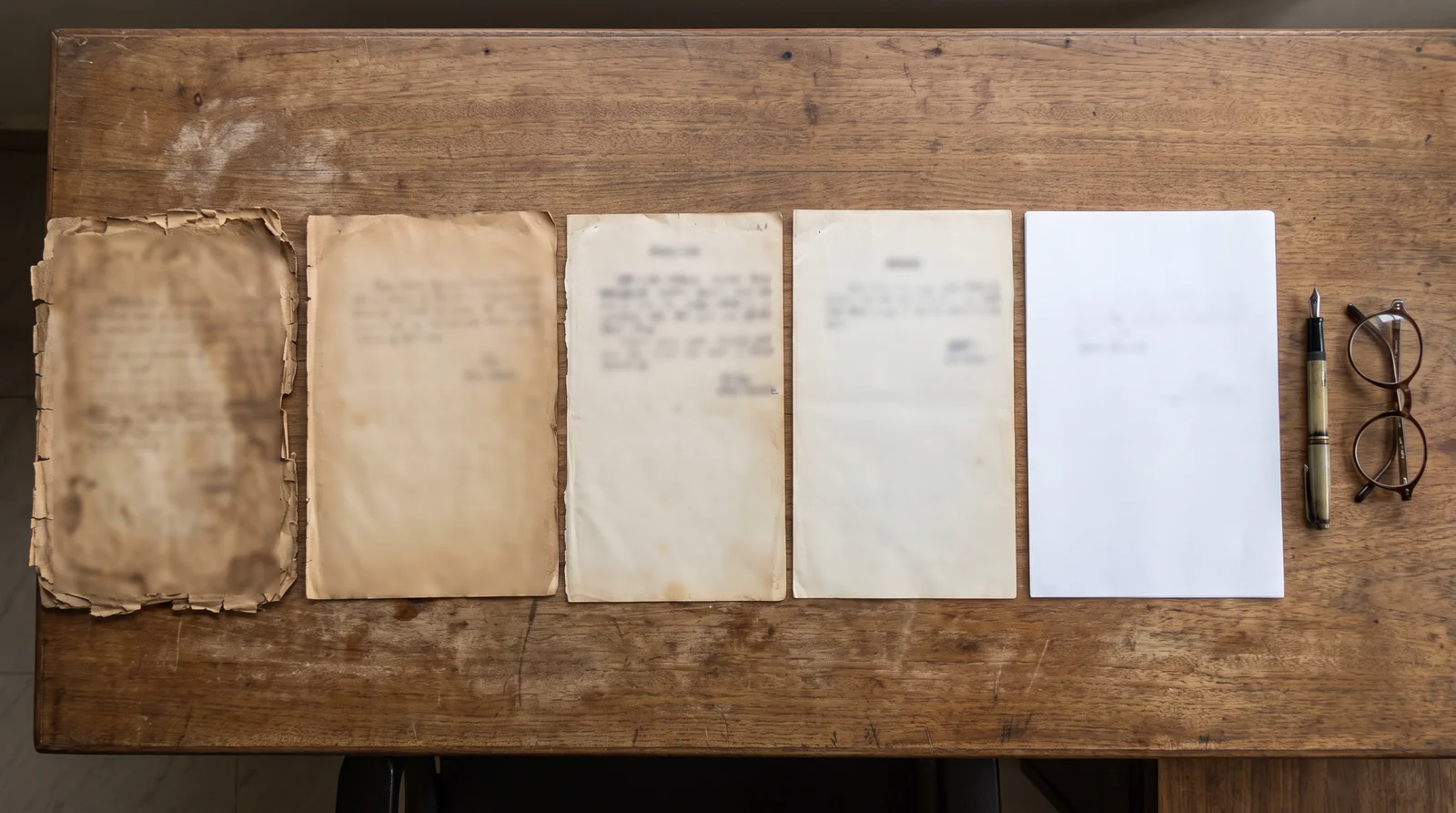
The advocate runs the title backwards through the registry, deed by deed, and looks for five things.
- An unbroken chain of ownership. Each transfer registered, each deed naming the person who sold under the deed before it. A sale of immovable property worth a hundred rupees or more passes only by a registered instrument, so a missing link is a missing deed.
- Anything registered against the property. An existing mortgage, an attachment, a court order.
- Whether every owner has signed. Heirs, co-owners, anyone holding a share nobody mentioned at the first meeting.
- Whether the land may be transferred at all. Restricted, allotted, leasehold or agricultural land comes with conditions on who may buy it and how.
- Whether the approvals exist. The colony's registration, the sanctioned layout, the building permission.
The technical visit: someone stands on your plot
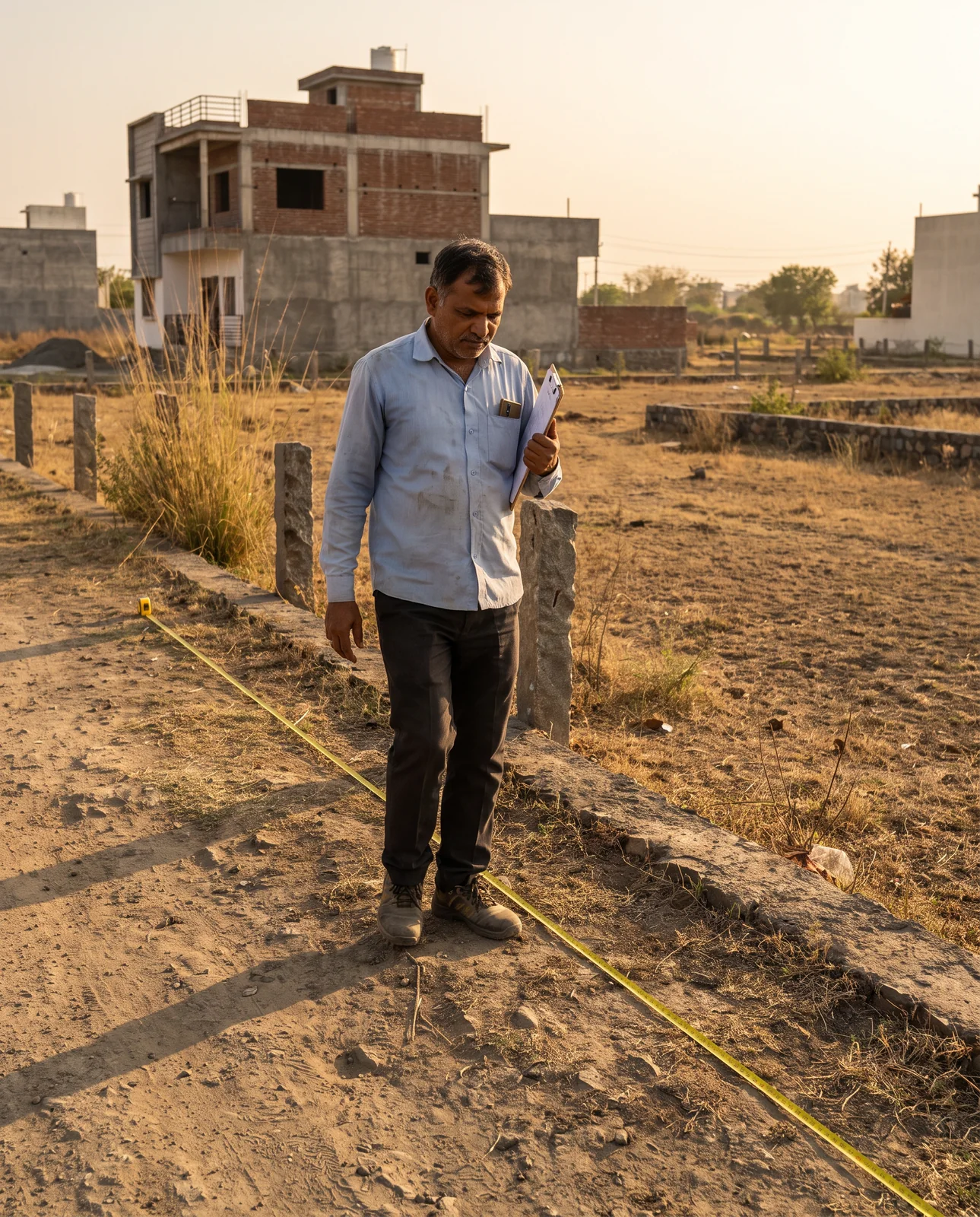
The valuer arrives with a tape and a form. They confirm that the property is where the papers say it is, measure it against the sanctioned layout, note the width of the road outside and the stage of any construction, and put a market value on it.
That value matters twice. The bank lends a share of the property's value as its own valuer assessed it, so a low valuation can mean a smaller loan and a larger down payment. And if the valuation comes in well below the price you have agreed, you have just been told, free of charge, that you may be overpaying.
If the bank says no, find out why before you argue
This is the most useful sentence in the guide. When a loan is refused, most buyers treat it as an obstacle and go looking for a lender who will say yes.
Sometimes the reason really is about you: income, age, existing loans. Often it is about the property, and a professional has just told you so at no cost to you. A missing approval or a gap in the chain does not go away because a second bank was less careful.
Ask in plain words: "Was this declined on my profile, or on the property?" If there is a legal or technical report, ask to see it. Lenders charge a processing fee on the application, so the question is a fair one.
बैंक ने मना किया है तो वजह पूछिए — अगला बैंक मत ढूँढ़िए।
Bank ne mana kiya hai to vajah poochhiye — agla bank mat dhoondhiye.

Check it before the bank does
Everything the advocate and the valuer will look for can be looked at earlier, before you pay a token and before you apply. Ask the seller for the chain of deeds. Check whether the colony is registered and its layout sanctioned. Confirm your plot appears on that layout with the same number and size. The guide on plot loans and home loans explains what changes when the land is still bare.
जो बैंक देखेगा, वो आप पहले देख लीजिए।
Jo bank dekhega, vo aap pehle dekh lijiye.
See it for yourself on the map — boundaries, plans and paperwork on one screen.
See the colony's registration, sanctioned layout and zone before the bank's visit →Questions people ask
What does a bank check before giving a home loan on a property?
Two things about the property: a legal search of the title by an empanelled advocate, and a technical visit and valuation by an empanelled valuer. Your income and credit are checked separately.
Can I see the bank's legal and valuation report?
Ask. Lenders differ on what they share, but the findings concern the property you are buying, and asking whether a refusal was about you or the property is always reasonable.
Why did the bank value my property lower than the price?
The valuer puts a market value on what is actually there. A value well below your agreed price may mean you are paying too much, and the loan is sized on the bank's own assessment.
Home loan rejected because of property, what should I do?
Find out exactly what the advocate or valuer found before applying elsewhere. A defect in the title or a missing approval stays with the property whichever lender you try.
Will a bank give a loan in an unapproved colony?
The Reserve Bank's housing-finance rules say lenders should not finance property in unauthorised colonies and should have the required approvals in place before disbursing.
Where the facts come from. The facts and figures in this post come from verified government sources and verified RERA-registered brokers.
Indori Zameen is a private platform. It is not a government body and is not affiliated with one — always confirm a record with the concerned authority before you commit money.
Share this post
Related posts
 Money8 min read
प्लॉट पर लोन
Money8 min read
प्लॉट पर लोन
Plot loans are not home loans
Less of the value funded, fewer years, sometimes a deadline to build, a tax break that waits — and a bank that checks the ground before it checks you.
8 Sep 2026 Papers & law7 min read
साफ़ टाइटल एक ज़ंजीर है।
Papers & law7 min read
साफ़ टाइटल एक ज़ंजीर है।
Clear title is not a certificate: how to read the chain of title
Nobody issues a certificate saying your land is fine. Clear title is a chain of owners with no gap, traced back thirty years. How to read it, and its limits.
3 Oct 2026 Papers & law7 min read
काग़ज़ पूरे हैं?
Papers & law7 min read
काग़ज़ पूरे हैं?
The five documents that decide whether land is safe
The land is usually fine; the paper decides. The five documents that separate a plot you can build on from one you can only argue about, and how to read each.
8 Sep 2026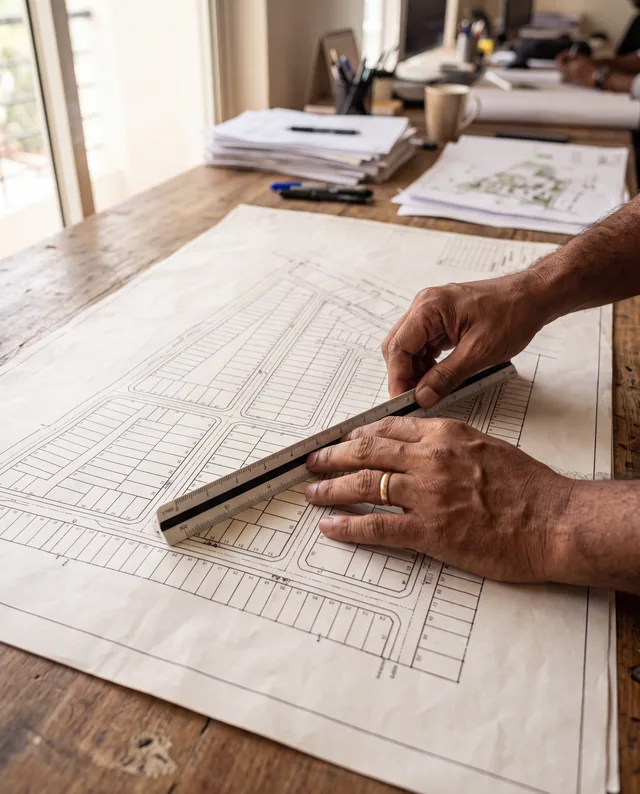 Maps & plans8 min read
नक्शा पढ़ना सीखिए।
Maps & plans8 min read
नक्शा पढ़ना सीखिए।
How to read a sanctioned layout plan
Plot numbers, road widths, open space, the reserved series and boundary lengths: how to read each one off a sanctioned layout plan before you pay.
8 Sep 2026Tagged loan, checklist, instagram-series, sale-deed, encumbrance.
Read it. Then check it on the map.
Every colony's boundary, its approved layout, its zoning and its paperwork — on one screen. Signing in is free.