
ज़मीन आपकी, बिल्डिंग उनकी — हिस्सा पक्का कीजिए।
Joint development: giving your land to a builder for a share of flats
What a landowner is really agreeing to in a joint development agreement: the share, the six clauses, the RERA seat you may end up in, and when the tax falls due.
On this page
- The deal in one line: you pay with land, you are paid in flats
- Before you negotiate: your share is a share of what the plan allows
- "Three flats" is not a share; three named flats is
- Six things the agreement must put in writing
- Under RERA, you may be a promoter too
- Tax, in outline: it comes at completion, not at signing
- Red flags: five clauses to refuse
- Choosing the builder: a partner for years
- Before the first meeting
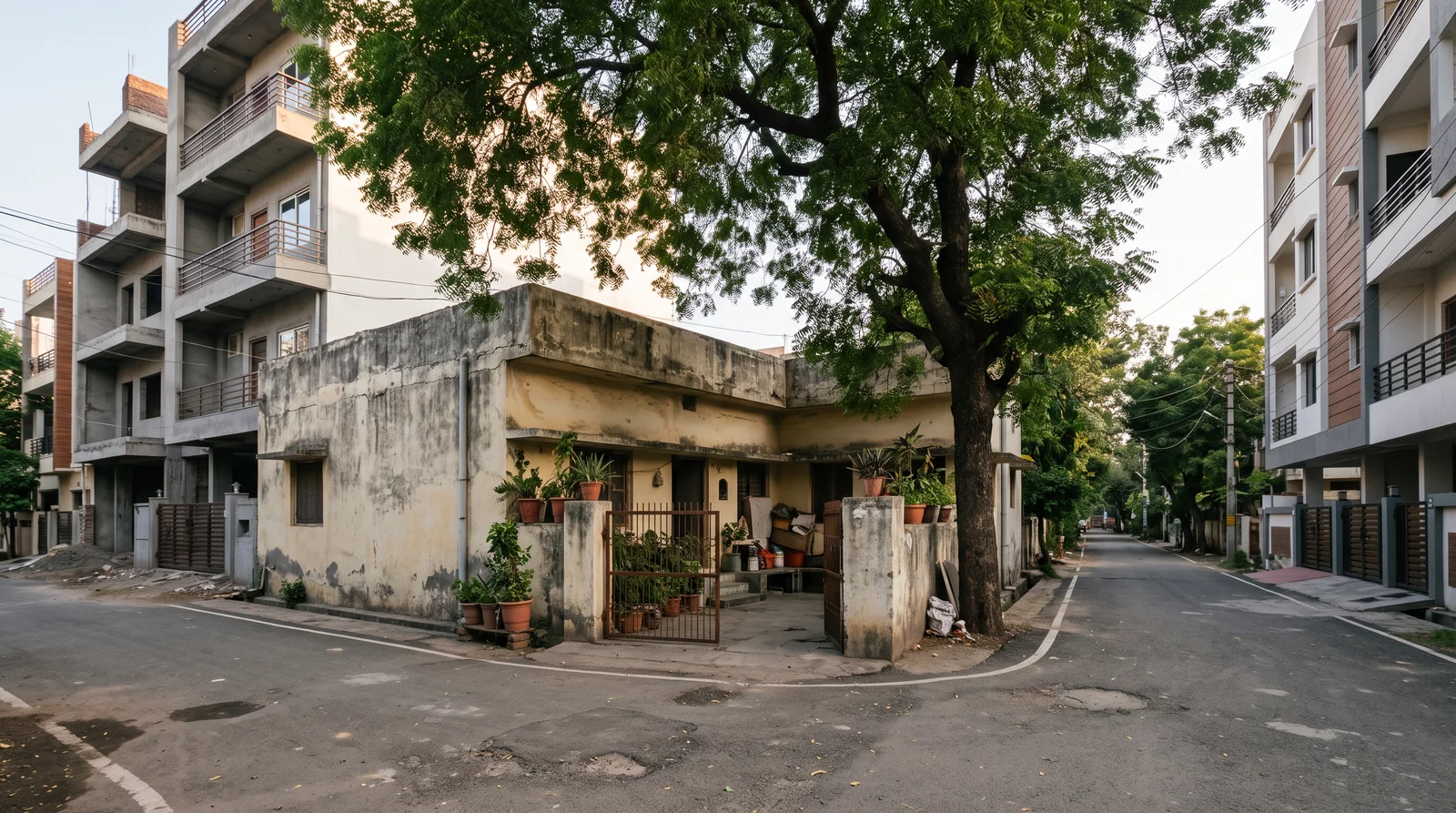
In a joint development agreement you hand your plot or house, and the right to build on it, to a builder. The builder obtains the sanctions, builds, and sells its own share of the flats; you receive an agreed share, sometimes with cash. It works only if the share, the clauses and the builder are settled before you sign.
The deal in one line: you pay with land, you are paid in flats
| You give | The builder | You get |
|---|---|---|
| The land or the old house, and the right to build on it | Gets the sanction, builds, and sells its own share of the flats | An agreed share of the flats, and sometimes cash as well |
Your land is your investment; the builder's money and work are its own. The agreement has to do the work a price normally does.
In July 2026 Indore's municipal corporation was reported to be moving to treat apartment projects on plots inside developed colonies as colonies, with development-permission and shelter charges levied on them. Somebody pays those charges. The agreement should say who.
ज़मीन आपकी, बिल्डिंग उनकी — हिस्सा पक्का कीजिए।
Zameen aapki, building unki — hissa pakka keejiye.
Before you negotiate: your share is a share of what the plan allows
Three facts set the size of the cake before anyone slices it.
- The zone. Residential, commercial or mixed: the master-plan zone decides whether flats are allowed on your plot at all.
- The FAR. Floor area ratio is built floor area divided by plot area. It caps how much can ever be built, whatever the builder promises.
- The layout. Is your colony's layout sanctioned, and is your plot on it?
Know them before the first meeting.
"Three flats" is not a share; three named flats is
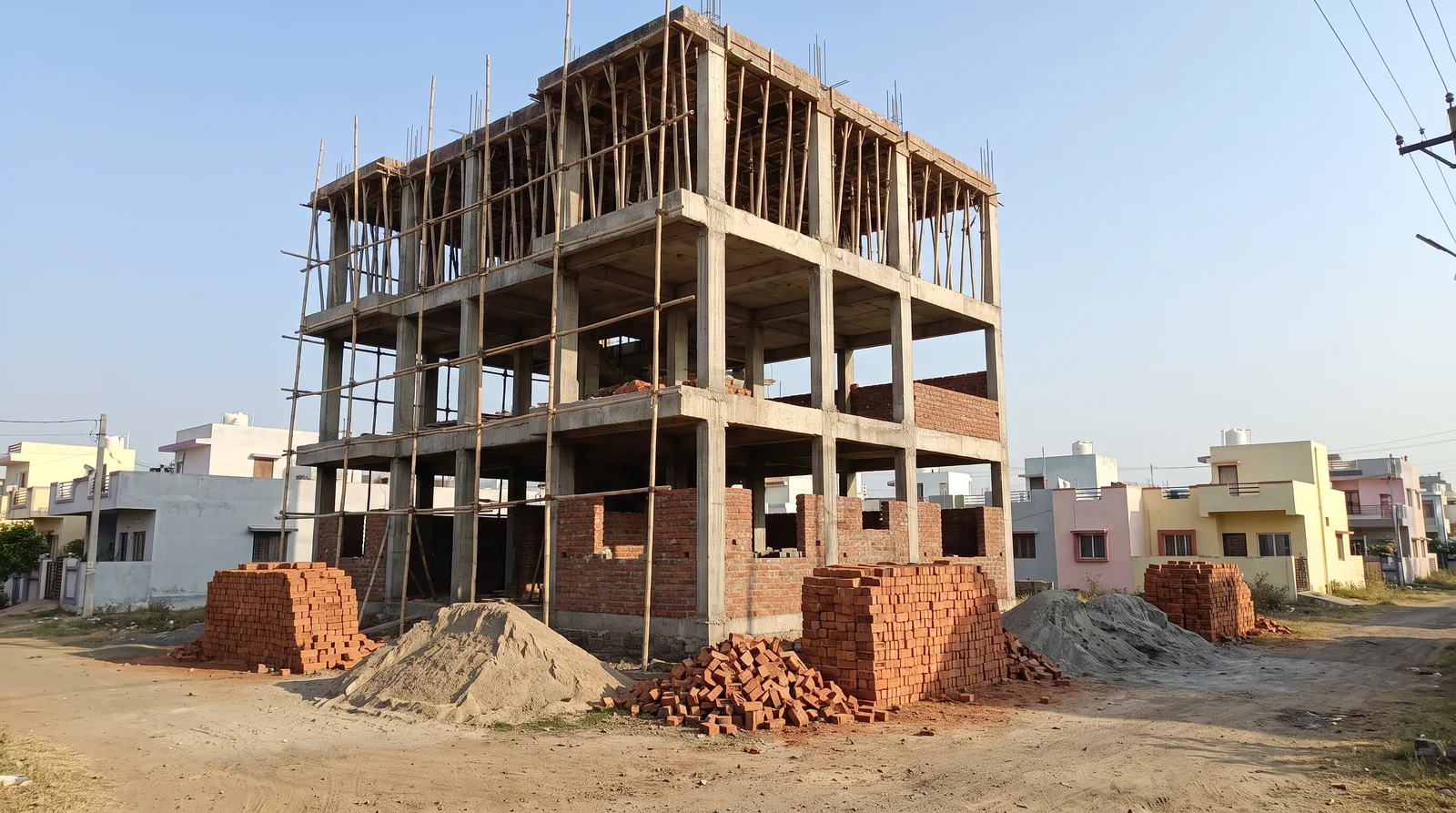
Take invented round numbers. A 3,000 sq ft plot; if the FAR were 2.0, 6,000 sq ft could be built. Say the sanctioned plan shows eight flats, and the owner agrees a share of three, leaving five for the builder to sell.
"Three flats" leaves the builder to decide which three. The agreement should name each of yours on the sanctioned plan: its floor, its facing, its carpet area and its parking. Not a percentage of built area that the builder allocates later.
No law fixes the split; it is negotiated. The real FAR for your plot comes from the master plan.
Six things the agreement must put in writing
- The share. Which flats, exactly: floor, facing, carpet area and parking, marked on the plan. Any cash, with its payment dates.
- The specification. A schedule, not adjectives. Structure, flooring, fittings, lift, water, listed item by item, so "premium" cannot shrink.
- The date. Completion defined, with "complete" meaning the completion certificate, not a letter from the builder.
- The delay. A penalty for every month late, and a date after which you may end the agreement.
- The sanctions. Who applies for building permission, who pays the fees and charges, and what happens if permission is refused.
- RERA. Who registers the project, who is named as promoter, and who answers to the buyers of the builder's flats.
Then register it and stamp it. The tax treatment described below applies only to a registered agreement, and in Madhya Pradesh a development agreement carries its own entry in the stamp schedule.
Under RERA, you may be a promoter too
The builder's flats are sold to strangers, which brings in the RERA Act, 2016.
- Registration before a single sale. A project on more than 500 sq m of land, or with more than eight flats, must be registered with MP RERA before any flat is advertised or sold. Smaller projects are exempt, and their buyers get none of the Act's safeguards.
- Builder and seller are both promoters. Where one person builds and another sells, the Act treats both as promoters, jointly liable. If you sell your own flats, that can include you.
- A public report every quarter. A registered project must post the flats booked, the approvals taken and pending, and its status on the RERA website. Read it.
Tax, in outline: it comes at completion, not at signing
For an individual or a Hindu undivided family, the order of events is this.
- Sign and register. No capital gains tax yet.
- Sanction and construction. Any cash the builder pays you carries 10 per cent TDS, whatever the amount.
- Completion certificate, for the whole project or a part. Your gain is taxed in this year. The value is the stamp duty value of your share on the date of the certificate, plus any cash.
- Selling a flat later is a separate sale with its own gain. Its cost is the value that was taxed at completion.
Transfer your share before the completion certificate and the deferral falls away: the gain is taxed that year, normally. GST on building your flats is the builder's to pay, at completion or first occupation, whichever is earlier.
टैक्स दस्तख़त के दिन नहीं, कम्प्लीशन सर्टिफ़िकेट के साल में।
Tax dastakhat ke din nahin, completion certificate ke saal mein.
Red flags: five clauses to refuse
Choosing the builder: a partner for years
This is a partnership for the length of the project. Check the builder as a partner would.
- Walk through two finished projects. Ask to see their completion certificates and compare the dates with what was promised.
- Meet earlier landowners, not the brochure. Did their flats arrive on time, and as specified?
- Read their record on MP RERA. Past registrations, the quarterly updates on current sites, and any orders against them.
- Ask how the building is financed, and whether your land will be mortgaged for the builder's loan. Put the answer in the agreement.
More in how to verify a developer.
Before the first meeting
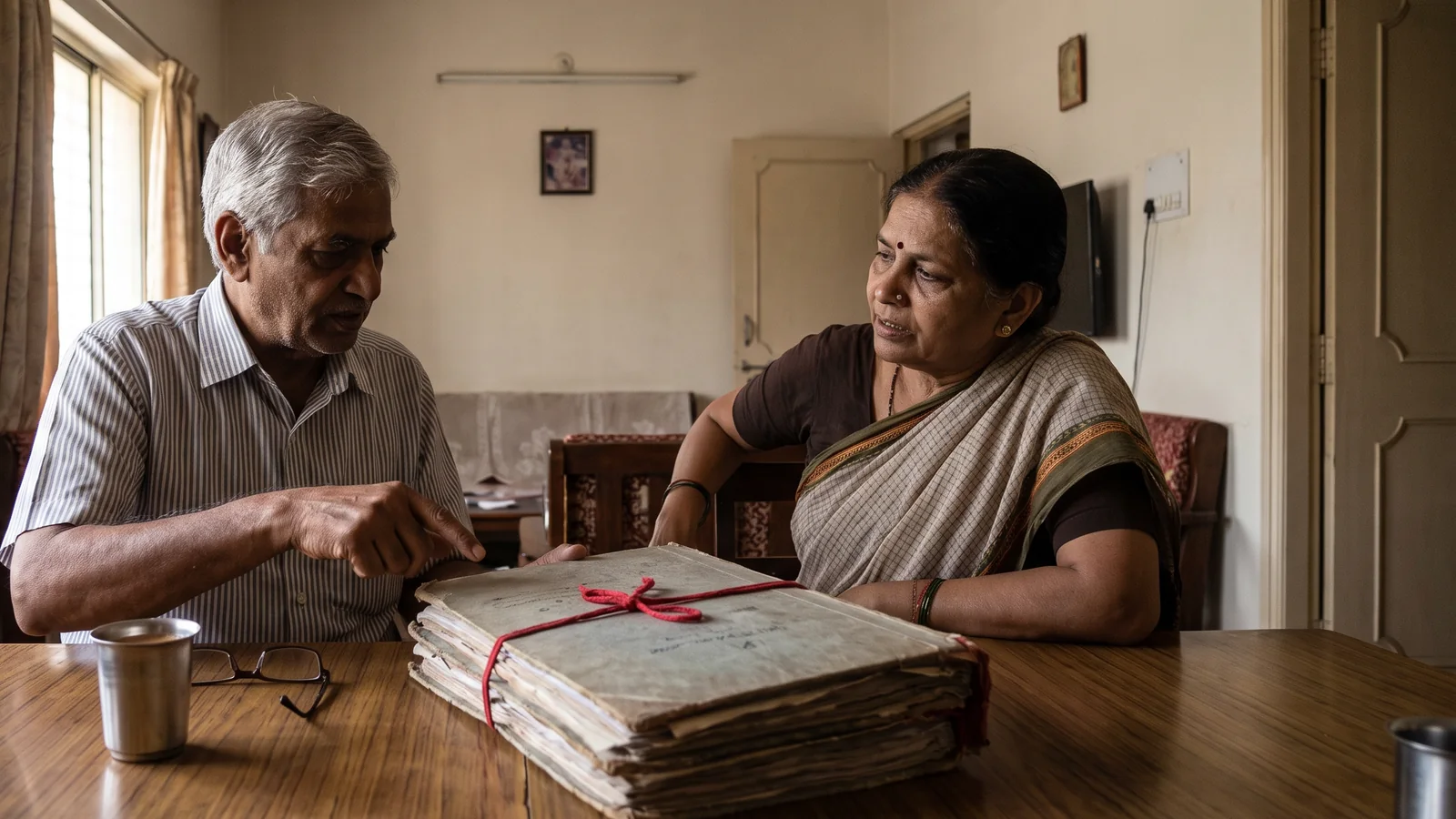
Look up your plot's colony record, sanctioned layout and master-plan zone before the first meeting. This is general information, not legal or tax advice: have a lawyer read the agreement and a chartered accountant work out the tax before you sign.
See it for yourself on the map — boundaries, plans and paperwork on one screen.
Check your plot's master-plan zone before the builder's meeting →Questions people ask
What is a joint development agreement in real estate?
An agreement in which a landowner lets a builder develop a project on their land in return for a share of the built flats, sometimes with cash. The builder sells its own share.
When is capital gains tax payable on a joint development agreement?
For an individual or HUF with a registered agreement, in the tax year the completion certificate is issued, on the stamp duty value of their share on that date plus any cash. Selling the share earlier ends the deferral.
Is TDS deducted on cash paid to the landowner under a JDA?
Yes. The builder deducts 10 per cent on any cash paid under the agreement, with no minimum amount.
Does a landowner become a promoter under RERA?
Possibly. Where one person builds and another sells, the Act treats both as promoters, jointly liable, so selling your share of flats can put you in that position.
Where the facts come from. The facts and figures in this post come from verified government sources and verified RERA-registered brokers.
Indori Zameen is a private platform. It is not a government body and is not affiliated with one — always confirm a record with the concerned authority before you commit money.
Share this post
Related posts
 Papers & law9 min read
ज़मीन देख ली — बनाने वाले को देखा?
Papers & law9 min read
ज़मीन देख ली — बनाने वाले को देखा?
How to verify a developer in Indore
A clean plot from a developer who does not finish is still a problem. An afternoon in a colony they completed, five things to look at, what they must prove.
8 Sep 2026 Papers & law7 min read
रजिस्टर्ड है — पर किसका?
Papers & law7 min read
रजिस्टर्ड है — पर किसका?
What RERA does, and what it does not
Who must register with MP RERA, what an agent's number means, and the four checks a registration does not replace: title, ownership, coverage and sanction.
8 Sep 2026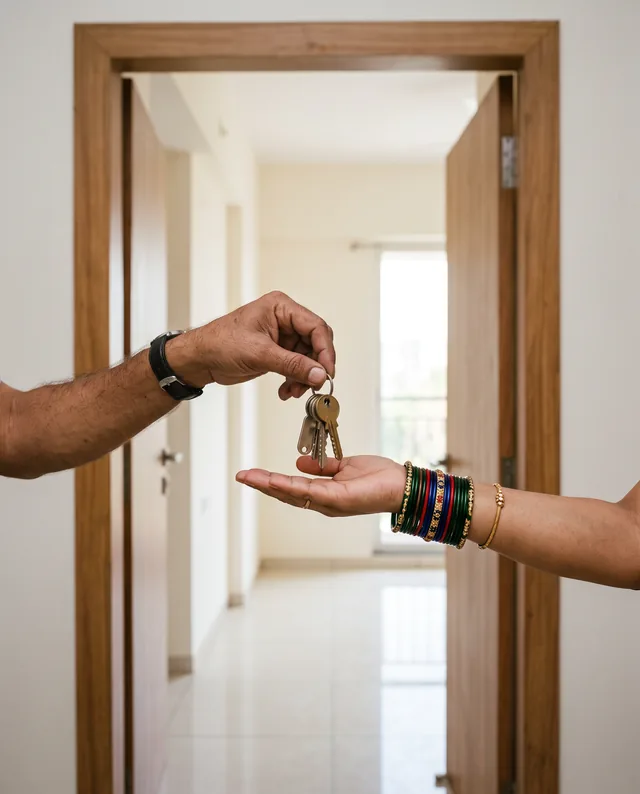 Papers & law8 min read
CC और OC — बिना इनके क़ब्ज़ा मत लीजिए।
Papers & law8 min read
CC और OC — बिना इनके क़ब्ज़ा मत लीजिए।
Occupancy certificate and completion certificate: two papers, two jobs
A completion certificate says the building matches its plan. An occupancy certificate says you may live in it. Ask for both before you take the keys.
3 Oct 2026 Money8 min read
मुनाफ़ा
Money8 min read
मुनाफ़ा
Capital gains when you sell property
Selling a plot or house in 2026? The 24-month rule, the 12.5% rate, the pre-July 2024 choice and three ways to reinvest the gain, under the 2025 Act.
3 Oct 2026Tagged developer, flat, rera, master-plan, checklist, instagram-series.
Read it. Then check it on the map.
Every colony's boundary, its approved layout, its zoning and its paperwork — on one screen. Signing in is free.