
क़ब्ज़ा मालिकाना हक़ नहीं है।
Possession is not ownership
Who holds a plot and who owns it are separate questions. How to find out who is on the land, what each kind of occupant means for you, and what to settle before you pay.

On this page
No. Possession is who holds the land today; ownership is whose title the records show. Usually they match. Sometimes a tenant, a caretaker, a relative or a stranger is on a plot the seller genuinely owns. Before you buy, find out who is on the land and on what basis, because the law will assume you knew.
Two questions, not one
Most buyers spend their effort on the first question: who owns this land? They read the sale deeds, check the revenue record, perhaps pay a lawyer for a title search. All of that is necessary. None of it tells you who is actually standing on the plot.
That is the second question, and it is answered only on the ground. The owner on the record may live in another city and not have visited in years. The person on the land may have been there, with or without anyone's permission, for a long time. A clean title over an occupied plot is still a purchase with a problem attached.
काग़ज़ बताता है मालिक कौन है; ज़मीन बताती है बैठा कौन है।
Kaagaz batata hai maalik kaun hai; zameen batati hai baitha kaun hai.
The law assumes you asked
There is a specific reason this matters to a buyer and not only to the seller. The Transfer of Property Act says that anyone acquiring immovable property is deemed to have notice of the title, if any, of whoever is in actual possession of it at the time.
In plain terms: whatever rights the occupant holds, you are treated as having known about them, whether you asked or not. You cannot later say that nobody told you about the tenant. Walking the land, and asking, is the only way to find out what you are already deemed to know.
The question to ask on the ground
Stand on the plot and put one question to the seller and to the real estate agent: who is on this land right now, and on what basis? Then check the answer yourself. The answer will fall into one of two kinds, and they lead to very different places.
Somebody with permission
A tenant, a caretaker, a watchman, a relative who was told they could stay. Their possession began with the owner's consent, and the Supreme Court has long held that possession which began with permission does not become hostile merely because it lasts a long time.
That is reassuring about the title. It is not reassuring about the timetable. A person in occupation with permission still has to leave, and getting them out can take longer than the sale itself, particularly if they dispute the terms. The seller is bound to give you such possession as the property allows when you ask for it, so this is the seller's job to finish before registration, not yours to inherit after.
Somebody without permission
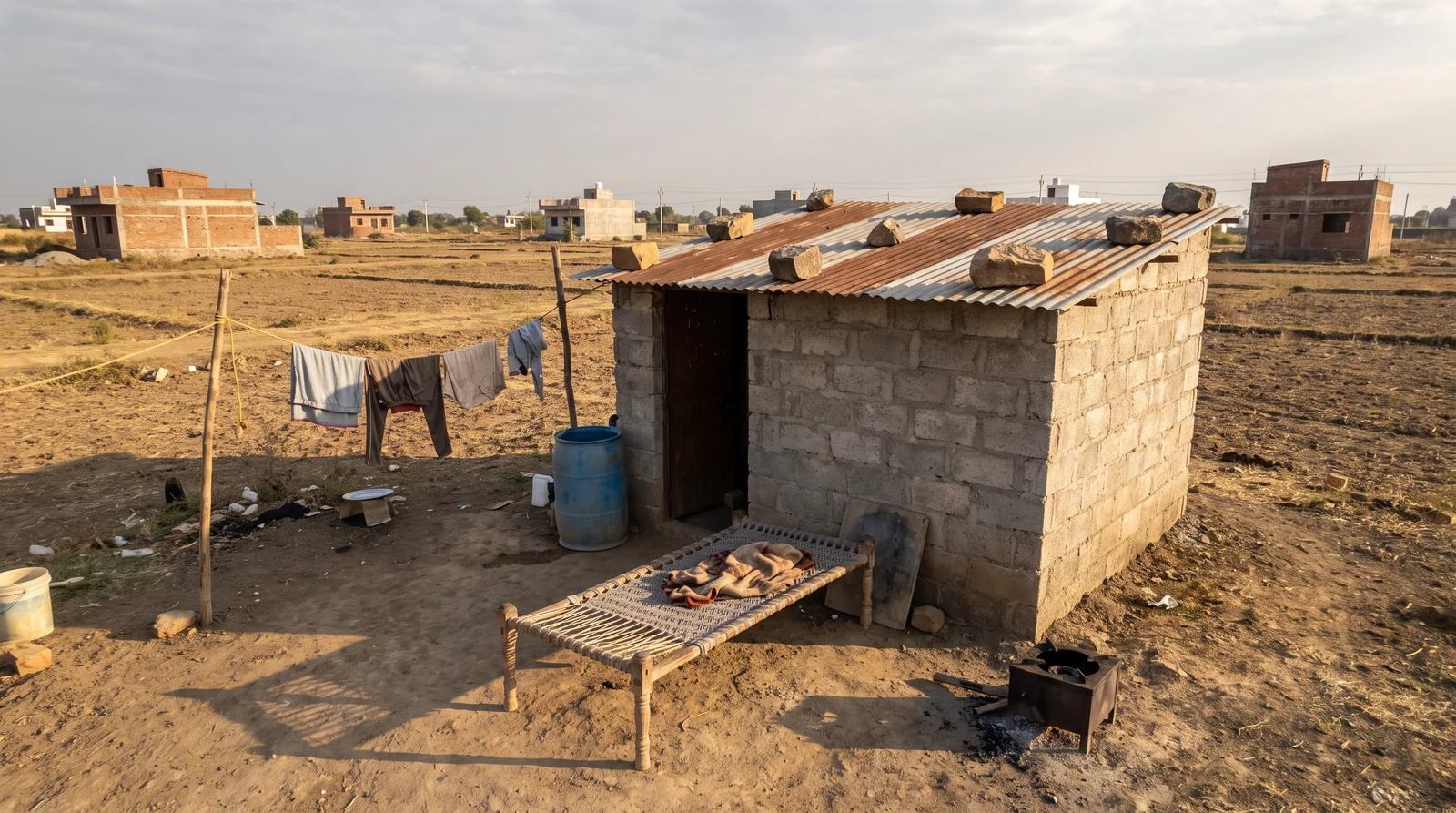
This is the harder case. An owner who wants to recover land from someone holding it on their own account, with nobody's permission, must normally sue within twelve years from the time that possession became adverse to the owner. When that period runs out, the Limitation Act does not merely bar the suit: it extinguishes the owner's right to the property.
In 2019 the Supreme Court held that a person who has completed that period can go to court to have their title declared, not only use it as a defence. The plea is not easy to make out. The possession has to be long, continuous, open and hostile to the owner. But it can be made, and an absent owner is exactly the kind of owner it is made against. For land belonging to the government, the period in the Act is thirty years.
Empty land is not the same as safe land
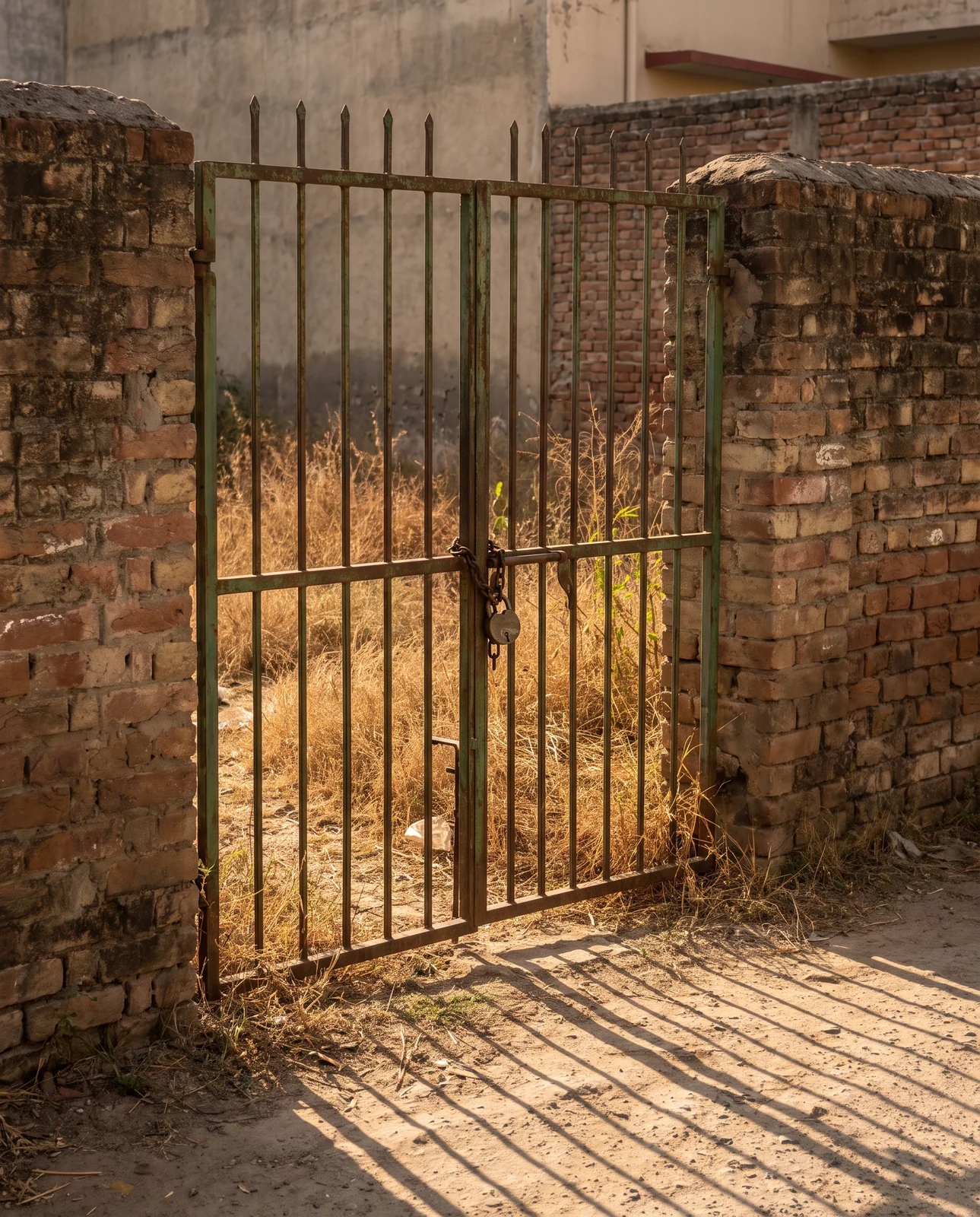
A vacant, walled plot feels like the safest thing to buy: nobody there, nothing to dispute. Look again. A wall and a lock tell you somebody is controlling access. Who built the wall, and who holds the key? If the answer is not the seller, you have found an occupant, even if nobody sleeps there.
Long absence is also what makes a plot vulnerable in the first place. A plot nobody has visited for years is the one where somebody else may have started to behave like its owner.
Why "we will clear it ourselves" is a bad sign
Sometimes the answer to an occupant is a confident promise that they will be removed. The law does not favour removal by force, even by a genuine owner. A person put out of immovable property without their consent, other than by due process of law, can sue to recover possession within six months, and the court can restore them regardless of who holds the better title. Removal by muscle can simply send the matter back to the start, with you now in the middle of it.
What to check, in order
- Read the record. Confirm whose name the sale deeds and the revenue record carry. That tells you who may sell.
- Walk the plot, all of it. Look for any structure, bedding, cooking, crops, stored material, a hut in a corner, a path worn by daily use.
- Ask who holds the key. A lock you were not given a key to belongs to somebody.
- Talk to the neighbours. Ask who comes and goes, and for how long.
- Ask the seller in writing. The agreement should state that the land will be handed over vacant on registration, and the seller should hand over the keys that day.
पहले देखिए कौन बैठा है, फिर पूछिए कितने का है।
Pehle dekhiye kaun baitha hai, phir poochhiye kitne ka hai.
Two jobs, both before the money
Reading the record tells you who owns the land. Walking it tells you who holds it. Neither replaces the other, and both are cheap compared with the cost of finding out after registration. If you want a head start, compare the outline of the plot on a recent satellite view with what you see on the ground; our guide to what a satellite image can show you explains how to read one.
See it for yourself on the map — boundaries, plans and paperwork on one screen.
Check the colony's recorded boundary and layout before you walk the plot →Questions people ask
Can a tenant claim ownership of property after 12 years?
Not merely by staying that long. Possession that began with the owner's permission does not become adverse simply because of its length, though a tenant still has to be removed lawfully.
What is adverse possession in India?
Possession held openly, continuously and against the owner's title. If the owner does not sue within twelve years from when it became adverse, the Limitation Act extinguishes the owner's right; for government land the period is thirty years.
How do I check if a plot is occupied before buying?
Walk the whole plot, look for any structure or sign of daily use, ask who holds the keys, talk to neighbours, and get the seller to promise vacant possession in writing.
Can the owner remove an illegal occupant by force?
The law does not favour it. A person dispossessed without consent and without due process can sue within six months to recover possession, whatever the title.
Does a clean title search mean the plot is free of occupants?
No. A title search reads documents. Whether somebody is physically on the land is only answered by visiting it.
Where the facts come from. The facts and figures in this post come from verified government sources and verified RERA-registered brokers.
Indori Zameen is a private platform. It is not a government body and is not affiliated with one — always confirm a record with the concerned authority before you commit money.
Share this post
Related posts
 Buying guides8 min read
ज़मीन पर जाकर क्या देखें।
Buying guides8 min read
ज़मीन पर जाकर क्या देखें।
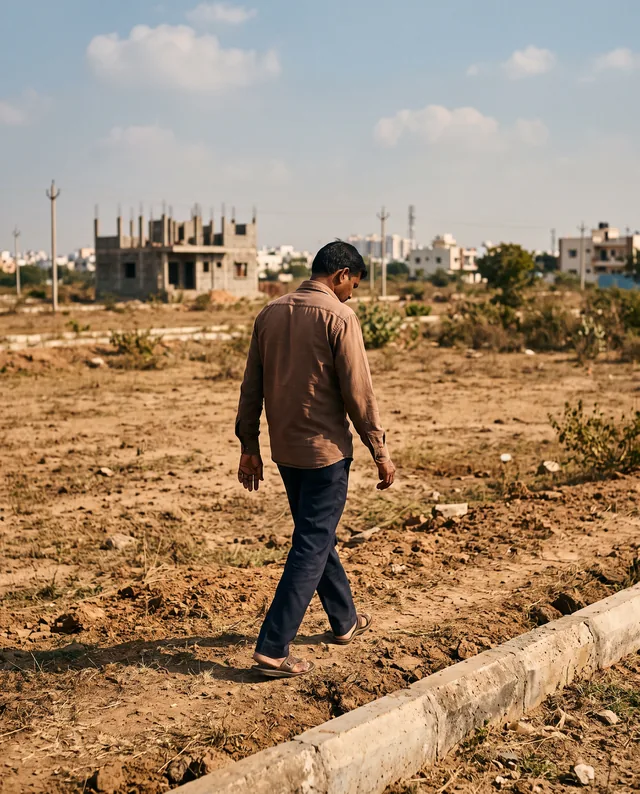
The plot site visit: what to check with your feet
Walk all four sides, pace the road, return at another hour, look down and up, ask the neighbours, photograph the markers with the date on. The site visit list.
8 Sep 2026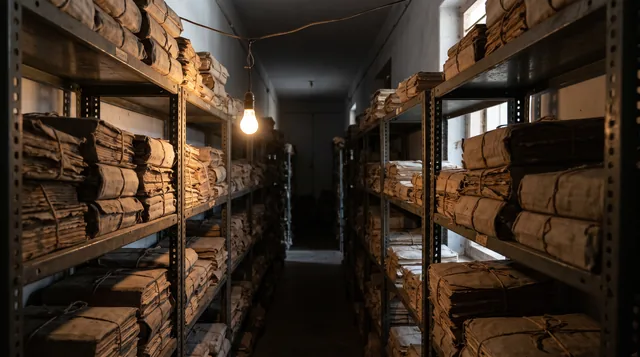 Papers & law7 min read
साफ़ टाइटल एक ज़ंजीर है।
Papers & law7 min read
साफ़ टाइटल एक ज़ंजीर है।
Clear title is not a certificate: how to read the chain of title
Nobody issues a certificate saying your land is fine. Clear title is a chain of owners with no gap, traced back thirty years. How to read it, and its limits.
3 Oct 2026 Papers & law8 min read
सरहद का झगड़ा।
Papers & law8 min read
सरहद का झगड़ा।
How boundary disputes start, and the cheap half of avoiding them
Boundary disputes begin as a few feet nobody measured. The six ways a line goes wrong, and the five cheap things to do before you build.
8 Sep 2026 Maps & plans7 min read
ऊपर से देखिए।
Maps & plans7 min read
ऊपर से देखिए।
Your plot from above: what a satellite image tells you, and what it cannot
A satellite view shows roads, neighbours and where water collects. It cannot show your boundary, your plot number, the owner or the zone.
3 Oct 2026Tagged sale-deed, boundary, myths, instagram-series, site-visit, checklist.
Read it. Then check it on the map.
Every colony's boundary, its approved layout, its zoning and its paperwork — on one screen. Signing in is free.