
ज़मीन पर जाकर क्या देखें।
The plot site visit: what to check with your feet
Six things only your own eyes and feet can tell you about a plot, and the half of the visit you can do from home before you get in the car.
On this page
- Two different jobs
- 1. Walk the boundary, all four sides
- 2. Measure the road, and pace that too
- 3. Go twice, at different hours
- 4. Look down, then look up
- 5. Talk to whoever already lives there
- 6. Photograph the corners and the markers, with the date on
- The list, to take along
- The half that can be done from home
- Where to check it yourself
On a plot site visit, do six things with your own feet and eyes: walk all four sides and count your paces, pace the width of the road at your plot, come back at a different hour, look at where the water goes and what runs overhead, talk to whoever already lives there, and photograph every corner and marker with the date stamp on.
Two different jobs
The paperwork tells you about the rights: who owns the land, what was sanctioned, what the city has planned around it. Only the ground tells you about the ground. No file will ever say that one side of the plot is shorter than the drawing, that the road pinches at the corner, or that the whole plot drains into its own middle. Those are things you find by standing there. The visit and the record answer different questions, and a buyer needs both answered.
हक़ काग़ज़ में लिखा है। हाल ज़मीन पर दिखता है।
Haq kaagaz mein likha hai. Haal zameen par dikhta hai.
1. Walk the boundary, all four sides
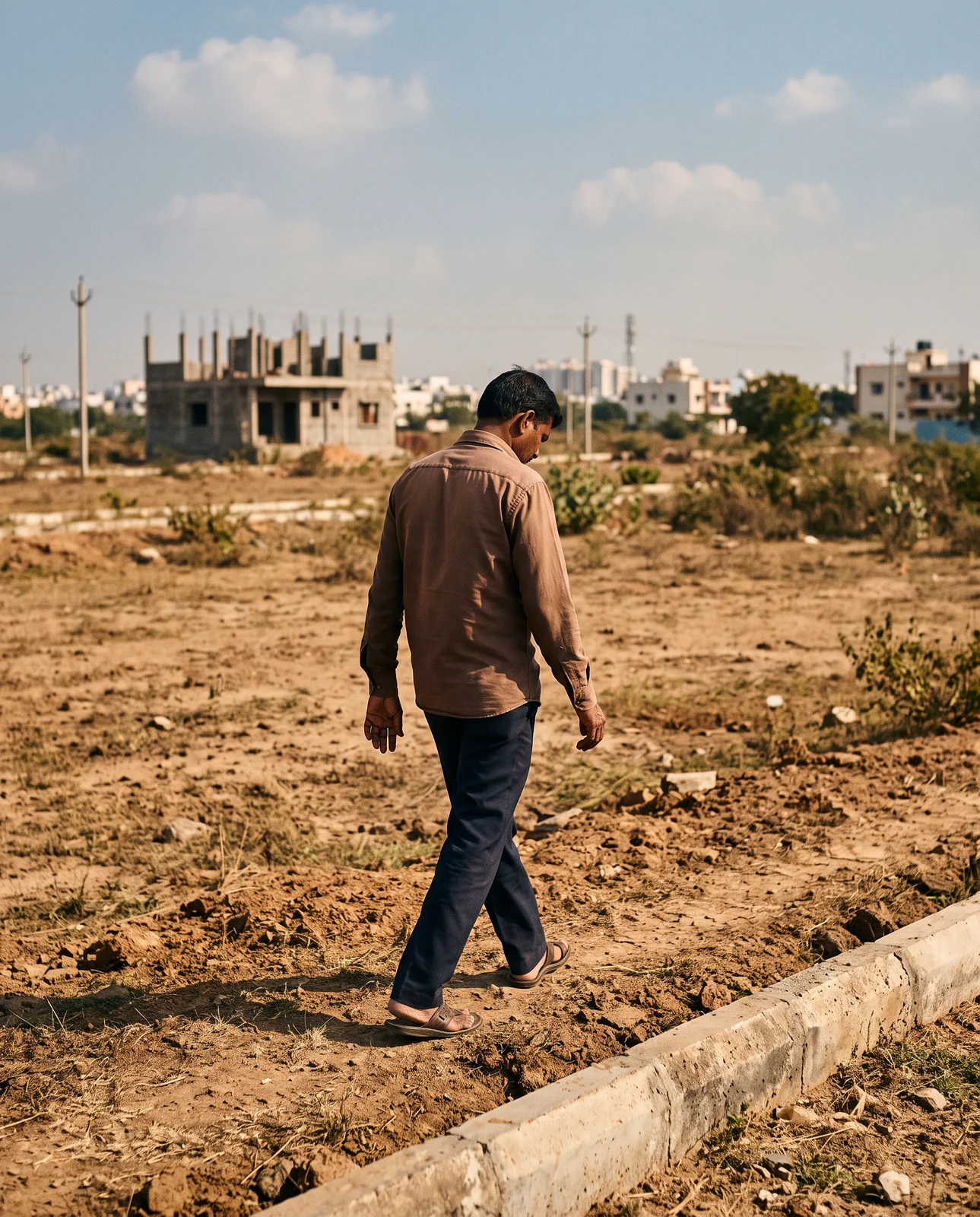
Most people walk the side that faces the road, look across the plot, and get back in the car. Walk all four. If you have no tape, count your paces on each side and write the numbers down; an ordinary walking pace is close enough to a metre to catch a real shortfall.
The single most common complaint after a plot purchase is a plot that measures correctly on three sides and comes up short on the fourth, usually the back, usually against a neighbour who has already built. Nobody finds that standing at the gate. Compare your four counts with the dimensions on the layout plan, and if one side is short, ask why before you go further.
2. Measure the road, and pace that too
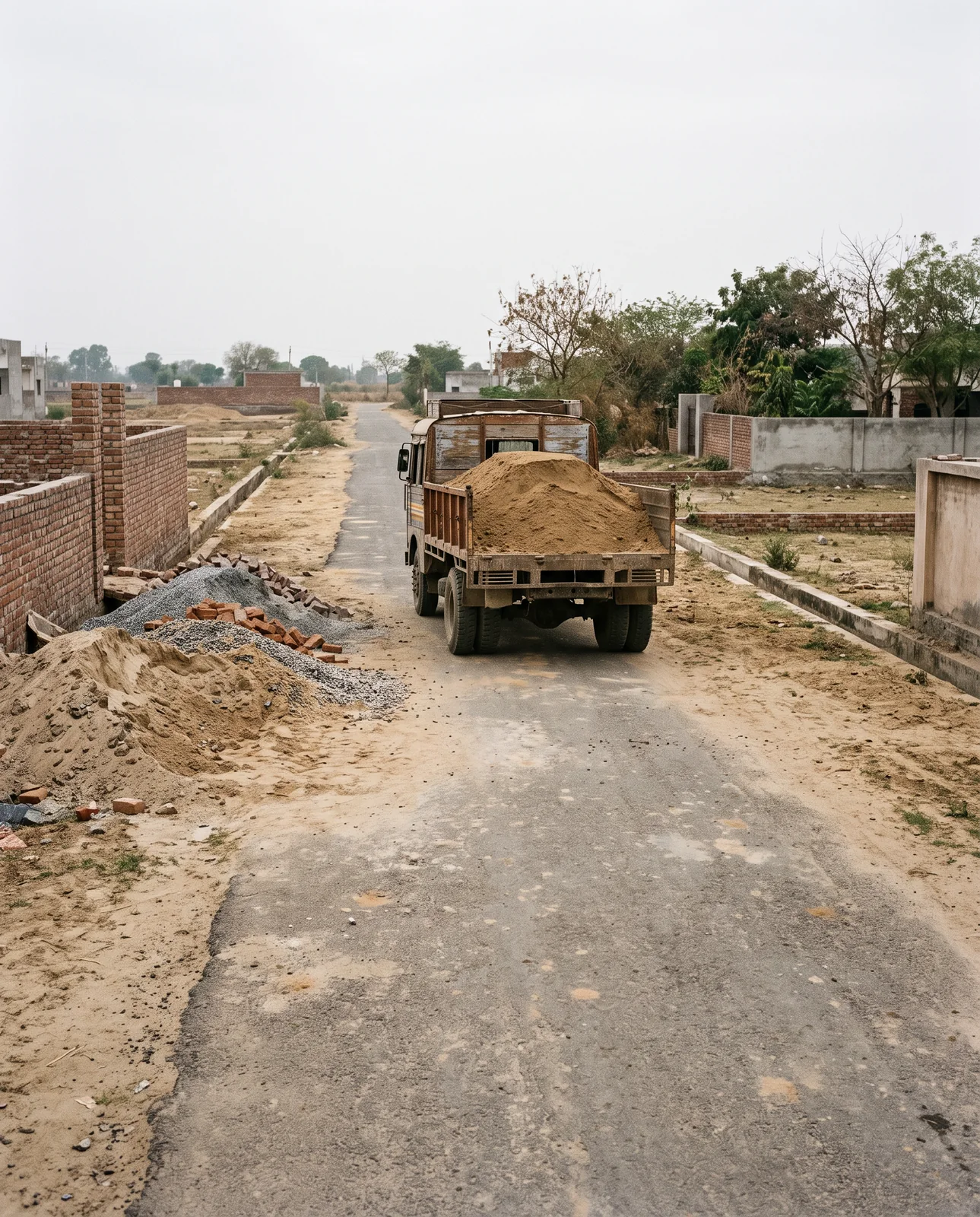
The width of the road in front of a plot decides two things. The first is what you are permitted to build: the building rules tie setbacks, height and floor area to the width of the road the plot faces, so a narrower road means a smaller house. The second is more immediate: whether a loaded truck of sand or bricks can reach your gate at all.
Pace the road at your plot, not at the colony entrance. A road drawn at twelve metres on the plan that is nine metres of tarmac and three metres of somebody's building material is, for every practical purpose, a nine-metre road. Note where the tarmac stops and what is sitting on the rest.
3. Go twice, at different hours
Site visits are arranged for eleven in the morning for a reason. It is the quietest hour a colony has: the approach road is empty, there is somewhere to park, and nobody is home to ask anything awkward. It is also the hour that shows the least.
Go back at seven in the evening, or six in the morning. The same road is doing its real work then: the traffic and the school pick-up, where the water tanker stops, how far the streetlight reaches, and who is genuinely living there. Water pressure, power cuts, noise and light exist only at particular hours. Two visits a day apart is enough to see them.
4. Look down, then look up
Down first. Every plot falls one way or another, and water goes to the lowest corner. Find that corner and work out whose it is. If it is yours, you will pay to fill it before you build; if it is the neighbour's, they may already have raised their plinth so that the water comes back to you. Look for old water marks on walls.
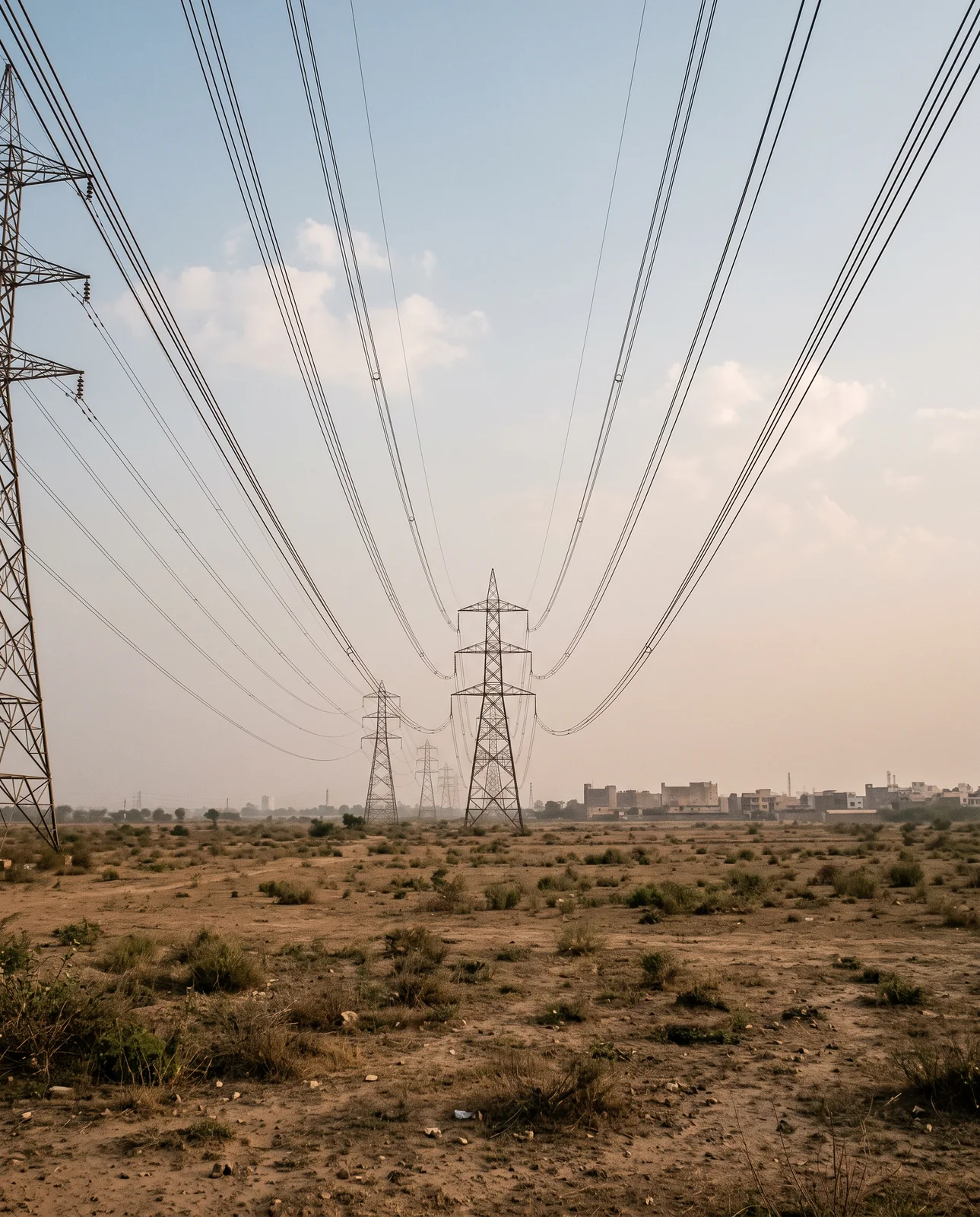
Then up. A high-tension line crossing a plot changes what may be built underneath it, and it is the easiest thing on this list to miss because nobody looks at the sky on a site visit. Note any line, any pylon, and any transformer inside or beside the boundary.
5. Talk to whoever already lives there
Five minutes with a neighbour is worth an hour in the site office; a resident has nothing to sell you. Ask four plain questions and let them talk.
- Where does your water come from? A borewell, a tanker, or a line that runs for two hours a day are three very different answers.
- How often does the power go, and for how long? Ask about June and August separately.
- Does it flood anywhere here? Someone will point to the exact spot.
- What were you promised when you bought, and what actually came? The most useful question on the list. It tells you how the colony's promises have held up so far.
6. Photograph the corners and the markers, with the date on
Before you leave, switch on your phone's date stamp and photograph each corner of the plot twice, once wide to show its position and once close to show the marker. Photograph the boundary stones and pegs, the road in both directions from your gate, and the neighbours' walls exactly where they stand today.
Markers move, sometimes innocently and sometimes not. A dated photograph of where they stood on the day you visited is the cheapest insurance a buyer can carry.
जो पैर नापें और आँख देखे, वो किसी फ़ाइल में नहीं मिलता।
Jo pair naapein aur aankh dekhe, wo kisi file mein nahin milta.
The list, to take along
| Step | What to do | What it needs |
|---|---|---|
| 1 | Walk all four sides and count paces | your feet |
| 2 | Pace the road width at your plot | your feet |
| 3 | Come back at a different hour | a second visit |
| 4 | Find the lowest corner; look for lines overhead | your eyes |
| 5 | Ask four questions of a neighbour | five minutes |
| 6 | Photograph corners, markers, road, walls | a phone with the date on |
The half that can be done from home
Everything above is about the ground. The rights can be read before you get in the car: the colony's recorded boundary, its sanctioned layout over the satellite image, its master-plan zone and what is on file for it. Read your plot's dimensions and the sanctioned road width off the layout, so that every pace you count on site has a number to compare against. Then go and walk the plot.
As of September 2026 the register holds 1,161 colonies and projects in Indore, drawn to their recorded boundaries, with 86 sanction plans placed on the ground.
Where to check it yourself
See it for yourself on the map — boundaries, plans and paperwork on one screen.
Open the colony before you go and read the plot dimensions and road widths off its sanctioned layout →Questions people ask
What should I check during a plot site visit?
Walk all four sides and count paces, pace the road at your plot, visit again at a different hour, check where water drains and what runs overhead, ask neighbours about water, power and flooding, and photograph the corners and markers with the date on.
How do I measure a plot without a measuring tape?
Count your paces along each side; an ordinary walking pace is close to a metre. Compare all four counts with the dimensions on the sanctioned layout plan.
Why does road width matter when buying a plot?
The building rules link what you may build to the width of the road the plot faces, and a narrow or partly blocked road may not let a loaded truck reach your gate.
What time of day is best for a site visit?
Go twice. Late morning shows the plot at its quietest; early morning or evening shows the road, the water tanker, the streetlights and the neighbours as they really are.
Where the facts come from. The facts and figures in this post come from verified government sources and verified RERA-registered brokers.
Indori Zameen is a private platform. It is not a government body and is not affiliated with one — always confirm a record with the concerned authority before you commit money.
Share this post
Related posts
 Buying guides8 min read
प्लॉट लेने से पहले, ये आठ सवाल ज़रूर पूछिए।
Buying guides8 min read
प्लॉट लेने से पहले, ये आठ सवाल ज़रूर पूछिए।
The eight questions every plot buyer in Indore asks, and where each answer sits
Registration, khasra, zoning, proposed roads, the sanctioned layout, building limits, plot position and promoter: eight questions and where each answer sits.
8 Sep 2025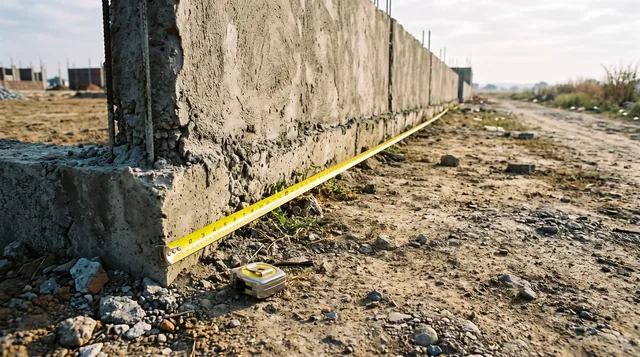 Papers & law8 min read
सरहद का झगड़ा।
Papers & law8 min read
सरहद का झगड़ा।
How boundary disputes start, and the cheap half of avoiding them
Boundary disputes begin as a few feet nobody measured. The six ways a line goes wrong, and the five cheap things to do before you build.
8 Sep 2025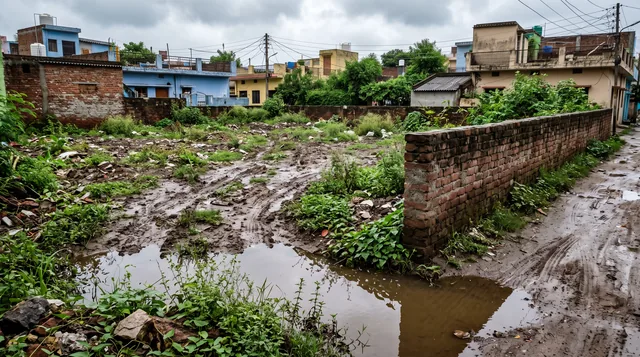 Buying guides7 min read
पानी और ज़मीन
Buying guides7 min read
पानी और ज़मीन
Water, drainage and the plot you are about to buy
Land is bought in April and lived on in August. The slope, the fill, the drain, the supply and the zone — six checks a dry-season site visit misses.
8 Sep 2025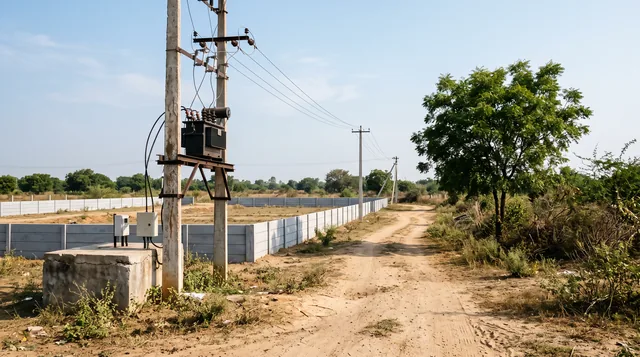 Buying guides8 min read
सुविधा है या वादा?
Buying guides8 min read
सुविधा है या वादा?
Is the colony serviced? Power, water, sewer
A gate, a road and a wall can be finished years before a working connection. Six questions and one visit after dark tell you what you are really buying.
8 Sep 2025Tagged site-visit, checklist, boundary, instagram-series, water, layout-plan.
Read it. Then check it on the map.
Every colony's boundary, its approved layout, its zoning and its paperwork — on one screen. Signing in is free.