
सुविधा है या वादा?
Is the colony serviced? Power, water, sewer
Six things the word 'developed' is supposed to mean, and how to find out which of them exist before you pay a token.
On this page
- "Developed" is one word for six things
- 01 · Power: a supply, or a pole at the gate?
- 02 · Water: three arrangements, three bills
- 03 · Sewer: what is under the road
- 04 · Internal roads: built to the width, or graded flat?
- 05 · Street lighting and the approach road
- The honest test: after sunset, three doors
- Read the sheet first, then walk the colony
A colony is serviced when a household living in it has a meter, a tap and a connected drain that work today — not when a pole stands at the gate. "Developed" bundles six separate things: power, water, sewer, internal roads, street lighting and the approach road. Check each one against the sanctioned layout, then walk the colony after dark and ask three households.
"Developed" is one word for six things
A levelled road, an entrance gate and a boundary wall can all be finished long before the first house gets a meter, a tap or a drain that goes anywhere. The gap between the two states is measured in years, and it is paid for by whoever buys early and builds first. So the adjective on the pamphlet is not the question. The question is which of the six things below is built, energised and being used by somebody right now.
दीवार खड़ी हो गई, लाइन अब तक नहीं आई।
Deewar khadi ho gayi, line ab tak nahin aayi.
In Madhya Pradesh the internal development of a colony — its roads, drains, water lines and electricity network — is the coloniser's responsibility under the Colony Development Rules, and it is that work the completion certificate is meant to certify. The rules set the obligation; they do not tell you how far along it is on the ground. Only the visit does.
01 · Power: a supply, or a pole at the gate?
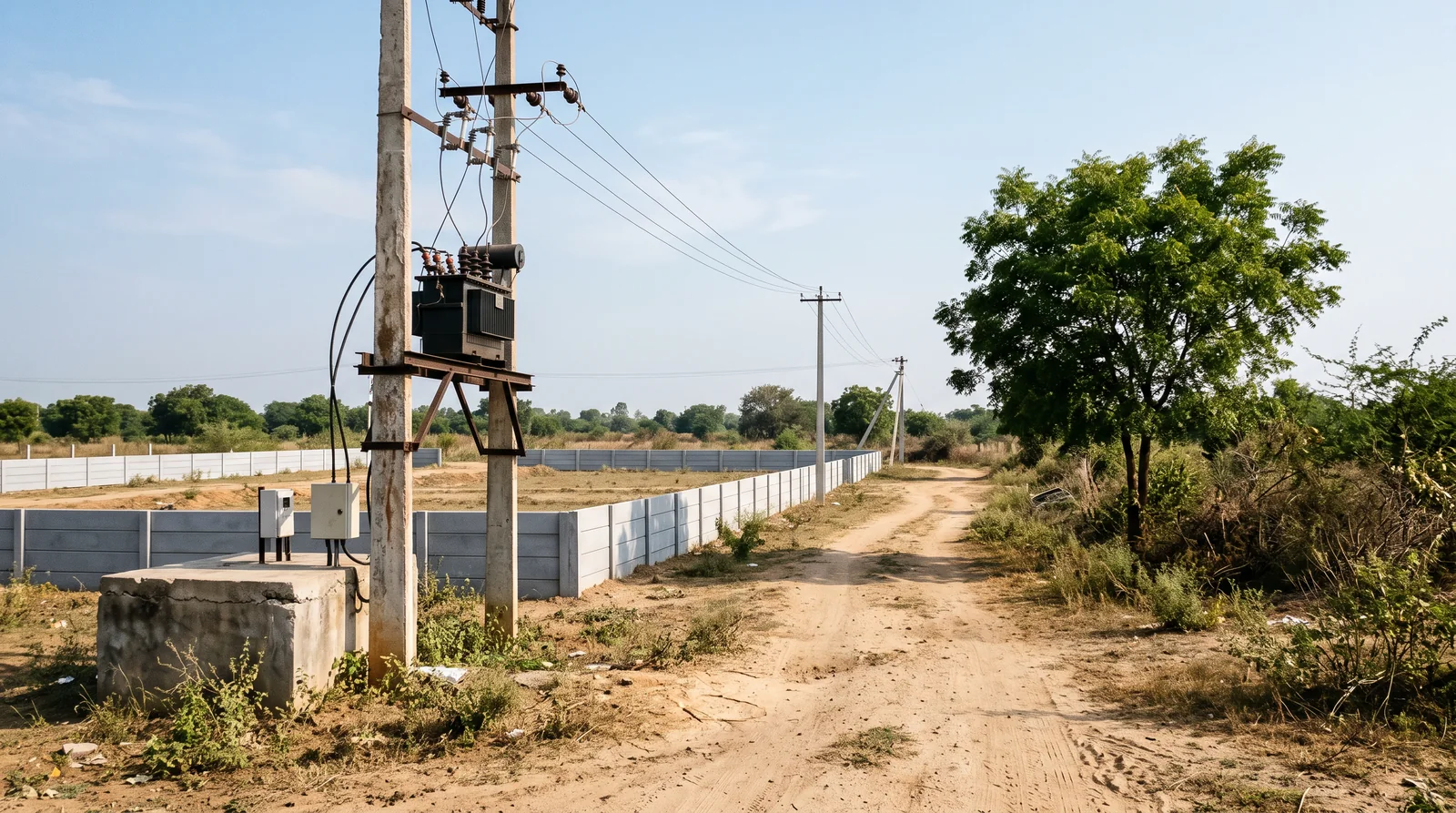
A colony has electricity when a distribution line reaches it, a transformer is energised for it, and poles and cable run down its own internal roads. A single pole standing at the entrance is a plan, not a supply. Follow the wire: where does it go after that pole?
Three questions, in this order:
- Is that transformer live, and which houses here are drawing from it?
- Who lays the poles and cable inside the colony — the developer, or each buyer as they build?
- Who applies for the connection to your plot, and who pays for the network to reach it?
The last one is where the money hides. If the internal network is not the developer's job, the first few buyers fund it between them.
02 · Water: three arrangements, three bills
Every colony is on one of three arrangements, and each means a different monthly cost, a different person to call when it stops, and a different answer in the weeks before the rains.
| Arrangement | What it means for you | The question |
|---|---|---|
| A municipal line | Laid inside the colony and joined to the city's network. A pipe in the ground and a pipe that is connected are not the same week. | Is it joined yet? |
| A borewell and tank | The colony owns the pump, the tank and the pipes — and so owns every repair, every bill and every dry morning. | Whose pump, whose repair, whose bill? |
| Tankers | Water comes by road. Somewhere it is a stopgap while the line is laid; somewhere it has quietly become permanent. | How often, in May? |
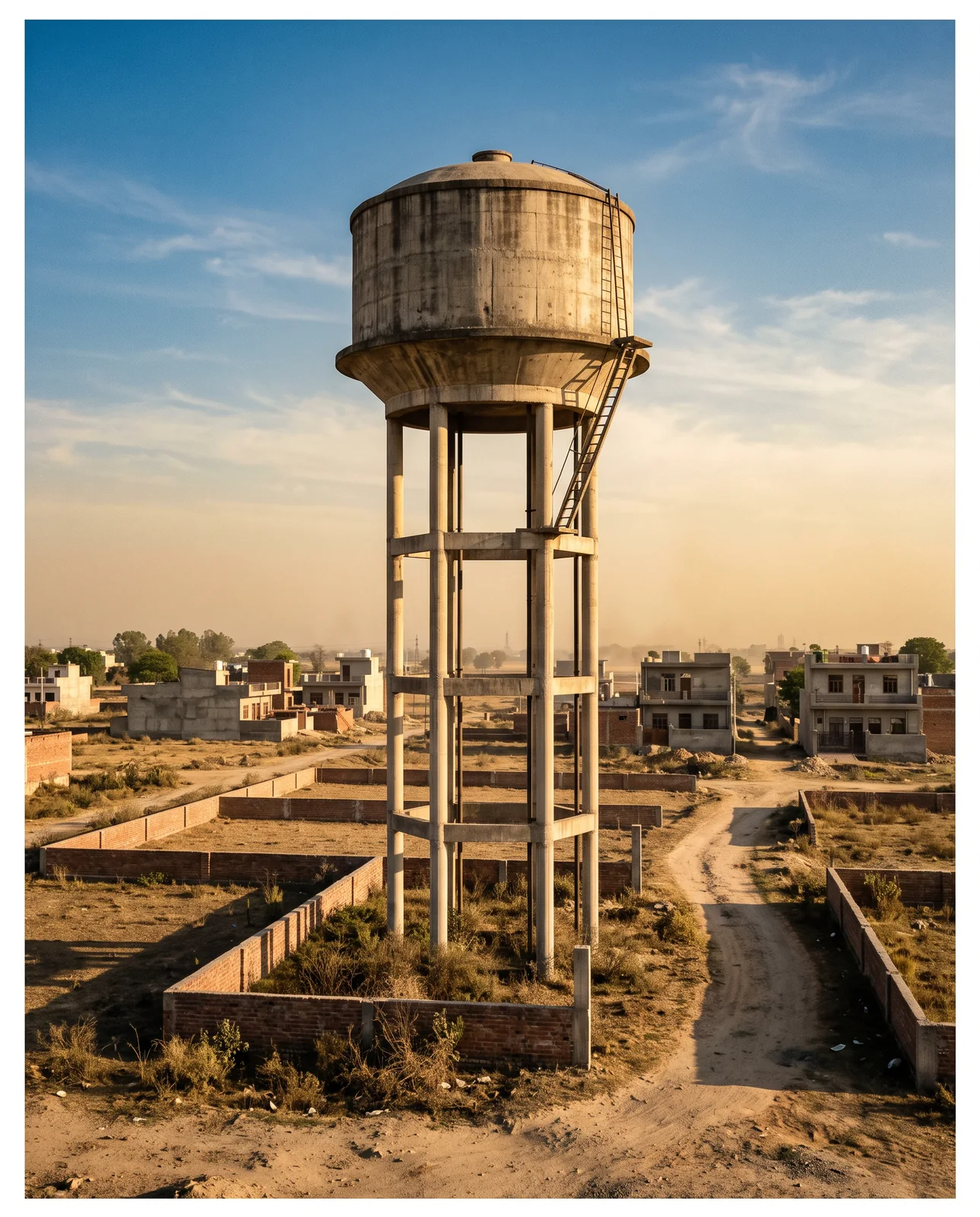
Do not ask whether there is water. Ask the households already living there what they did for water this morning, and in whose name the connection stands.
जो आज चल रहा है वही सच है — बाक़ी सब योजना है।
Jo aaj chal raha hai wahi sach hai — baaqi sab yojana hai.
03 · Sewer: what is under the road
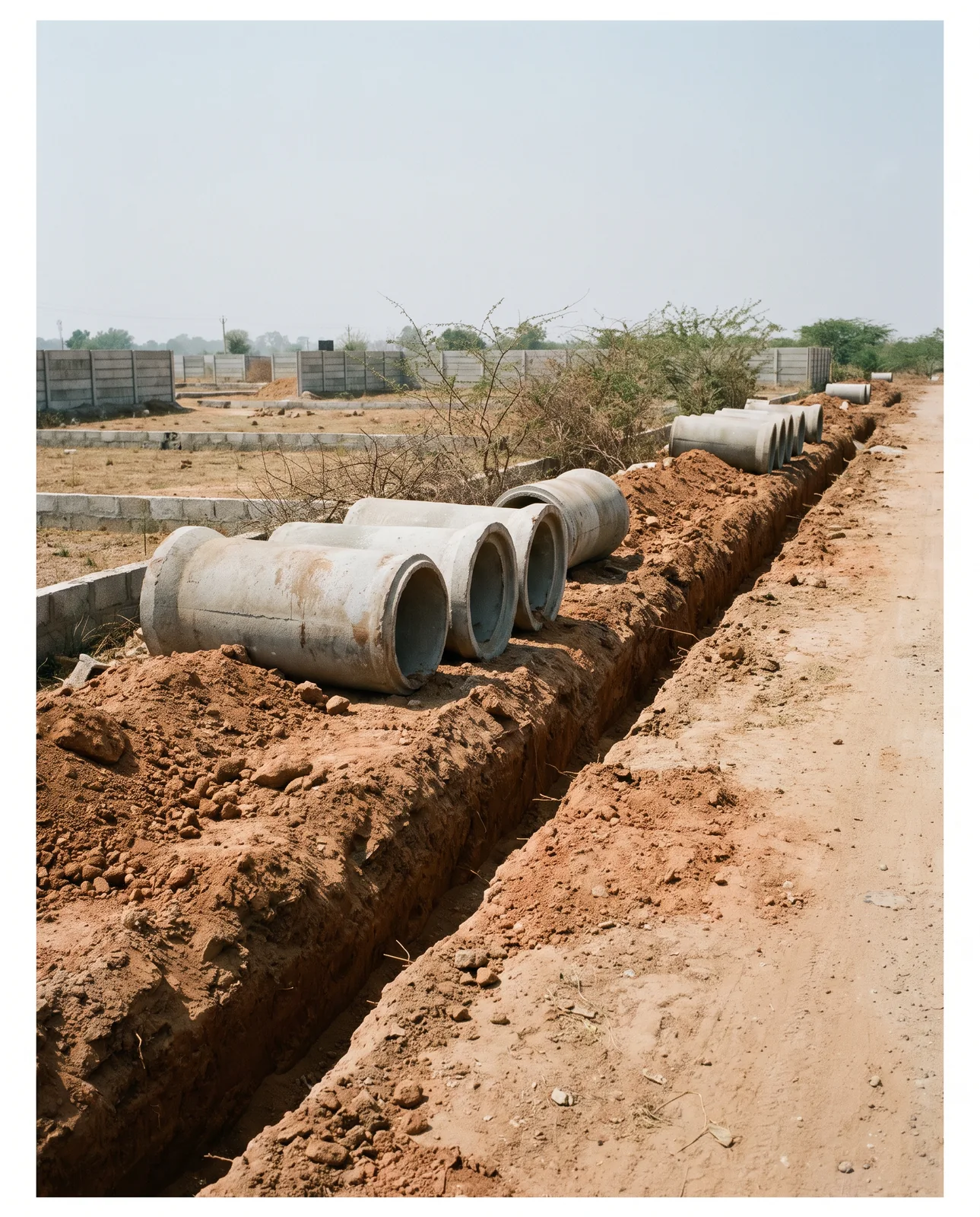
Of the six, this is the one that decides what you can build and when. A house on a septic tank needs room set aside for it on your own plot, which is space the design has to give up. A colony whose road was surfaced before anything went under it is a colony whose road will be cut open later, at somebody's cost. Three states, and you want to know which one on paper: a line is laid; the line is connected to something at the far end; or it is your own tank.
04 · Internal roads: built to the width, or graded flat?
Two very different things are sold as "a plot on a road". One is a metalled road, kerb to kerb, to the width on the sanctioned drawing. The other is earth a tractor flattened last season — and narrower than the sheet says. Walk the internal roads to the far end of the colony. The first hundred metres from the gate are always the best hundred metres; the last ones show what the developer actually finished.
The sanctioned layout carries the width of every internal road. Read it before you go, then stand in the road and compare what you are standing on with what was drawn.
05 · Street lighting and the approach road
Inside the gate, the internal roads, poles and street lights sit within the sanctioned layout, so whether they were built is a question with a drawing behind it. Outside the gate is different. The stretch from the main road to the entrance may not belong to the colony at all, and nobody's road is nobody's repair — which is how it stays unlit and unsurfaced for years. A colony can be complete inside its own boundary and still be a rough, dark drive home every night.
The question almost nobody asks: whose land is the approach road on, who is meant to light and maintain it, and has anyone taken it on record?
The honest test: after sunset, three doors
Every site visit happens at eleven in the morning, which is the one hour a colony can hide everything. Go back once after dark. You will see which street lights are on, how many houses have a light burning inside, and what the drive in from the main road is really like.
Then knock on three doors and ask three short questions:
- When did your connection actually come, and how long did you wait for it?
- Who do you call when the water stops?
- What has this colony still not got?
Three households, three minutes each. Nobody living there has anything to sell you.
अँधेरे में कॉलोनी सच बोल देती है।
Andhere mein colony sach bol deti hai.
Read the sheet first, then walk the colony
The land a layout sets aside for services and the width of every internal road are drawn on the sanctioned sheet, years before anything is dug. The drawing tells you what was sanctioned; the visit tells you what was built; and the two halves only make sense together. Read the layout first so the site visit has something to be measured against.
See it for yourself on the map — boundaries, plans and paperwork on one screen.
Open the sanctioned layout before you visit →Questions people ask
What does "developed plot" mean in Indore?
There is no fixed meaning. It can cover anything from a levelled road and a boundary wall to a colony with live power, connected water and a working sewer. Ask which of the six services actually exists.
How do I check if a colony has an electricity connection?
Look for an energised transformer and cable running down the internal roads, then ask a household which meter they are drawing on. A pole at the gate is not a supply.
Is a borewell in the colony enough for water?
It can be, but the colony owns the pump, the tank, the pipes and every repair. Ask who runs it, who pays, and how the last few summers went.
What if the colony has no sewer line?
Then each house needs a septic tank on its own plot, which takes space from the design, and any later sewer line means the roads are cut open.
Who maintains the approach road to a colony?
Often nobody, because the stretch from the main road to the gate may not belong to the colony. Ask whose land it is and who is on record for lighting and repairing it.
Where the facts come from. The facts and figures in this post come from verified government sources and verified RERA-registered brokers.
Indori Zameen is a private platform. It is not a government body and is not affiliated with one — always confirm a record with the concerned authority before you commit money.
Share this post
Related posts
 Buying guides8 min read
ज़मीन पर जाकर क्या देखें।
Buying guides8 min read
ज़मीन पर जाकर क्या देखें।
The plot site visit: what to check with your feet
Walk all four sides, pace the road, return at another hour, look down and up, ask the neighbours, photograph the markers with the date on. The site visit list.
8 Sep 2025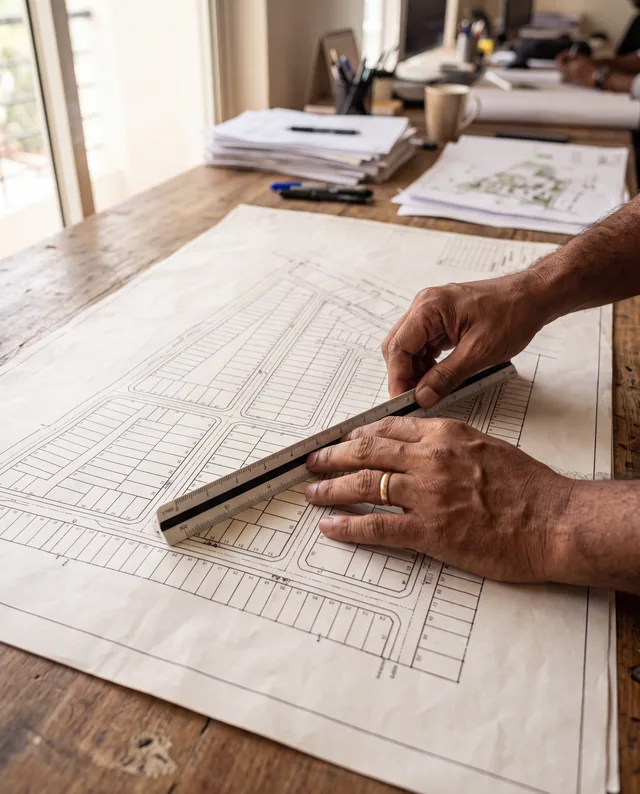 Maps & plans8 min read
नक्शा पढ़ना सीखिए।
Maps & plans8 min read
नक्शा पढ़ना सीखिए।
How to read a sanctioned layout plan
Plot numbers, road widths, open space, the reserved series and boundary lengths: how to read each one off a sanctioned layout plan before you pay.
8 Sep 2025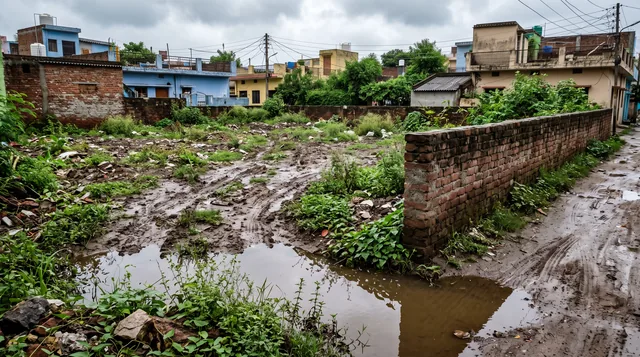 Buying guides7 min read
पानी और ज़मीन
Buying guides7 min read
पानी और ज़मीन
Water, drainage and the plot you are about to buy
Land is bought in April and lived on in August. The slope, the fill, the drain, the supply and the zone — six checks a dry-season site visit misses.
8 Sep 2025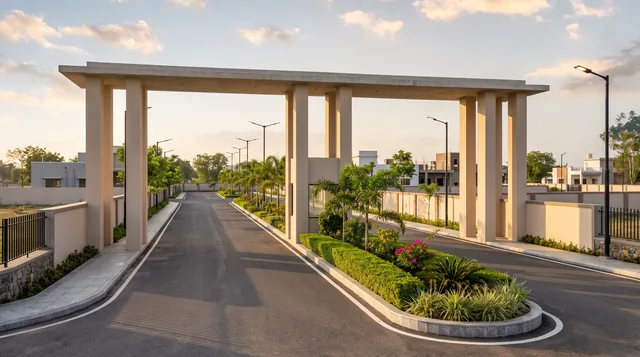 Maps & plans7 min read
वादा अलग चीज़ है। नक्शा अलग।
Maps & plans7 min read
वादा अलग चीज़ है। नक्शा अलग।
Promised vs sanctioned: the brochure and the layout plan
Why a brochure binds nobody and a sanctioned layout does, what reserved land looks like on the sheet, and the one question to ask when the amenity is not on it.
8 Sep 2025Tagged water, site-visit, instagram-series, layout-plan, checklist.
Read it. Then check it on the map.
Every colony's boundary, its approved layout, its zoning and its paperwork — on one screen. Signing in is free.