
वादा अलग चीज़ है। नक्शा अलग।
Promised vs sanctioned: the brochure and the layout plan
A brochure can show a clubhouse; only the sanctioned layout can reserve the land it would stand on — here is how to read the one against the other before you pay.
On this page
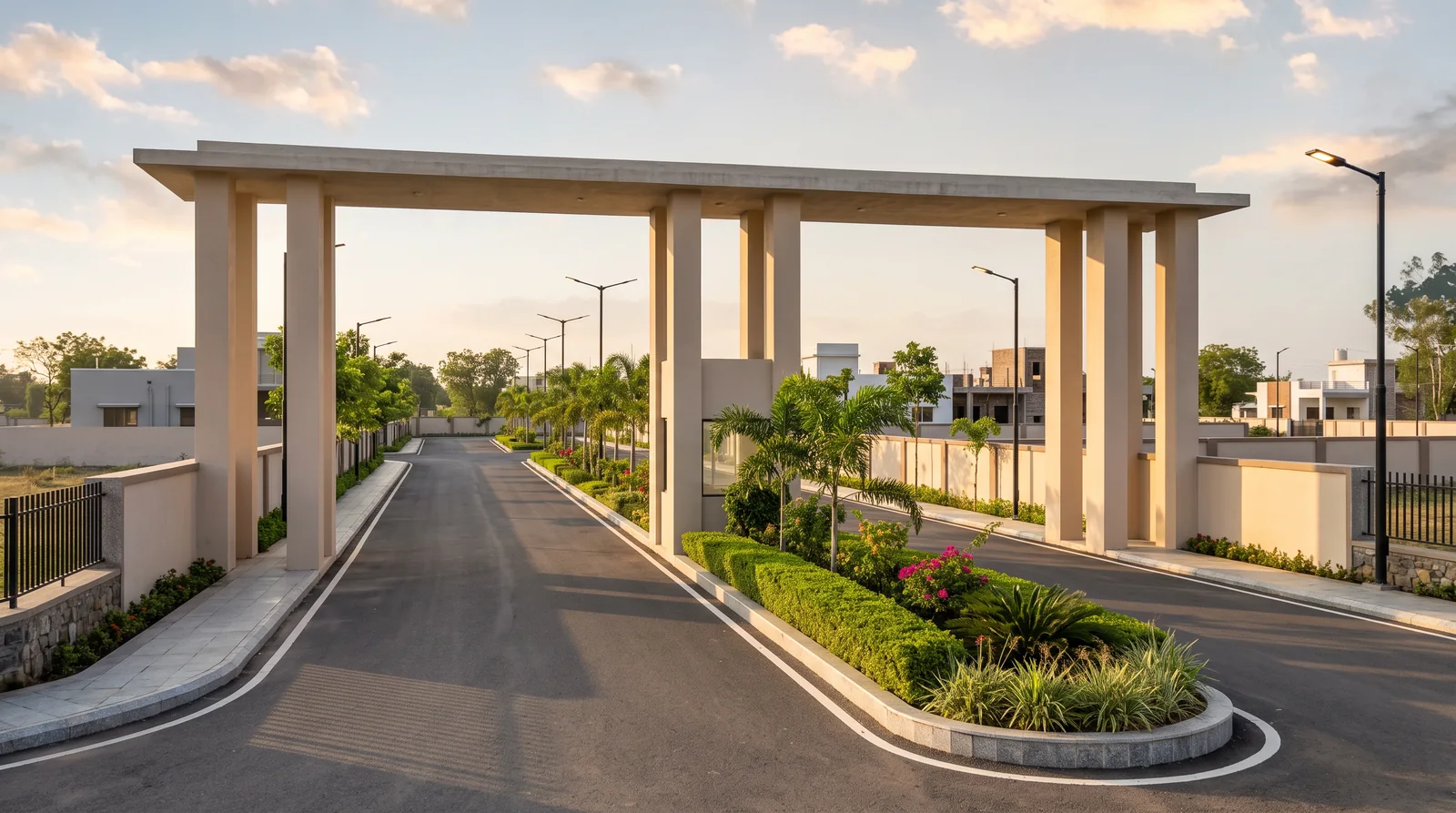
A colony is described by two documents. The brochure is printed by whoever is selling and can show a gate, a garden, a temple and wide avenues; it binds nobody. The sanctioned layout was approved before a plot could be sold and shows which land is reserved for what. Read the promise against the sheet before you pay.
Two documents, one colony
One is handed to you at the site office; the other is on record with the planning authority, and you usually have to ask for it.
| The brochure (पर्चा) | The sanctioned layout (पास किया हुआ नक्शा) | |
|---|---|---|
| Who made it | Whoever is selling | Approved by the planning authority |
| What it shows | How the colony is meant to feel | Which land is reserved for what |
| How easily it changes | Reprinted any afternoon | Changing it means sanctioning it again |
| Whom it binds | Nobody | This is the colony, on record |
A description can be as generous as it likes, because nobody has to stand behind it. A sanction cannot be generous: somebody signed for it, and altering it means going back to that somebody.
What reserved land looks like on the sheet
On a sanctioned layout the amenity you were promised is not a sentence. It is a colour, a hatch or a separately numbered parcel, and three things about it are worth learning to read.
- Open space and garden are drawn outside the saleable plots. That exclusion is the amenity's only real guarantee: land that is not a plot cannot be sold as one.
- Reserved parcels have their own series. Land set aside for a school, a shop line or a community building is numbered apart from the residential plots, because it was never an ordinary plot.
- Every road carries its width in metres. Nine, twelve — printed on the drawing itself, not left to the sales talk.
Weeds today. Still not for sale.
A reservation on the sheet does not mean a garden on the ground on day one. Land drawn as open space may stay empty for years, fenced by a kerb and full of scrub, while the plots around it are built on. That is normal, and it is not the thing to worry about.
What the reservation prevents is quieter. That patch cannot become somebody's bungalow without the layout being re-sanctioned, and a re-sanction is a public act with a file behind it. The weeds are temporary. The line on the sheet is not.
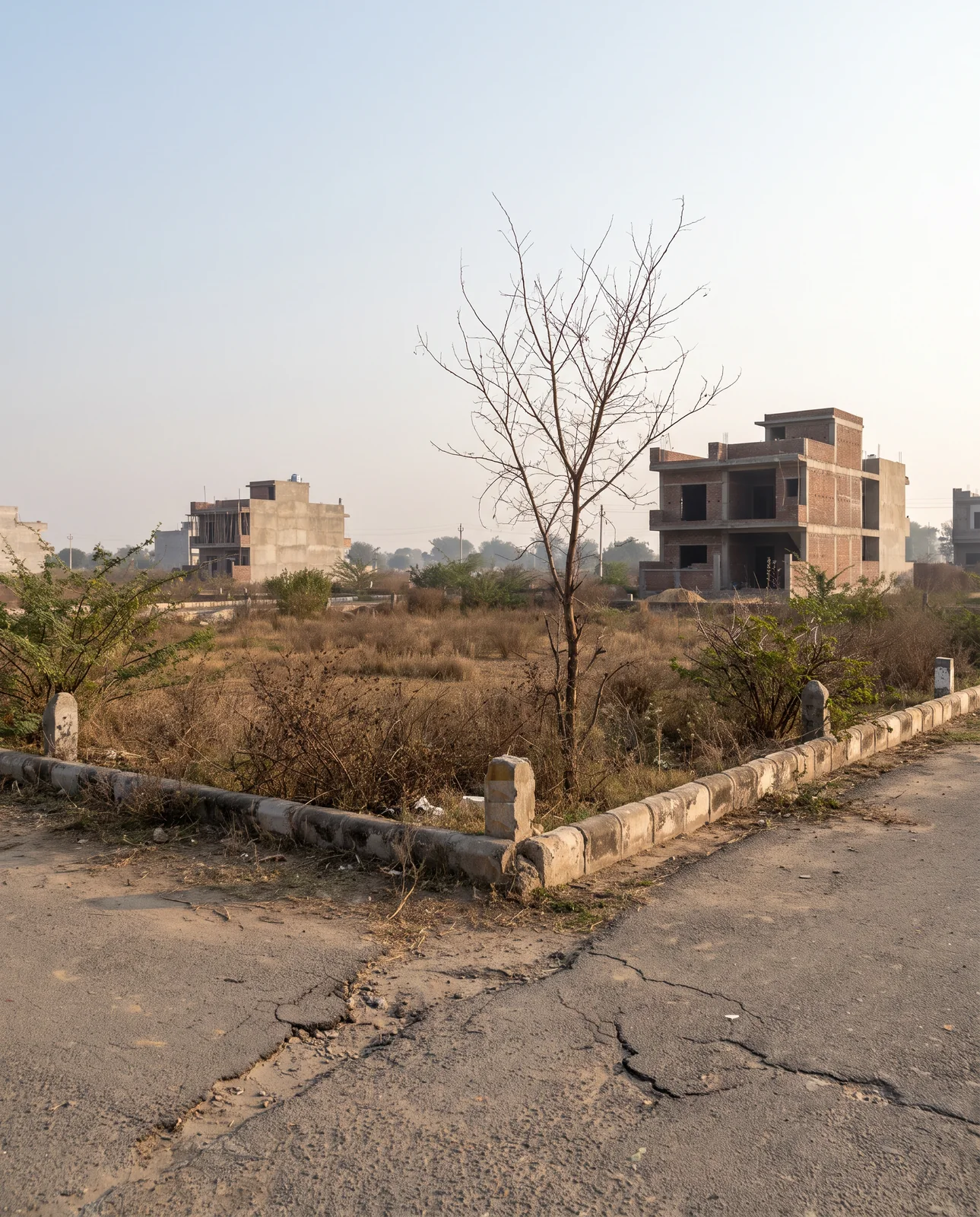
आज झाड़ है — पर यह ज़मीन बिकने की नहीं है।
Aaj jhaad hai — par yeh zameen bikne ki nahin hai.
Roads have widths. Brochures have adjectives.
The quickest way to tell the two documents apart is to look at how each describes a road.
| In the brochure | On the sanctioned layout |
|---|---|
| Wide avenues | 12 m |
| Grand approach | 9 m |
| Sprawling greens | Open space |
| Ample parking | Reserved |
One column you can hold somebody to; the other was designed to please. When a brochure says "wide", ask how many metres. If the answer is on the sheet you have a fact, and if it is not you have an adjective.
When the amenity is not on the drawing
If the clubhouse is not on the sanctioned sheet, that is not yet a verdict. Ask where it is going to go, and listen for which of three answers comes back.
- "It is in a later phase." Perfectly possible — so ask to see that phase's own sanction and the date on it. Until a phase is sanctioned it is an intention, not a phase.
- "It is on the land next door." Also possible. Then it is a separate parcel with its own khasra and its own owner, and nothing in your colony's sanction reserves it for you.
- Silence. That is an answer too. If no sheet reserves the land, nobody is holding it for the clubhouse.
The first two answers have a document behind them that you can ask to see. The third does not.
"Developed plot" is not a specification
Two words that mean whatever the listener assumes. Laid, kerbed and drained — or promised. Instead of accepting the phrase, ask which of these already exists on the ground:
- The road, laid
- The drain, built and covered
- The electricity poles, standing
- The water line, in
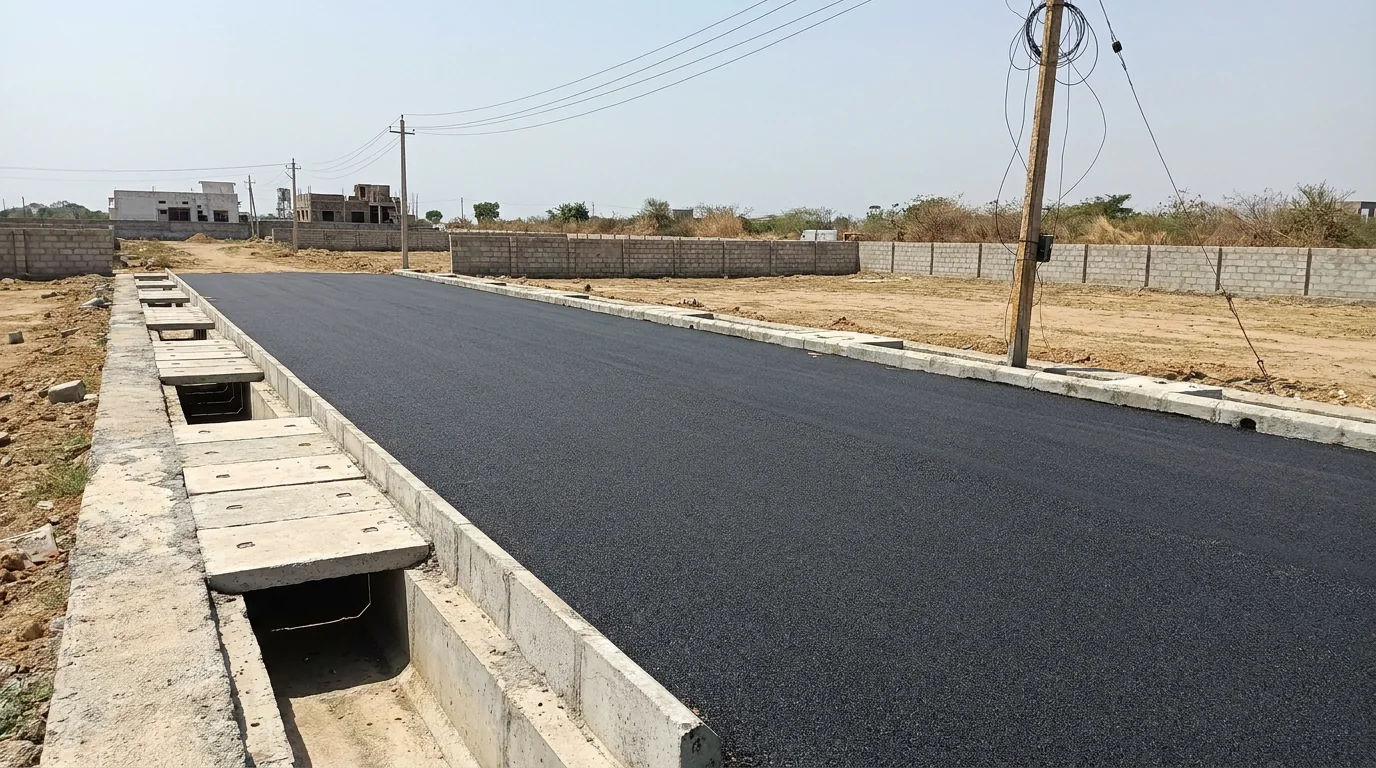
And for whatever is not there yet, ask by when, in writing.
Put it in the agreement, not the pamphlet
Two years on, nobody opens the brochure and everybody opens the agreement. If the clubhouse, the park and the gate live only in the pamphlet, then legally they live nowhere; the pamphlet goes in a drawer and the agreement goes to court.
So ask for the amenity to be named in the agreement itself — its size or specification written down, and the month it is to be finished — in the same words the sales pitch used. A seller who means it will not mind. A seller who minds has told you something.
जो लिखा नहीं गया, वह कहा ही नहीं गया।
Jo likha nahin gaya, woh kaha hi nahin gaya.
To be fair: a method, not a warning
Many colonies build exactly what their brochure showed. Gardens get planted, roads get laid, the gate goes up on time. This is not an argument for suspicion. It is an observation that you can tell which kind of colony you are looking at before you pay, using a drawing that already exists, was approved before the first brochure was printed, and can be asked for.
On this platform the sanctioned plan — not the brochure — is drawn over the satellite view of each colony that has one, so a brochure claim can be checked against the sheet in a minute: 86 georeferenced sanction plans among 1,161 colonies and projects mapped, with 13,352 documents on file, as of September 2026.
See it for yourself on the map — boundaries, plans and paperwork on one screen.
Check the brochure's claims against the sanctioned sheet →Questions people ask
What is the difference between a brochure and a sanctioned layout plan?
The brochure is printed by the seller and can be changed at will; it commits nobody. The sanctioned layout is approved by the planning authority before plots are sold, shows which land is reserved for what, and can only be changed by re-sanction.
Is a brochure legally binding?
On its own, no. What binds is the agreement you sign. If an amenity matters to you, have it named in the agreement with its specification and completion date.
How do I know if the park or clubhouse in a colony is real?
Find it on the sanctioned layout. Land reserved as open space or as a separately numbered parcel is kept out of the saleable plots; an amenity that appears only in the brochure has no reservation behind it.
What does developed plot mean?
Nothing specific. Ask which services exist on the ground today — road laid, drain built and covered, poles standing, water line in — and get a written date for whatever does not.
Where the facts come from. The facts and figures in this post come from verified government sources and verified RERA-registered brokers.
Indori Zameen is a private platform. It is not a government body and is not affiliated with one — always confirm a record with the concerned authority before you commit money.
Share this post
Related posts
 Maps & plans8 min read
नक्शा पढ़ना सीखिए।
Maps & plans8 min read
नक्शा पढ़ना सीखिए।
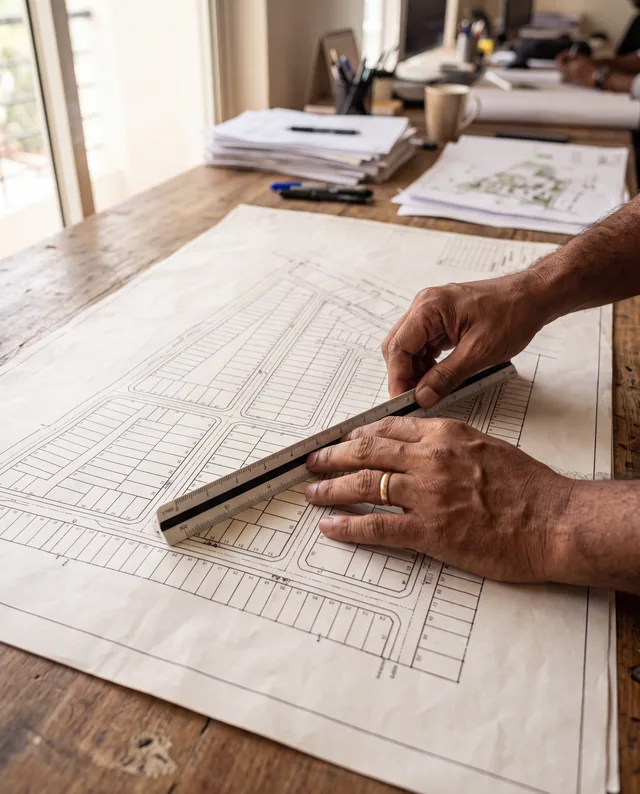
How to read a sanctioned layout plan
Plot numbers, road widths, open space, the reserved series and boundary lengths: how to read each one off a sanctioned layout plan before you pay.
8 Sep 2025 Buying guides8 min read
इश्तिहार की भाषा
Buying guides8 min read
इश्तिहार की भाषा
Decoding the advertisement: seven phrases and the question each one hides
Prime location, approved, clear title, loan available — what each pamphlet phrase can honestly mean, and the one question that puts it on paper.
8 Sep 2025 Papers & law7 min read
रजिस्टर्ड है — पर किसका?
Papers & law7 min read
रजिस्टर्ड है — पर किसका?
What RERA does, and what it does not
Who must register with MP RERA, what an agent's number means, and the four checks a registration does not replace: title, ownership, coverage and sanction.
8 Sep 2025 Papers & law7 min read
टोकन देने से पहले
Papers & law7 min read
टोकन देने से पहले
The token: the agreement that comes before the sale deed
The token is the first money you pay and the moment you have least on paper. Six things to put in the agreement to sell before it moves.
8 Sep 2025Tagged layout-plan, t-and-cp, instagram-series, advertisement, developer, checklist.
Read it. Then check it on the map.
Every colony's boundary, its approved layout, its zoning and its paperwork — on one screen. Signing in is free.