
दो सौदे, एक ज़मीन
Buying from a developer vs an individual owner
Work out which of the two transactions you are in, and you will know which questions the seller can actually answer.

On this page
Buying from a developer means buying into a project: roads, drains and street lights that do not exist yet, owed to the colony by a company on a timetable. Buying from an individual owner means buying one parcel and the chain of paper behind it, with nobody owing you anything afterwards. Same registry office, two different jobs.
The first question is who is across the table
Most buyers open with the price and the site visit. The question that shapes everything else comes earlier: are you dealing with a company selling plots out of a new colony, or a person reselling a single plot they already hold? The land might look identical in both cases. The transaction around it is not, and neither is the way each one goes wrong.
The money changes hands in the same sub-registrar's office, on the same stamp paper. Everything before that signature, and everything after it, differs.
सामने कौन बैठा है — यही पहला सवाल है।
Saamne kaun baitha hai — yahi pehla sawaal hai.
Route A: from a developer, in a new colony
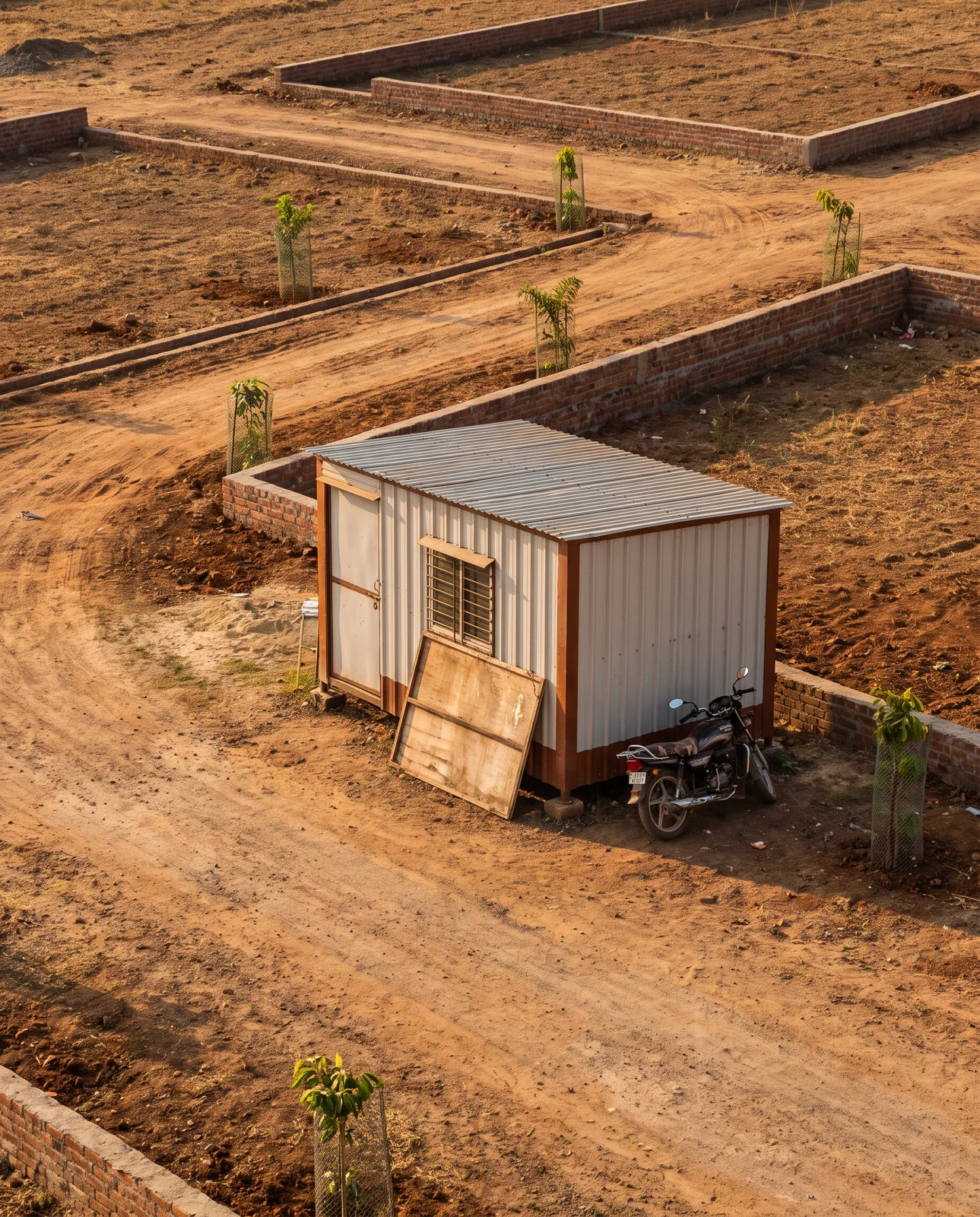
With a developer you are not really buying a plot. You are buying a share of a project, and a large part of what you pay for is still a promise. The internal road, the drain along it, the light on the corner and the boundary of the colony itself are somebody's obligation, due by a date. That obligation is what sits beside the land in the price, and it is the thing you have to be able to check.
Five things to ask a developer
- Is the colony approved, and is there permission to develop it? In Madhya Pradesh a colonizer has to be registered, and may not begin development work or sell a single plot until permission to develop the colony has been granted. "The papers are in process" is not a status.
- Is the layout sanctioned, and is your plot number on that sheet? The development has to follow the approved layout, not the drawing at the sales desk. If your plot is not on the sanctioned sheet with that number and that size, it does not exist in the sense that matters.
- Who builds the roads, water, sewerage, drainage and street lighting? In an approved colony this is the colonizer's work, to be completed within five years, after which the colony passes to a residents' body to maintain.
- What has this developer finished before? A delivery record can be checked: earlier colonies, and whether they were completed as approved.
- Does RERA apply to this project? If it does, ask for the registration number and look it up. Then remember what a registration covers and what it does not.
Route B: from an individual owner
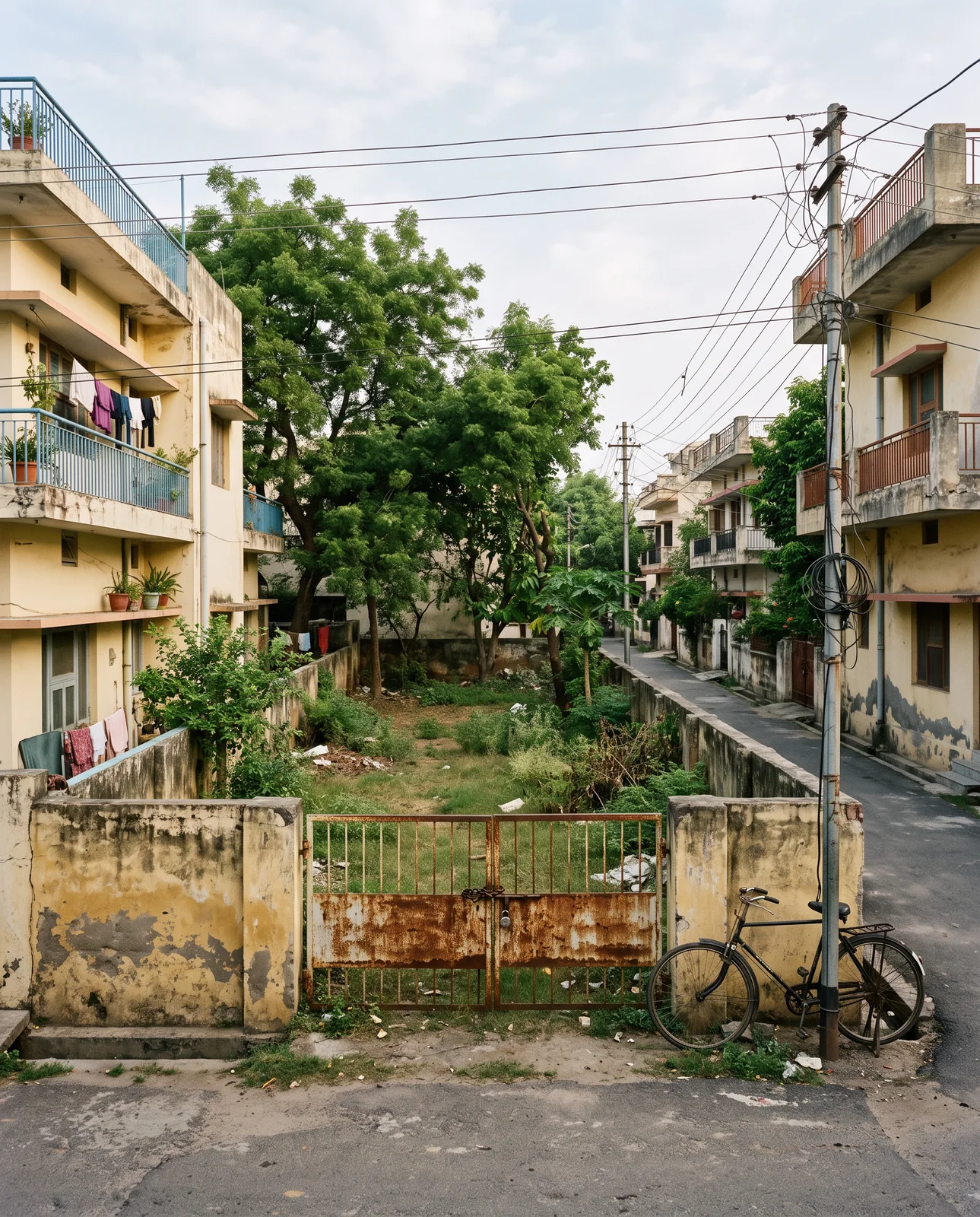
With an owner there is no project behind the sale, no schedule and no development obligation. What exists is what you get: the road is as wide as it is this afternoon. What you are actually buying is the strength of one chain of paper, and the questions turn from the colony to the person and the history behind them.
Five things to ask an individual owner
- Is this seller the name the record carries today? Not the name on the last sale deed, not the name the family uses, but the name that stands in the revenue record now.
- How did the plot reach them — purchase, inheritance, partition, gift? Every link in that chain needs its own document, and every one of those documents needs to have been registered.
- Has mutation happened, and what does it prove? The Tahsildar passes a mutation order within thirty days when nobody disputes it, and within up to five months when somebody does. The entry updates the record. It does not decide who owns the land.
- Is somebody selling on a power of attorney? The Supreme Court held in 2011 that a general power of attorney, an agreement to sell and a will, alone or together, do not transfer title. Only a registered conveyance does.
- Is there a charge on the land? A loan taken against the plot travels with the plot. Ask, and then go and look for yourself.
काग़ज़ पुराना होने से साफ़ नहीं हो जाता।
Kaagaz puraana hone se saaf nahin ho jaata.
Side by side
| From a developer | From an individual owner | |
|---|---|---|
| Who you negotiate with | A sales desk, working from a company rate list and a booking form | The owner, and often a whole family, not all of whom are in the room |
| What documents exist | A project file: registration, permission to develop, the sanctioned layout, allotment papers | One file: this parcel's title chain and its revenue record; nothing else was ever created |
| Who signs | The company, through an authorised signatory | Every recorded owner; a minor, an heir abroad or a missing co-owner has to be resolved first |
| What a delay means | Something promised is late: development work owed to the colony | Nothing is owed to you, so there is no schedule to fall behind |
| Who you go back to | A company that still exists, and a regulator if the project is registered | A person; once the deed is signed, that is usually the whole list |
Neither column is the safe one. They are two different pieces of work, and knowing which one you are doing is most of the job. Careful people fall into both traps above, not through carelessness but by reading the wrong document very carefully.
Three things the land has to satisfy either way
Who is selling changes what you ask them. It changes nothing about what the land itself has to be.
- The colony has to be an approved one. A colony carries approval today or it does not, and that is the same question whether a company or a neighbour is selling.
- The land has to have been diverted. Agricultural land does not become a housing plot because houses stand next to it. The record has to show that the use was changed.
- Your plot has to exist on the sanctioned layout, with that number, that size and that road in front of it. A resold plot inherits the layout it was cut from; an old sale deed does not repair a plot that was never sanctioned.
Where to check
See it for yourself on the map — boundaries, plans and paperwork on one screen.
Find the colony, read its status and its sanctioned layout before you meet the seller →Questions people ask
Is it safer to buy a plot from a builder or from an individual owner?
Neither is safer by default. With a developer the risk is that promised development never arrives; with an owner the risk is a break somewhere in the title chain. Each route needs its own checks.
Can I buy a plot on a power of attorney?
A registered sale deed is what transfers title. The Supreme Court held in 2011 that a GPA, an agreement to sell and a will do not, singly or together. Treat a GPA sale as a reason to ask why the recorded owner is not signing.
Does mutation prove the seller owns the plot?
No. Mutation updates the revenue record so the current holder's name appears on it. It is evidence, not a decision on ownership; the registered deeds behind it are what carry title.
Who has to build the roads and drains in a new colony in Madhya Pradesh?
Under the Colony Development Rules, 2021 the colonizer does, within five years of permission, after which the colony is handed to a residents' body for maintenance.
If a resale plot has been sold twice before, is it automatically clean?
No. Each earlier sale needs to have been registered, and the plot still has to exist on the colony's sanctioned layout. Earlier sales do not sanction a plot that was never on the sheet.
Where the facts come from. The facts and figures in this post come from verified government sources and verified RERA-registered brokers.
Indori Zameen is a private platform. It is not a government body and is not affiliated with one — always confirm a record with the concerned authority before you commit money.
Share this post
Related posts
 Papers & law9 min read
ज़मीन देख ली — बनाने वाले को देखा?
Papers & law9 min read
ज़मीन देख ली — बनाने वाले को देखा?
How to verify a developer in Indore
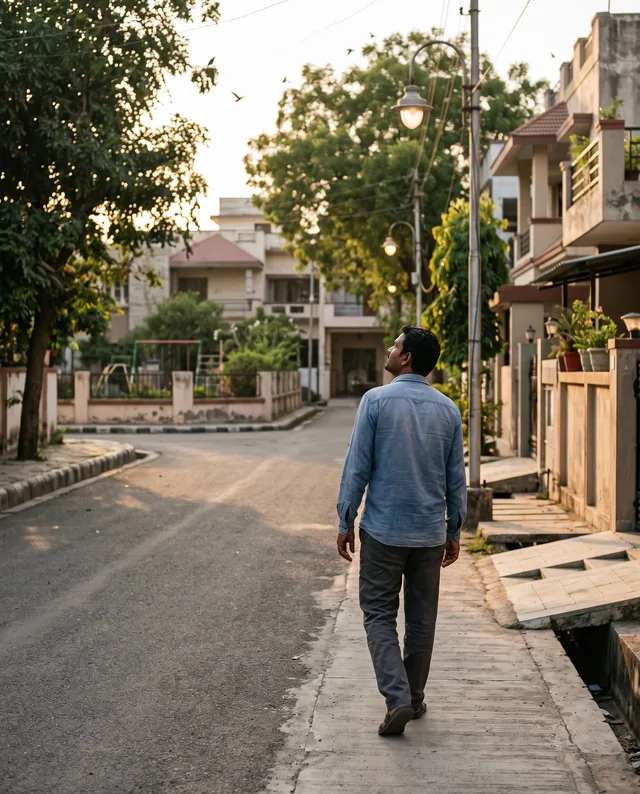
A clean plot from a developer who does not finish is still a problem. An afternoon in a colony they completed, five things to look at, what they must prove.
8 Sep 2025 Papers & law7 min read
काग़ज़ पूरे हैं?
Papers & law7 min read
काग़ज़ पूरे हैं?
The five documents that decide whether land is safe
The land is usually fine; the paper decides. The five documents that separate a plot you can build on from one you can only argue about, and how to read each.
8 Sep 2025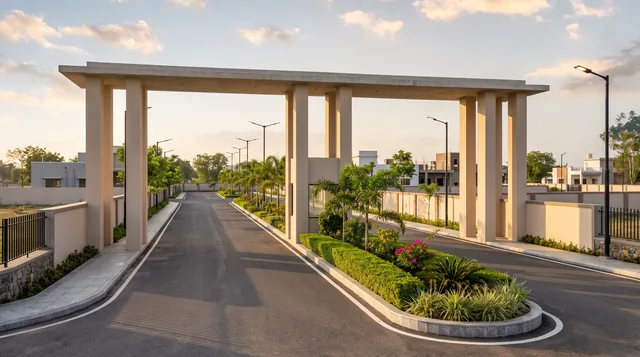 Maps & plans7 min read
वादा अलग चीज़ है। नक्शा अलग।
Maps & plans7 min read
वादा अलग चीज़ है। नक्शा अलग।
Promised vs sanctioned: the brochure and the layout plan
Why a brochure binds nobody and a sanctioned layout does, what reserved land looks like on the sheet, and the one question to ask when the amenity is not on it.
8 Sep 2025 Papers & law8 min read
एक दिन — और ज़िंदगी भर का काग़ज़।
Papers & law8 min read
एक दिन — और ज़िंदगी भर का काग़ज़।
Registry day: what happens, and mutation afterwards
Stamp duty, the four-month clock, Aadhaar at the counter, e-registration from home, and why a registered deed still leaves mutation to be done.
8 Sep 2025Tagged developer, resale, instagram-series, layout-plan, mutation, checklist.
Read it. Then check it on the map.
Every colony's boundary, its approved layout, its zoning and its paperwork — on one screen. Signing in is free.