
कॉलोनी की देखभाल कौन करेगा?
Who maintains the colony: roads, water and the handover
Every colony is in one of three hands after the sale. Here is how to tell which, and the three questions that get the true answer on site.
On this page
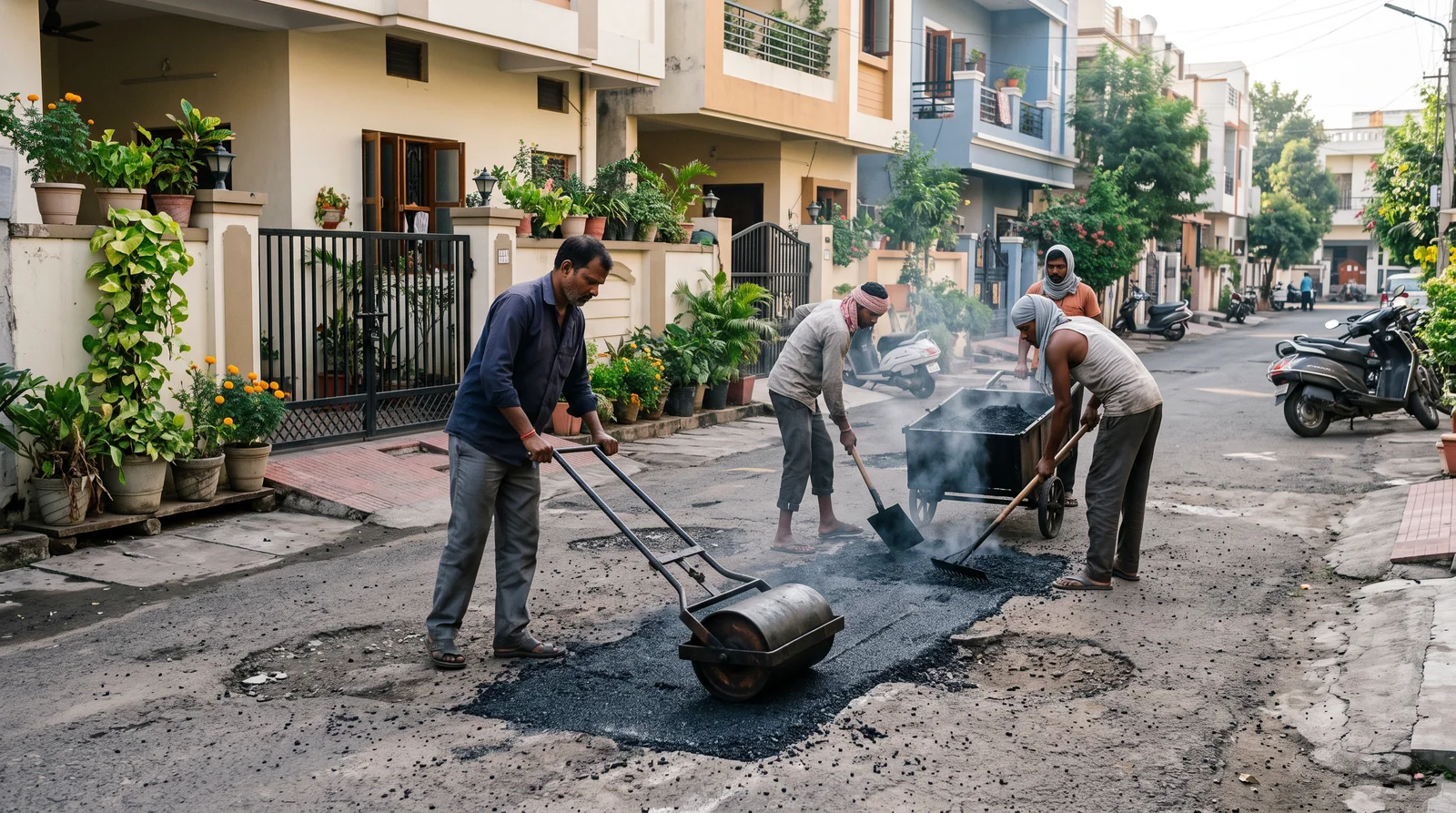
Whoever developed the colony maintains its roads, drains, street lights and open space until they are handed over. After that the job belongs to the local body, or, where handover never happened, the residents end up carrying it. Before you buy, find out which of the three applies, because the cost lands on you.
The question nobody asks at the sales office
The plot is the thing you are buying. The colony is the thing you are buying into. On the day of the visit the street light works, the road is clean and the drain runs. That tells you the developer is looking after it now. It says nothing about who replaces the bulb in 2031, who patches the road after its fourth monsoon, or who pays when the water line cracks.
These things are built by whoever developed the colony. They are not meant to stay with that person forever. At some point they pass to someone else, and until they do, the developer is the one responsible for keeping them working.

For a project registered under RERA this is written into the law. The promoter has to provide and maintain the essential services, at reasonable charges, until the association of allottees takes the maintenance over. Alongside the conveyance of the plots, the common areas are to be handed over to that association or to the competent authority, as the case may be. In Madhya Pradesh a project is inside the Act if its land is more than 500 square metres or it has more than eight apartments.
The three stages a colony can be at
Every colony sits at one of these. The aim before buying is to know which one, and how long it has been there.
1. The developer still maintains it
डेवलपर के हाथ में। This is normal in a new colony, and it is not a warning sign on its own. The questions are what exactly the developer has committed to maintain, whether that commitment is in writing, and for how long. A spoken promise to "look after everything" is worth what it costs to make.
2. It has been handed to the local body
नगर निगम या पंचायत को सौंप दी गई। For a buyer this is the best outcome. Roads, drains and lights become the municipality's or panchayat's job, and their upkeep is paid for through the taxes you already pay as an owner. You complain to a public office, not to a private firm that may have moved on.
3. Neither, and the residents carry it
रहवासी ख़ुद उठा रहे हैं। This is common where the handover never happened. The developer has sold the last plot and stepped away, the local body has not taken the colony on, and the residents' association collects money and organises repairs itself. It can work well when the association is strong and well run. It is a real, recurring cost either way, and it rarely appears in anyone's budget for the plot.
प्लॉट आपका, कॉलोनी सबकी — पहले पूछ लीजिए।
Plot aapka, colony sabki — pehle poochh lijiye.
Ask the neighbours, not the office
The sales office will tell you what the brochure says. The people already living in the colony will tell you what actually happens. Find two residents, out walking or outside their gates, and spend ten minutes with them. It is worth more than an hour of the sales pitch.
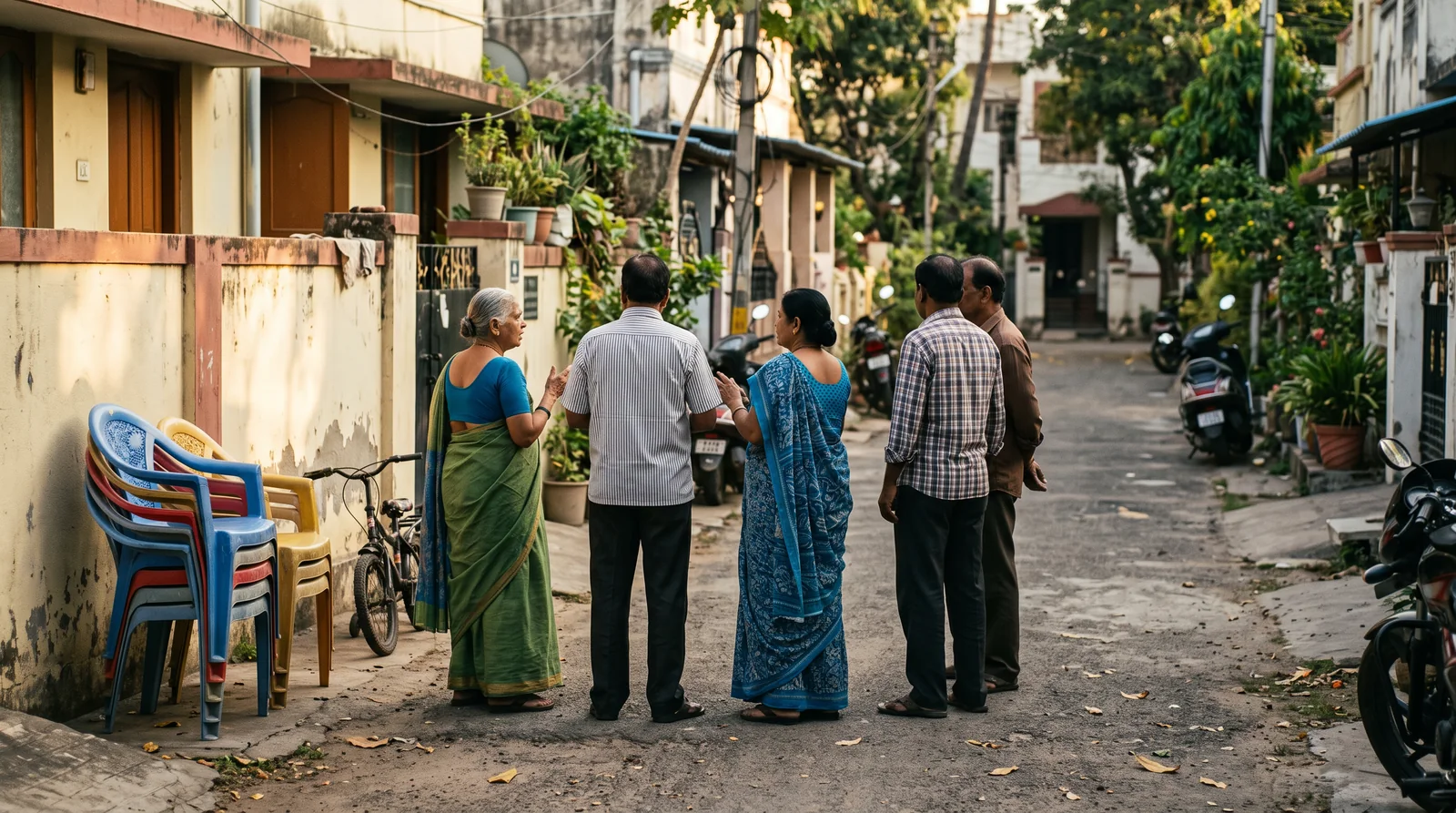
Three questions, all of which can be answered standing in the street:
- "Has the colony been handed over?" If yes, ask when, and to whom. If not, ask what has held it up. A clear answer either way is useful; a shrug is also an answer.
- "What do you pay each month, and to whom?" You want a real figure from someone who pays it, not a number printed in a brochure. Ask whether it has gone up, and what it covers.
- "Who did you call the last time the water stopped?" This one is the most revealing. If the answer is the municipal helpline, the colony is in public hands. If it is a phone number of the developer's staff, it is still with the developer. If it is the association secretary and a private plumber, the residents are carrying it.
Turning the answers into a decision
None of the three stages rules a colony out. What matters is that you know the stage, and that you price it in.
| Stage | What to get before you buy | What it costs you after |
|---|---|---|
| Developer maintains | The maintenance commitment in writing, and its term | Whatever charges that commitment sets |
| Handed to local body | When and to whom it was handed over | The taxes you pay as an owner |
| Residents carry it | The association's monthly charge and what it covers | That charge, every month, with no end date |
If the colony is new and registered, the project's page on the RERA portal is a place to start for who the promoter is and what was declared. For what services actually reach the plot today, see is the colony serviced, and for what changes once you are the owner on the municipal record, property tax and municipal records.
What this guide cannot settle
Whether a particular colony has been handed over, and under what terms, is a fact about that colony. Confirm it with the local body before you rely on what anyone tells you, including the residents. Their answers tell you where to look; the record tells you what is true.
Where to check it
See it for yourself on the map — boundaries, plans and paperwork on one screen.
See the colony's recorded boundary and sanctioned layout before you ask who maintains it →Questions people ask
Who is responsible for colony maintenance after possession?
Until the colony is handed over, the developer is responsible. For a RERA-registered project, the promoter maintains essential services until the association of allottees takes over. After handover it is the local body or the association, depending on to whom it was handed.
What does handover of a colony to the nagar nigam mean?
The roads, drains, street lighting and open space become the local body's responsibility, maintained like any other public area and paid for through the taxes owners pay.
What if the colony was never handed over?
The residents usually end up maintaining it through an association, which collects a regular charge. It can work well, but it is a recurring cost you should know before you buy.
How do I find out if a colony has been handed over?
Ask residents whether it has, when, and who they call for repairs. Then confirm the answer with the concerned local body.
Where the facts come from. The facts and figures in this post come from verified government sources and verified RERA-registered brokers.
Indori Zameen is a private platform. It is not a government body and is not affiliated with one — always confirm a record with the concerned authority before you commit money.
Share this post
Related posts
 Buying guides8 min read
सुविधा है या वादा?
Buying guides8 min read
सुविधा है या वादा?
Is the colony serviced? Power, water, sewer
A gate, a road and a wall can be finished years before a working connection. Six questions and one visit after dark tell you what you are really buying.
8 Sep 2026 Buying guides7 min read
अवैध कॉलोनी — और उसे वैध करने से क्या बदलता है।
Buying guides7 min read
अवैध कॉलोनी — और उसे वैध करने से क्या बदलता है।
Unapproved colonies: what the word means, and what regularisation fixes
Unapproved does not mean stolen land. It means three steps were skipped. What regularisation repairs, and the three things it never will.
3 Oct 2026 Papers & law10 min read
क़ब्ज़े के बाद
Papers & law10 min read
क़ब्ज़े के बाद
After you own it: property tax and municipal records
Who taxes your plot, why the seller stays liable until the record is changed, and what a tax receipt does and does not prove about ownership.
8 Sep 2026 Papers & law7 min read
रजिस्टर्ड है — पर किसका?
Papers & law7 min read
रजिस्टर्ड है — पर किसका?
What RERA does, and what it does not
Who must register with MP RERA, what an agent's number means, and the four checks a registration does not replace: title, ownership, coverage and sanction.
8 Sep 2026Tagged imc, developer, water, instagram-series, site-visit, rera.
Read it. Then check it on the map.
Every colony's boundary, its approved layout, its zoning and its paperwork — on one screen. Signing in is free.