
अवैध कॉलोनी — और उसे वैध करने से क्या बदलता है।
Unapproved colonies: what the word means, and what regularisation fixes
What is actually missing in an unapproved colony, what regularisation repairs on paper, and the three things it leaves exactly as they were built.
On this page
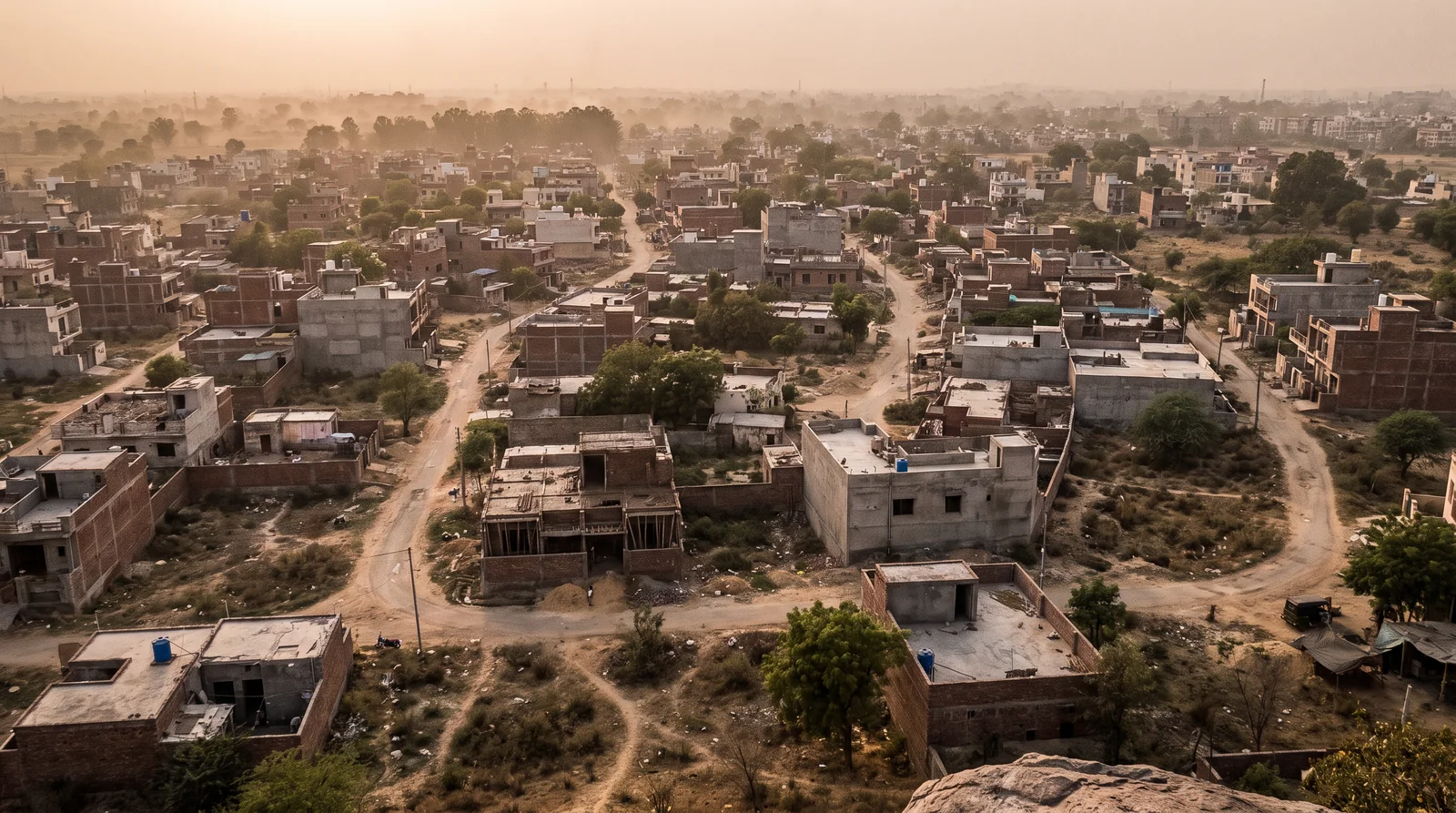
An unapproved colony is not stolen land. It is a colony where three things never happened: the developer was never registered with the local body, the layout was never sanctioned, and the roads, drains and lights were never built to any standard. Regularisation puts such a colony on the municipal record. It does not rebuild it.
The word, and what it does not mean
The Hindi word people use, अवैध, sounds like a crime. Buyers hear it and picture forged papers or land taken from someone. That is usually not what is going on. The seller may own the land outright and the sale deed may be perfectly valid. What is missing is the approval to turn that land into a colony.
The distinction tells you where to look. A title problem is a lawyer's question. An unapproved colony is a planning question, answered on the local body's record.
ज़मीन किसी की चुराई हुई नहीं, बस नक्शा कभी पास नहीं हुआ।
Zameen kisi ki churaai hui nahin, bas naksha kabhi paas nahin hua.
Three steps that were skipped
Developing a colony inside a municipal area is a sequence, and an unapproved colony is one where the sequence was never started.
1. Nobody registered as a coloniser
Before anyone can develop a colony, they register with the local body as a coloniser. Many of the people who carved fields into plots never applied. Without that registration there is no one the local body can hold to the colony's obligations.
2. No layout was sanctioned
A sanctioned layout is the approved drawing of the colony. It fixes the width of each road, the plots and their numbers, and the ground kept back for parks and services. Without it, nothing is fixed. Roads are whatever was left between walls; open space is whatever was not sold.
3. No standard for the works
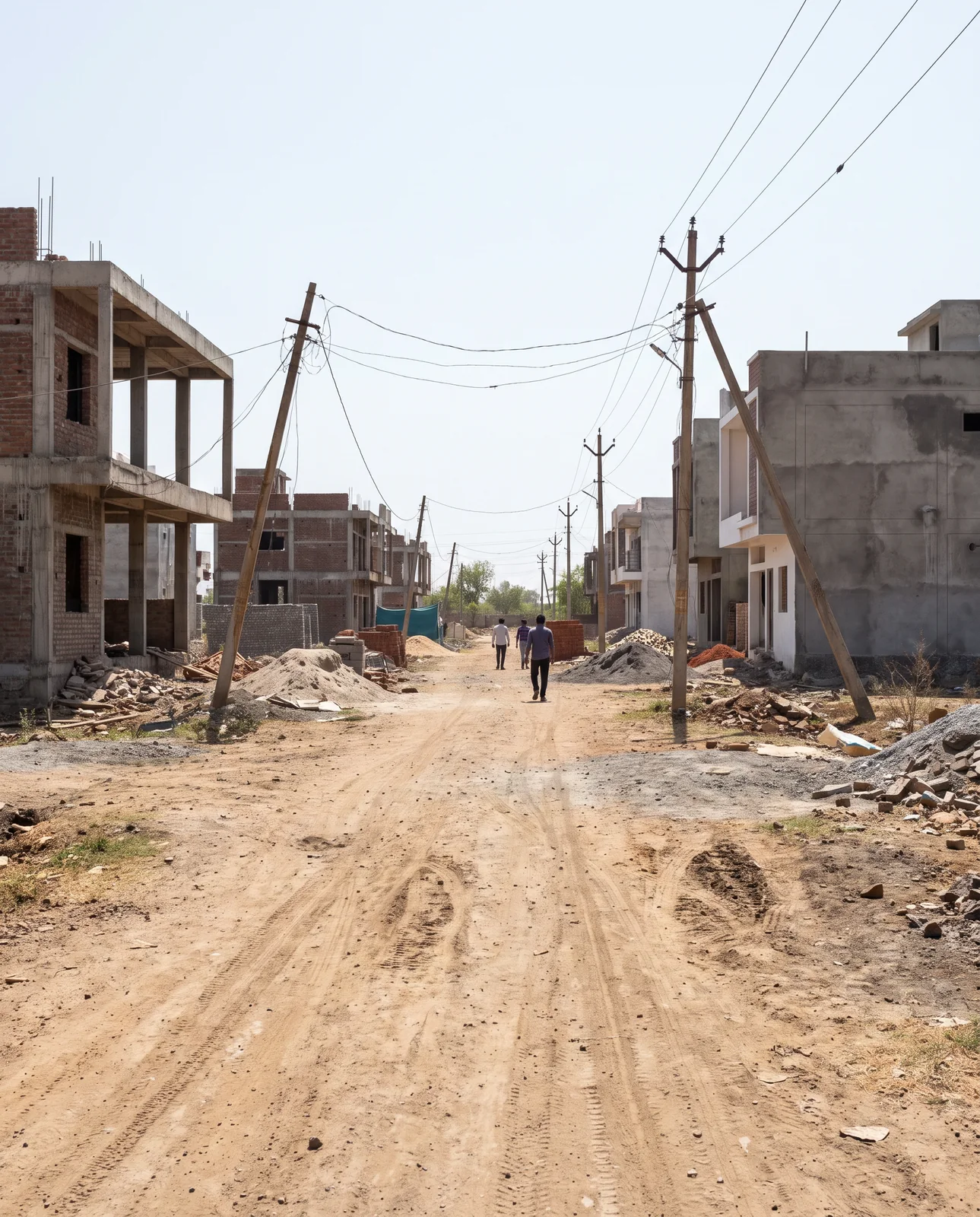
Water lines, drainage, street lighting and paved roads were no one's stated obligation. Some got built, some half-built, some not at all.
What it costs you, week to week
Plots in such a colony are cheaper, and the reason is not a court case waiting to happen. It is a list of small inconveniences that never quite end.
- Building permission is harder. A building permission is granted for a plot that sits on an approved layout. If there is no layout, your plot is not part of anything the local body can approve against.
- Services arrive slowly, or informally. Municipal water and sewer lines tend to reach approved colonies first. Until they reach yours, the answer is a borewell, a tanker or a private connection of uncertain standing.
- Loans are harder and dearer. A lender prices the paperwork risk into the rate, or declines the file.
- Your own buyer will see all of it. When you sell, the next buyer asks the same questions you are reading now, and the discount you got on the way in is the discount you give on the way out.
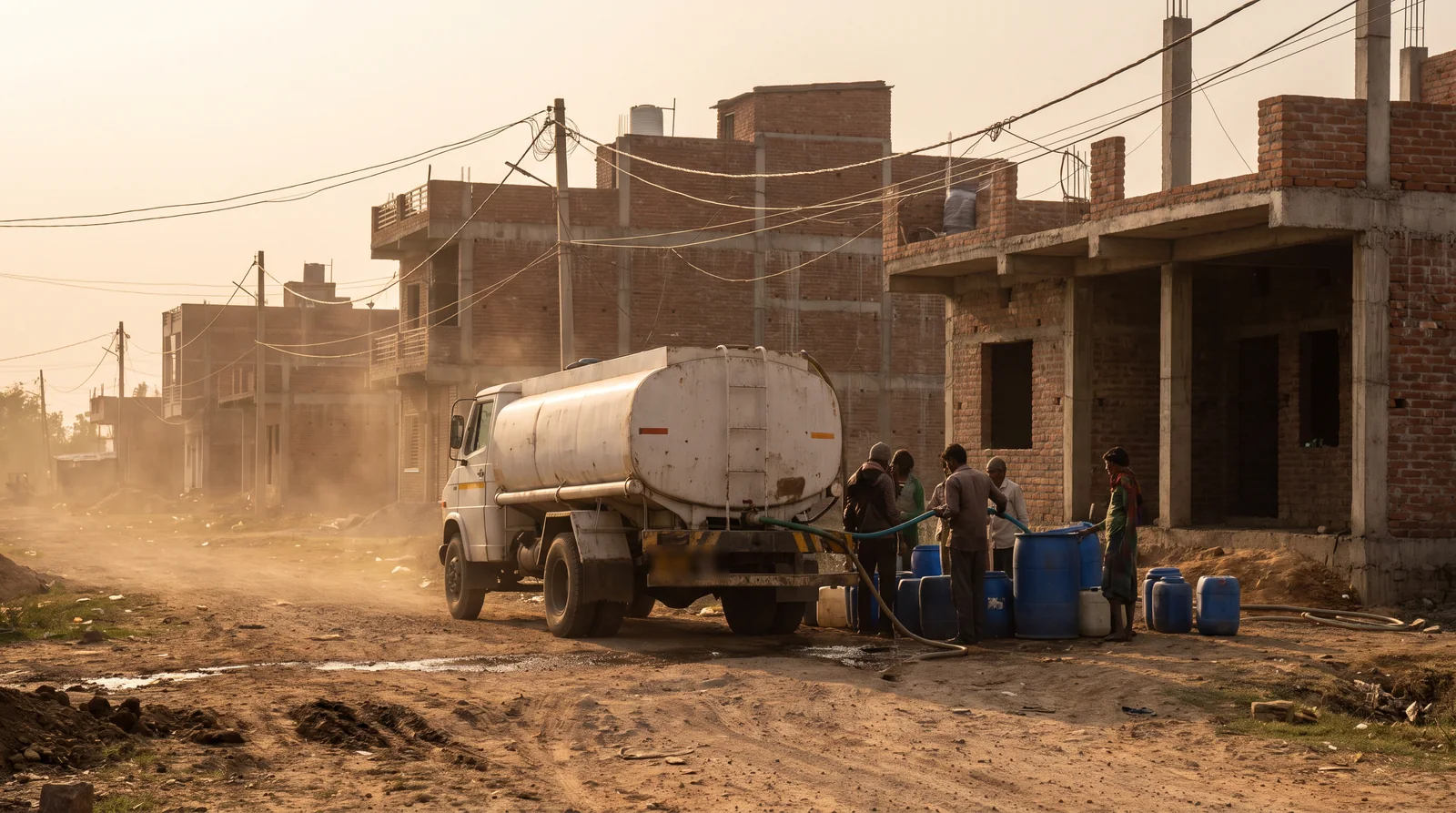
सस्ती ज़मीन की क़ीमत बाद में, थोड़ी-थोड़ी करके चुकती है।
Sasti zameen ki keemat baad mein, thodi-thodi karke chukti hai.
Regularisation: the route back onto the record
Madhya Pradesh has a lawful way to bring such a colony in. Under the state's colony development rules, the local body can regularise an unauthorised colony: it assesses the colony, charges a development fee, and takes it onto the municipal record, so that permissions and services can follow. Whole neighbourhoods have come in this way and are now ordinary places to live. It is a real route, used widely, and not a loophole.
The terms have been amended more than once, and they may change again. Whatever you hear about cut-off dates or charges, confirm the current position with the local body itself rather than with whoever is selling the plot.
What regularisation fixes, and what it never will
This is the part to read slowly. Regularisation is administrative. It changes the colony's standing on paper. It does not move a single wall.
| It does | It does not |
|---|---|
| Put the colony on the municipal record | Widen a road that was built too narrow |
| Open the door to permissions and services | Bring back open space already sold as plots |
| Make lending and resale easier | Cure a defect in the seller's title |
| Give the local body a basis to charge for and plan works | Change what was physically built |
A regularised colony is a legitimate place to buy. But it remains the colony it was built as. If the lane outside your plot is too narrow for a tanker to turn, it will still be too narrow the day after the order is passed. If the park was sold off as plots, there is no park. And if the seller's own title has a gap, regularisation has nothing to say about it; that is a separate check on the chain of title.
Two questions before any money moves
Ask them at the first visit, not at the token.
- "Is this colony approved, regularised, or neither?" These are three different answers, and anyone who sells plots there knows which one is true. A vague reply is itself an answer.
- "Show me the sanctioned layout with my plot on it." If a sanctioned layout exists, your plot number is drawn on it, with the road in front at its sanctioned width. If there is no layout to show, you have learned what you needed to.
Once you have the layout, here is how to read it.
Where to check it
See it for yourself on the map — boundaries, plans and paperwork on one screen.
See whether the colony has a recorded boundary and a sanctioned layout before you visit →Questions people ask
What is the meaning of an unapproved colony in Indore?
A colony whose developer never registered with the local body, whose layout was never sanctioned, and whose roads and services were built to no required standard. It says nothing by itself about who owns the land.
Is it safe to buy a plot in a regularised colony?
A regularised colony is a legitimate place to buy, because it is on the municipal record. Judge its roads, drainage and open space with your own eyes, and check the seller's title separately; regularisation does not touch either.
Can I get building permission in an unapproved colony?
It is hard, because building permission is granted against an approved layout and an unapproved colony has none. Regularisation is the route that opens the door to permissions.
Does regularisation widen narrow roads or give back the park?
No. It is an administrative step. A road built too narrow stays that width, and open space already sold as plots does not come back.
How do I know if a colony is approved or not?
Ask the seller whether it is approved, regularised or neither, ask to see your plot on the sanctioned layout, and then confirm both with the concerned local body before you pay.
Where the facts come from. The facts and figures in this post come from verified government sources and verified RERA-registered brokers.
Indori Zameen is a private platform. It is not a government body and is not affiliated with one — always confirm a record with the concerned authority before you commit money.
Share this post
Related posts
 Maps & plans8 min read
नक्शा पढ़ना सीखिए।
Maps & plans8 min read
नक्शा पढ़ना सीखिए।
How to read a sanctioned layout plan
Plot numbers, road widths, open space, the reserved series and boundary lengths: how to read each one off a sanctioned layout plan before you pay.
8 Sep 2026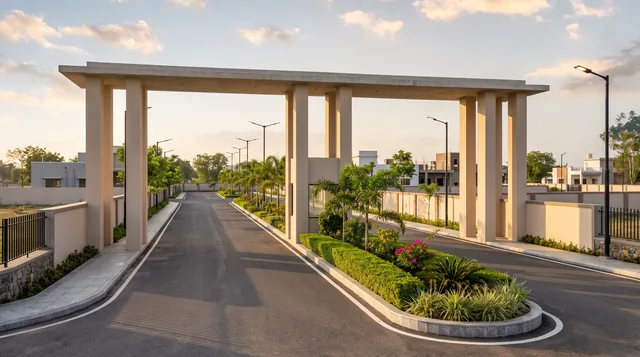 Maps & plans7 min read
वादा अलग चीज़ है। नक्शा अलग।
Maps & plans7 min read
वादा अलग चीज़ है। नक्शा अलग।
Promised vs sanctioned: the brochure and the layout plan
Why a brochure binds nobody and a sanctioned layout does, what reserved land looks like on the sheet, and the one question to ask when the amenity is not on it.
8 Sep 2026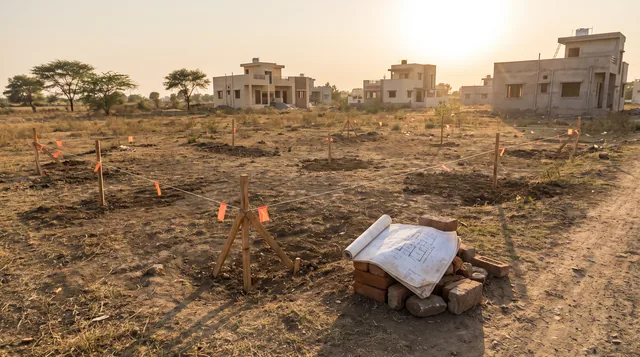 Maps & plans8 min read
नक्शा पास कराए बिना नींव मत डालिए।
Maps & plans8 min read
नक्शा पास कराए बिना नींव मत डालिए।
Building permission: getting the city's approval to build your house
Owning a plot in Indore does not let you build on it. How building permission works on ABPAS, what goes in the file, the fees, and the clock.
3 Oct 2026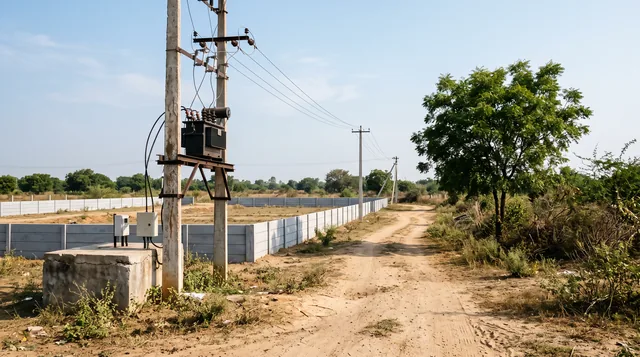 Buying guides8 min read
सुविधा है या वादा?
Buying guides8 min read
सुविधा है या वादा?
Is the colony serviced? Power, water, sewer
A gate, a road and a wall can be finished years before a working connection. Six questions and one visit after dark tell you what you are really buying.
8 Sep 2026Tagged layout-plan, t-and-cp, imc, instagram-series, plot, checklist.
Read it. Then check it on the map.
Every colony's boundary, its approved layout, its zoning and its paperwork — on one screen. Signing in is free.