
नीलामी की प्रॉपर्टी — सस्ती है, पर साफ़ है?
Buying property at a bank auction
How a bank's e-auction under SARFAESI works, what the sale notice is really telling you, and the five checks to finish before any earnest money leaves your account.

On this page
- What is actually for sale
- The sale notice matters more than the photographs
- Where Indore's auctions are listed
- From bid to certificate: the clock starts when you win
- The old bills that come with the house
- Who has the keys: symbolic or physical possession
- Five checks to finish before paying the EMD
- The bank sells the flat; you check the colony
A bank e-auction sells a mortgaged property whose borrower has defaulted, and the bank sells only what it holds. It promises nothing about the title, the old dues or who is living inside. These can be genuine opportunities, but every check a normal seller's papers would answer is yours to make, before the earnest money goes.
What is actually for sale
When a borrower ignores the bank's 60-day demand notice, the SARFAESI Act, 2002 lets the bank take the mortgaged property and sell it without going to court. The bank wants its loan back, which is why prices can look attractive.
Three phrases recur in every sale notice: as is where is, as is what is, and whatever there is. The property is sold in exactly the condition and legal state it is in. The same terms tell bidders to make their own inquiries into the title, encumbrances, the physical area and any claims or dues, and say the bank answers for none of them.
सस्ता सौदा, पर जाँच पूरी आपकी।
Sasta sauda, par jaanch poori aapki.
The sale notice matters more than the photographs
Every auction has a sale notice. Six lines in it decide whether you should bid at all. Here they are on an invented example: a 2BHK flat of 1,050 sq ft on the second floor, reserve price ₹32,00,000, earnest money ₹3,20,000.
| Line in the notice | What it is telling you |
|---|---|
| Property description | What the bank's file says it is. Match it against the colony layout and your own tape measure. |
| Possession | "Symbolic": the keys are not with the bank. More on that below. |
| Reserve price | The floor. There is no sale below it unless the borrower also agrees. |
| EMD | Earnest money, refunded if you lose. The rules leave the amount to the bank; in the notice we read it was about a tenth of the reserve. |
| Inspection | Dates, or by appointment. Visit, and note who is living there. |
| Known encumbrances | Limited to the bank's own knowledge. "Not known to the bank" is not the same as "none". |
Where Indore's auctions are listed
- ibapi.in, an Indian Banks' Association initiative, is a common listing of mortgaged properties that banks will auction online, beginning with the public-sector banks. You can search by city.
- baanknet.com, the public-sector banks' e-auction platform, relaunched in January 2025. SBI lists its auctions there.
- The newspaper. Every sale notice must also be published in two newspapers, one of them in the local language. Lenders post notices on their own websites as well.
From bid to certificate: the clock starts when you win
- At least 30 days before the auction, the sale notice is published. After that, the borrower loses the right to halt the sale by repaying.
- Before the deadline, you pay the EMD online.
- Auction day. The highest bid at or above the reserve wins, and the bank confirms the sale.
- The same or the next working day, you pay 25 per cent of the price, with the EMD counted in it.
- By the fifteenth day after confirmation, the remaining 75 per cent. Longer only if agreed in writing, and never beyond three months.
- Then the sale certificate, in your name. The bank sends a copy to the sub-registrar for filing.
Miss a payment and the deposit is forfeited and the property resold. Arrange a loan sanction before you bid, not after you win.
The old bills that come with the house
The borrower is gone. Their unpaid bills often are not.
- Property tax. Tax due on land or a building is a first charge on it. Get the IMC's figure for the account before bidding.
- Electricity. The new occupant must clear the premises' arrears, and the discom can refuse supply until they are paid; it must certify the amount if asked. The Supreme Court has upheld such rules against auction buyers.
- Society and maintenance. The terms we read said the bank takes no responsibility for water, electricity, municipal or housing-society dues.
Who has the keys: symbolic or physical possession
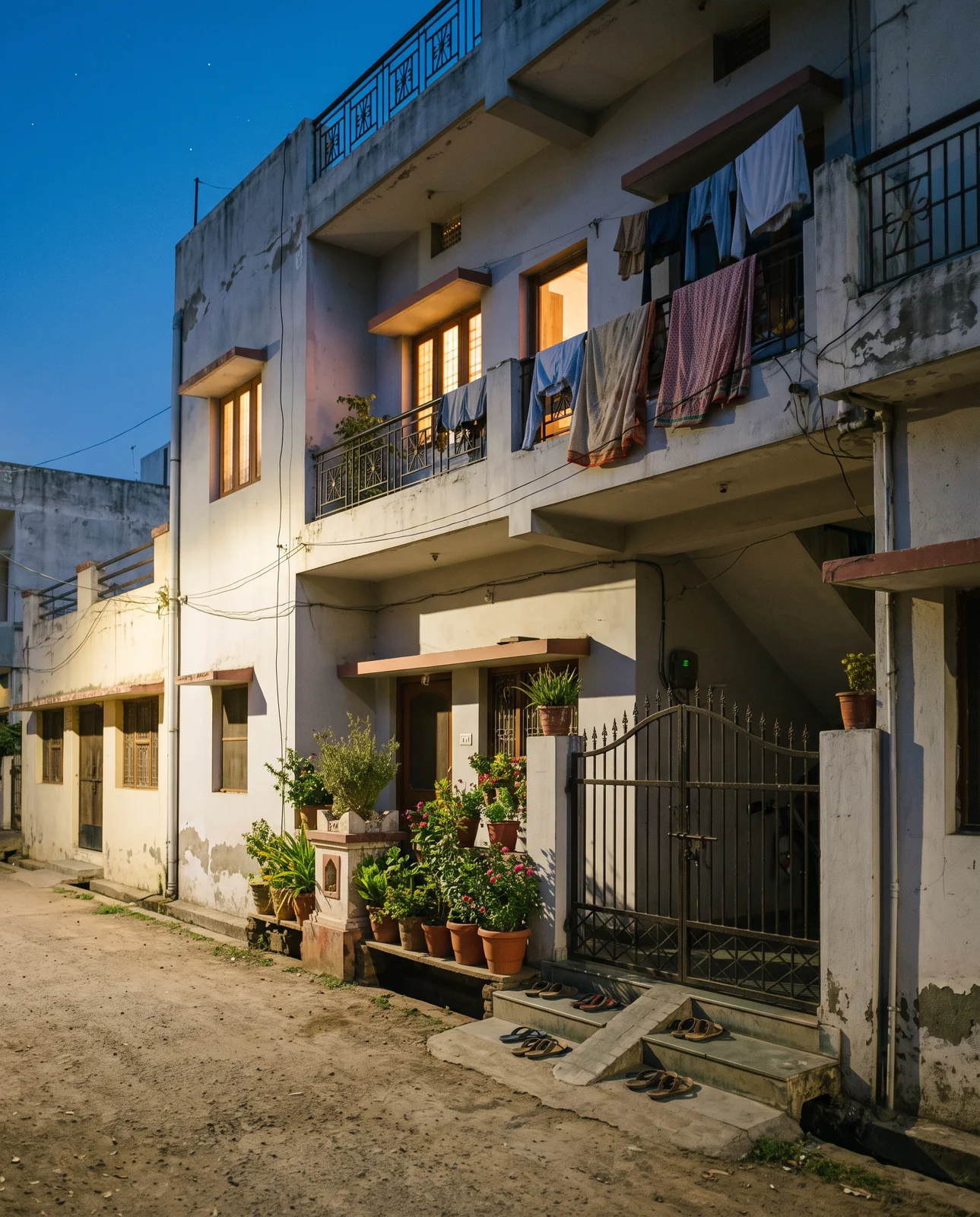
Symbolic possession means the bank has served its possession notice, fixed it on the property and published it. It does not hold the keys, and someone may still be living there.
Physical possession means the property is in the bank's hands. Ask to walk through it, empty, before bidding.
An occupied property is cleared with the District Magistrate's help, on the bank's application. The Act says 30 days, up to 60, but the Supreme Court has held that limit is not mandatory. A tenant may file a claim before the Debts Recovery Tribunal. Symbolic means pricing in time, and possibly a dispute.
Five checks to finish before paying the EMD
- See it. On an inspection date or by appointment, and notice who occupies it.
- Read the title. Ask to inspect the title deeds the bank holds, then run your own search; the guides on the chain of title and encumbrances show how.
- Get the dues in writing. The IMC's property tax figure, the discom's certificate, the society's statement.
- Check the colony. Its layout, its approval and its master-plan zone. No sale notice tells you whether the colony was sanctioned.
- Budget past the bid. The terms we read put stamp duty, registration fees and every other cost of transfer on the buyer. TDS on the price applies too, as it does on any purchase of fifty lakh rupees or more.

पहले जाँच, फिर बोली।
Pehle jaanch, phir boli.
The bank sells the flat; you check the colony
Terms differ from lender to lender: read the full notice and take a lawyer's view. General information, not legal advice.
See it for yourself on the map — boundaries, plans and paperwork on one screen.
Check the colony's sanctioned layout and master-plan zone before you bid →Questions people ask
Is it safe to buy a bank auction property in India?
It can be a genuine opportunity, but the bank sells "as is where is" and takes no responsibility for title, encumbrances, dues or occupants. Do your own title search, dues check and site inspection before you bid.
What does symbolic possession mean in a bank auction?
The bank has served and published its possession notice but does not hold the keys. Someone may still live there, and clearing them can take time through the District Magistrate.
How much do you pay after winning a bank auction?
25 per cent of the price, including the EMD, on the same or next working day, and the remaining 75 per cent within fifteen days of confirmation, extendable in writing up to three months.
Who pays old property tax and electricity dues on an auction property?
Usually the buyer. Property tax is a first charge on the property, and the discom can refuse supply until arrears are cleared. Get each figure in writing before you bid.
Where the facts come from. The facts and figures in this post come from verified government sources and verified RERA-registered brokers.
Indori Zameen is a private platform. It is not a government body and is not affiliated with one — always confirm a record with the concerned authority before you commit money.
Share this post
Related posts
 Papers & law9 min read
इस ज़मीन पर किसी का हक़ तो नहीं?
Papers & law9 min read
इस ज़मीन पर किसी का हक़ तो नहीं?
The encumbrance question: is a loan or a court order already on the land?
A plot can carry a mortgage, a court attachment or a pending suit you cannot see from the gate. What an encumbrance certificate shows, and what it misses.
8 Sep 2026 Papers & law7 min read
साफ़ टाइटल एक ज़ंजीर है।
Papers & law7 min read
साफ़ टाइटल एक ज़ंजीर है।
Clear title is not a certificate: how to read the chain of title
Nobody issues a certificate saying your land is fine. Clear title is a chain of owners with no gap, traced back thirty years. How to read it, and its limits.
3 Oct 2026 Money7 min read
टीडीएस काटना ख़रीदार का काम है।
Money7 min read
टीडीएस काटना ख़रीदार का काम है।
TDS on property: the one per cent the buyer must deduct
Buying property for ₹50 lakh or more? One per cent of the price is the seller's tax, and deducting it is your job. What to file, by when, and the NRI exception.
3 Oct 2026 Money7 min read
बैंक क्या-क्या जाँचता है?
Money7 min read
बैंक क्या-क्या जाँचता है?
What the bank checks before it lends on a property
Before a home loan, a lawyer and a valuer examine the property at the bank's cost. What each one checks, and why a refusal is information.
3 Oct 2026Tagged loan, encumbrance, checklist, site-visit, instagram-series.
Read it. Then check it on the map.
Every colony's boundary, its approved layout, its zoning and its paperwork — on one screen. Signing in is free.