
नगर निगम के अंदर या बाहर?
Inside or outside municipal limits: gram panchayat or IMC
Which side of the line a plot sits on decides who approves the colony, who lets you build, who owns the pipe and who sends the tax bill.
On this page
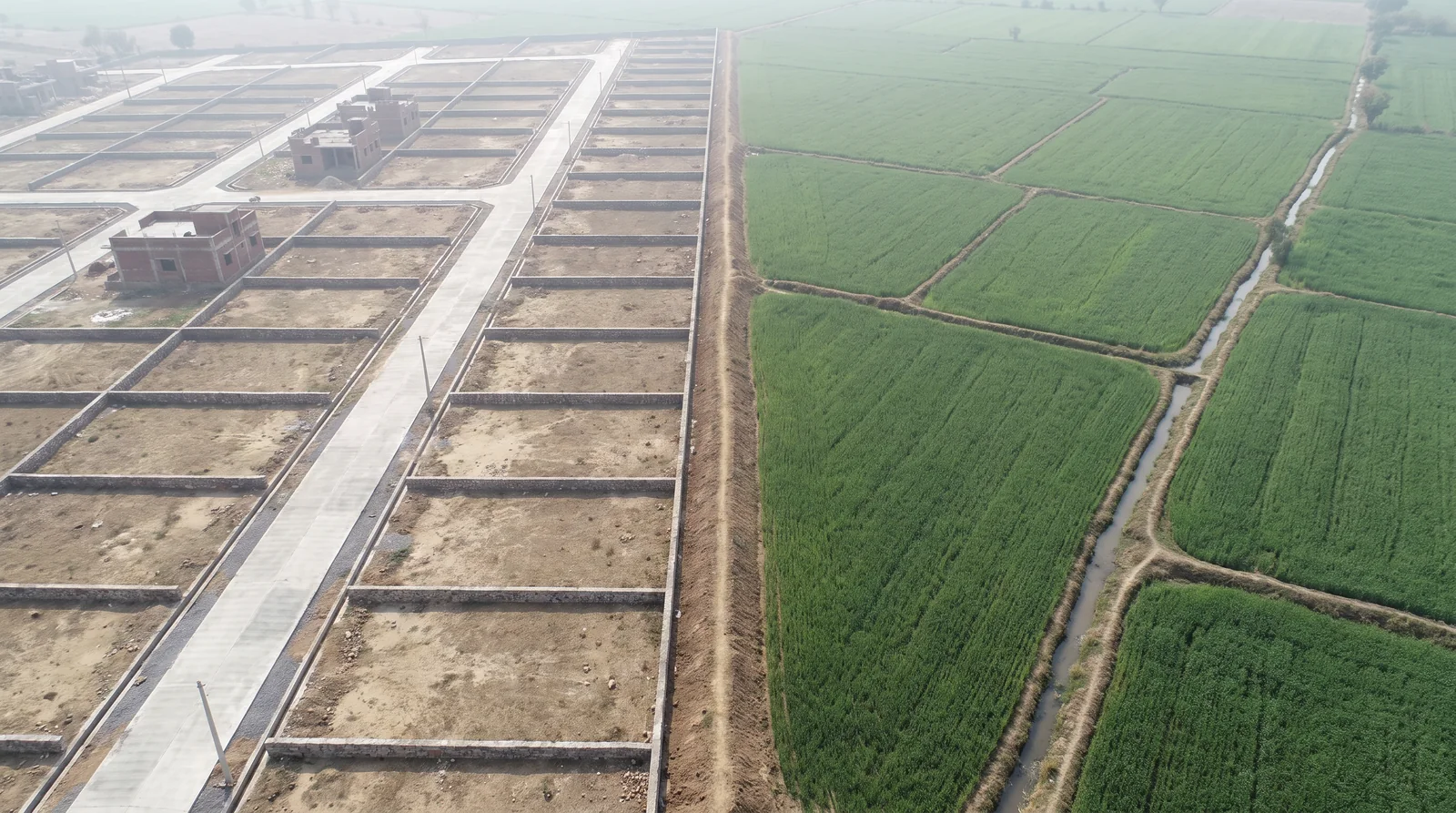
Land in and around Indore sits under one of two local governments: the Indore Municipal Corporation inside city limits, or a gram panchayat, with the Collector above it, outside. Which side a plot is on decides who sanctioned the colony, who lets you build, who maintains the pipe and who sends the tax bill. Outside is not a red flag. Not knowing is.
One city, two rulebooks
Inside the limits, the local body is a municipal corporation constituted under the M.P. Municipal Corporation Act, 1956. Outside them, it is a panchayat area under the M.P. Panchayat Raj Avam Gram Swaraj Adhiniyam, 1993. The soil does not change at the line. The rulebook does, on four counts that matter to a buyer, and the line itself is invisible from the ground.
ज़मीन वही है। सरकार दूसरी है।
Zameen wahi hai. Sarkaar doosri hai.
Who sanctions the colony
Two different desks approve a colony, depending on the side.
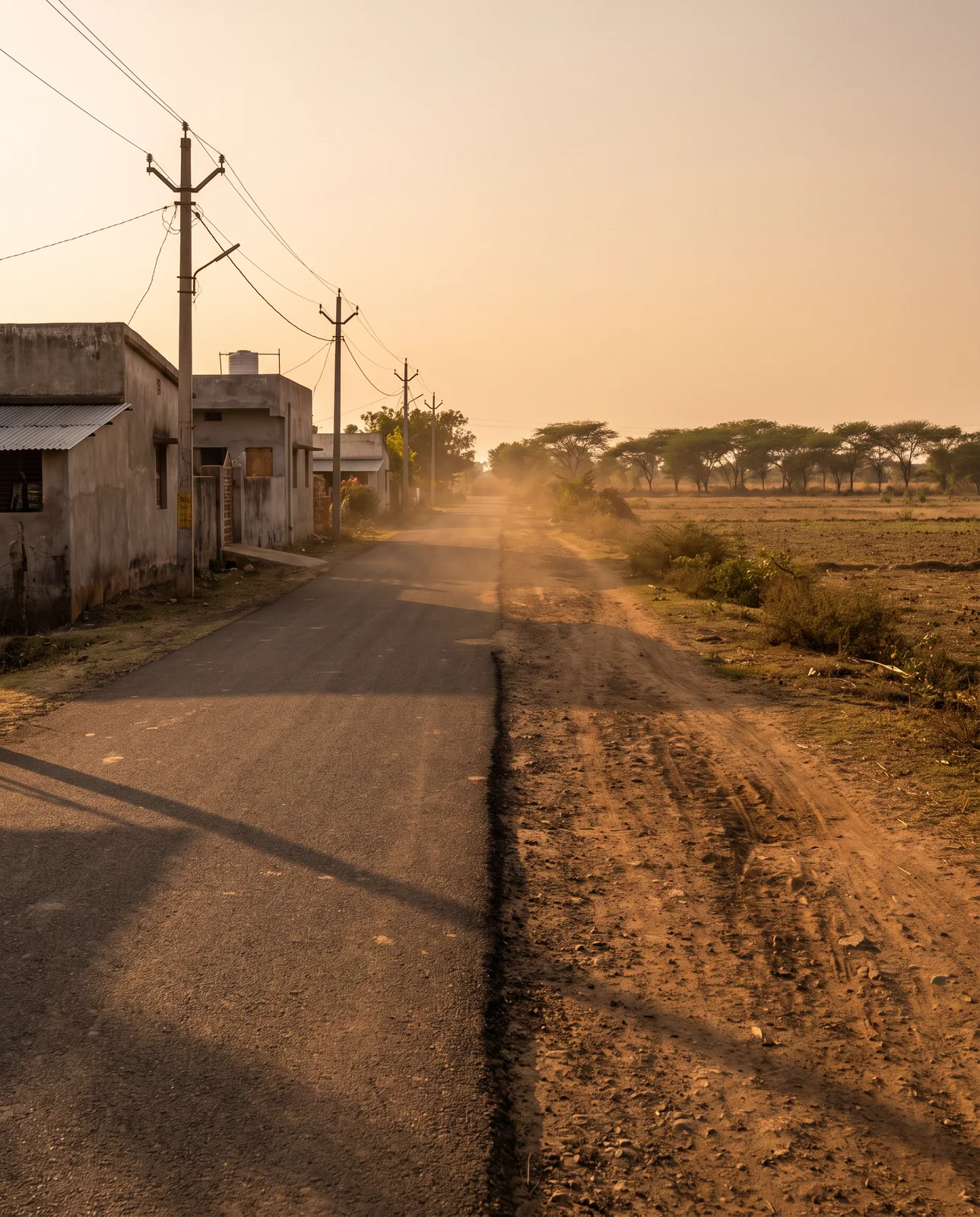
Inside, under the M.P. Nagarpalika (Colony Development) Rules, 2021, the competent authority for a municipal corporation area is the Municipal Commissioner, who grants the permission to develop. The Corporation's own Act carries a colonisation chapter, and a colonizer working inside the city registers under it.
Outside, under the M.P. Gram Panchayat (Development of Colonies) Rules, 2014, the competent authority in a district that has a municipal corporation is the Collector. Where the land falls within a planning area, the layout must also be approved under the Nagar Tatha Gram Nivesh Adhiniyam, 1973. The gram panchayat has a say, because the Act makes it consider an application for a colony in its area, but it is not the body that sanctions it.
The rules even put a distance on it: for colony purposes, a "gram panchayat area" is land in a gram panchayat within 16 km of a municipal corporation's limits.
Who lets you build on it
Sanctioning the colony and permitting a building on a plot are separate permissions, and again the desk depends on the side.
Inside, nobody may erect, re-erect or materially alter a building without the written permission of the Corporation's Chief Executive Officer.
Outside, building needs the written permission of the gram panchayat, and the Act adds a twist: if the panchayat does not communicate a refusal within 45 days, permission is presumed to have been granted.
So the first question about a plot is not the rate. It is whose permission the plot needs, and whether that permission was ever actually issued.
इजाज़त किससे लेनी है — ये पहले पता कीजिए।
Ijaazat kisse leni hai — ye pehle pata kijiye.
Whose job is the pipe
| Service | Inside limits | Outside limits |
|---|---|---|
| Water | The Corporation must run the municipal water works and provide public drinking-water facilities. | Wells, tanks and domestic water sit with the panchayat; a colony's internal lines are built by the developer. |
| Sewer and drains | Constructing and maintaining drains and sewers is an obligatory duty of the Corporation. | The developer lays the sewage system and hands the external drainage to the panchayat to maintain. |
| Roads | Constructing, altering and maintaining public streets is on the Corporation. | Village roads and public streets sit with the panchayat; a colony's external roads are handed over to it. |
| Street lighting | Lighting public streets and places is an obligatory duty of the Corporation. | Lighting village streets sits with the panchayat. |
The wording differs too. The Corporation's duties in this list are obligatory. The panchayat's functions are owed "in so far as the Gram Panchayat funds allow". That is not a criticism of panchayats; it is what the Act says, and it is why a buyer outside the limits should ask who maintains the road before assuming somebody does.
Who sends the bill
Both sides tax you. The body and the basis differ.
Inside, the Corporation levies a property tax on the owners of buildings and lands, with reference to their gross annual letting value, alongside a water tax, a general sanitary cess and a general lighting tax.
Outside, the gram panchayat levies its own tax on land or buildings, set on capital value rather than letting value, and a lighting tax where the panchayat has made lighting arrangements.
Different levy, different receipt, different record. Ask which receipt this plot already has, and in whose name it stands.
The line moves
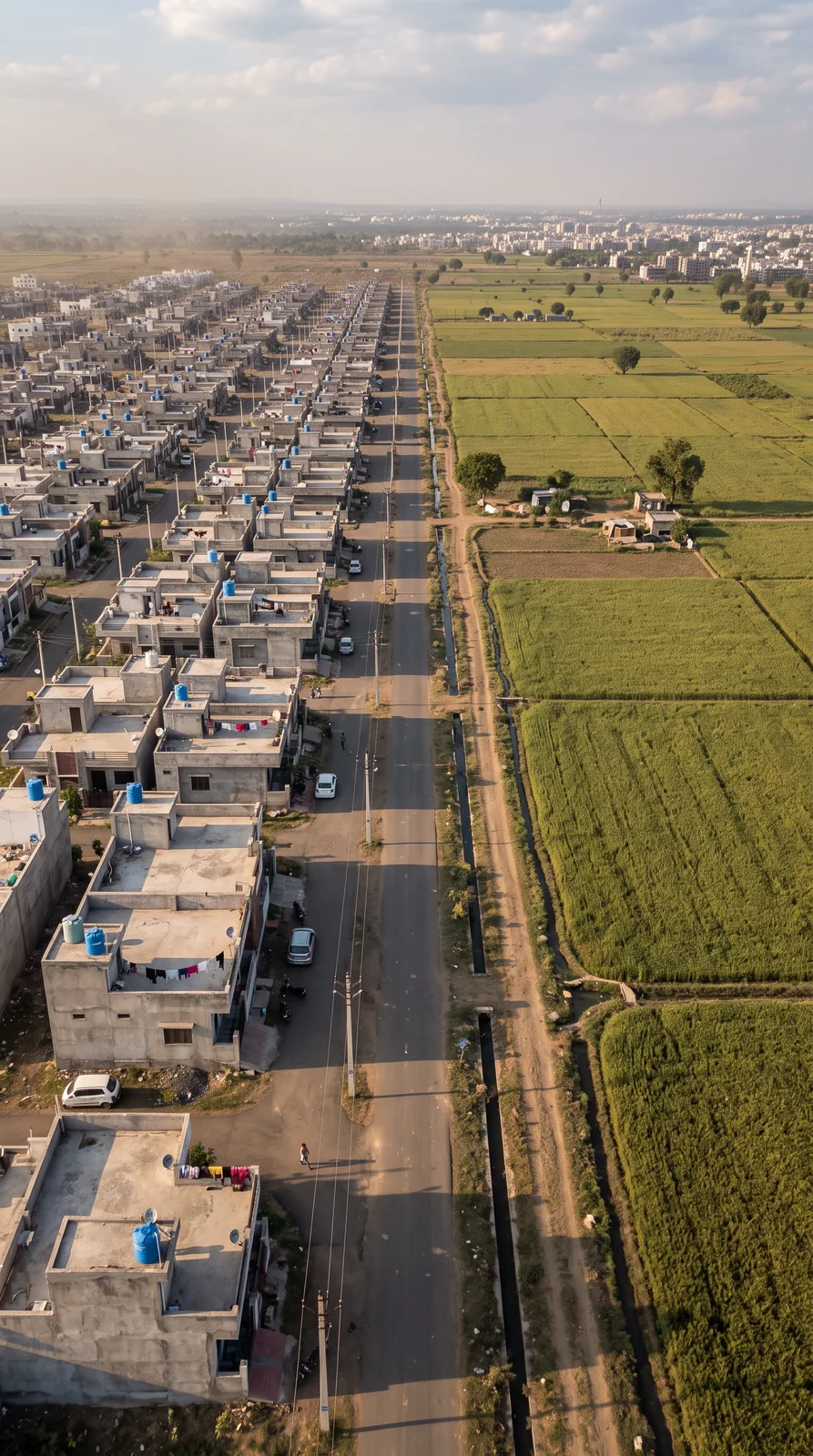
Outside today is not outside forever. The Corporation's Act lets the Governor declare an intention to include an area within, or exclude it from, the limits of the city, hear objections, and then notify the change.
It has happened here. In January 2014 Indore's ward map was redrawn to bring 29 villages inside city limits, taking the Corporation from 69 wards to 70 and adding roughly two lakh people to it.
आज बाहर है, कल अंदर हो सकता है।
Aaj baahar hai, kal andar ho sakta hai.
Outside is not a red flag. Not knowing is.
Land outside the Corporation can be cheaper, and it can be entirely legitimate: sanctioned by the Collector, diverted, on the record. The mistake is not buying outside. The mistake is not knowing which side you are buying on, and assuming that municipal water, a municipal sewer and a municipal road will simply arrive because the city is nearby.
Every colony carries its village and its tehsil
This is not a conversation to have with a seller. It is something you look up. Every colony on the platform carries its village and tehsil on its record, its boundary on the map, the sanctioned layout and the master-plan zone around it, so "which side of the line" becomes a fact you read rather than a claim you weigh. As of September 2026 that is 1,161 colonies and projects across Indore.
See it for yourself on the map — boundaries, plans and paperwork on one screen.
Open the colony and read its village and tehsil before you book →Questions people ask
How do I know if a plot is inside Indore municipal limits?
Look at the colony's record: its village and tehsil tell you which local body it falls under. The boundary on the map and the master plan around it confirm the side. Nothing on the ground will.
Who approves a colony outside Indore city limits?
Under the M.P. Gram Panchayat (Development of Colonies) Rules, 2014, the competent authority in a district with a municipal corporation is the Collector, and in a planning area the layout is approved under the Nagar Tatha Gram Nivesh Adhiniyam, 1973. The panchayat is consulted, not the sanctioning body.
Do I need building permission from the gram panchayat?
Yes. Outside the limits, building needs the panchayat's written permission, and if it does not communicate a refusal within 45 days permission is presumed granted. Inside the limits, it is the Corporation's Chief Executive Officer.
Is buying a plot in a gram panchayat area risky?
Not in itself. Land outside the Corporation can be cheaper and fully on the record. The risk is not knowing which side you are on and assuming municipal services will follow.
Who provides water and sewer outside Indore municipal limits?
The developer builds a colony's internal water lines and sewage and hands the external drainage and roads to the gram panchayat, whose functions are owed only so far as its funds allow. Inside the limits these are obligatory duties of the Corporation.
Can a village become part of Indore Municipal Corporation later?
Yes. The Governor may notify an area into or out of city limits after hearing objections. In January 2014, 29 villages were brought into Indore's limits.
Where the facts come from. The facts and figures in this post come from verified government sources and verified RERA-registered brokers.
Indori Zameen is a private platform. It is not a government body and is not affiliated with one — always confirm a record with the concerned authority before you commit money.
Share this post
Related posts
 Papers & law10 min read
क़ब्ज़े के बाद
Papers & law10 min read
क़ब्ज़े के बाद
After you own it: property tax and municipal records
Who taxes your plot, why the seller stays liable until the record is changed, and what a tax receipt does and does not prove about ownership.
8 Sep 2025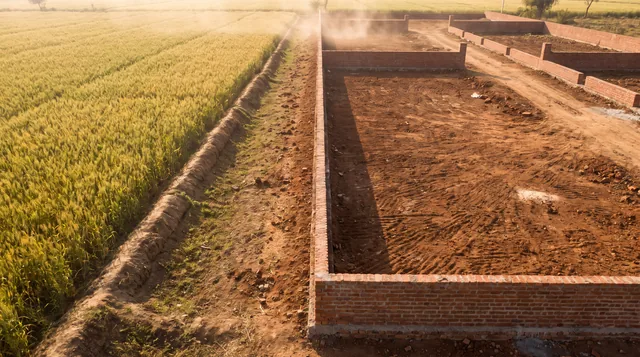 Papers & law9 min read
खेत से प्लॉट तक
Papers & law9 min read
खेत से प्लॉट तक
Farmland to plots: what diversion changes, and what it does not
Diversion only changes what a parcel is assessed for on the revenue record. The two permissions that must follow, and which paper to ask for by date.
8 Sep 2025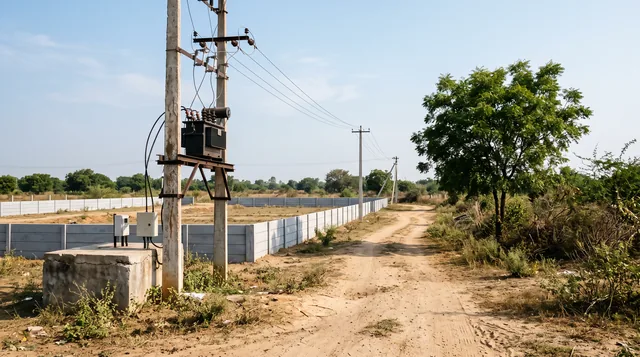 Buying guides8 min read
सुविधा है या वादा?
Buying guides8 min read
सुविधा है या वादा?
Is the colony serviced? Power, water, sewer
A gate, a road and a wall can be finished years before a working connection. Six questions and one visit after dark tell you what you are really buying.
8 Sep 2025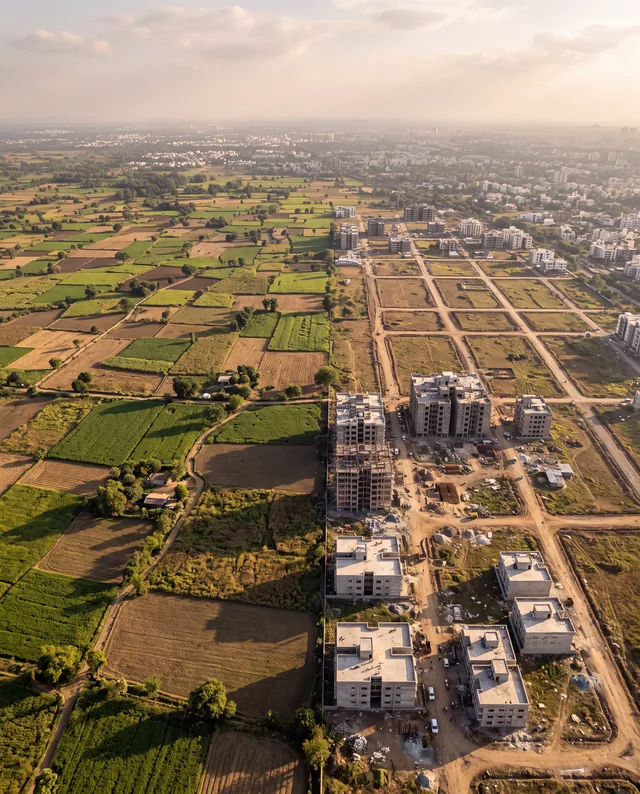 Indore7 min read
इंदौर का नक्शा बदल रहा है।
Indore7 min read
इंदौर का नक्शा बदल रहा है।
Indore is being redrawn: Master Plan 2035, the metro and the metropolitan region
A new master plan, a metro ring partly open, and a law that plans Indore as a region: what each changes for a plot, and where to check your own land.
8 Sep 2025Tagged imc, gram-panchayat, water, checklist, instagram-series.
Read it. Then check it on the map.
Every colony's boundary, its approved layout, its zoning and its paperwork — on one screen. Signing in is free.