
छत पर बिजली
Rooftop solar for the house you are about to build
What PM Surya Ghar pays, the six steps from portal to credit, and the three things to settle with your architect before the slab is cast.
On this page
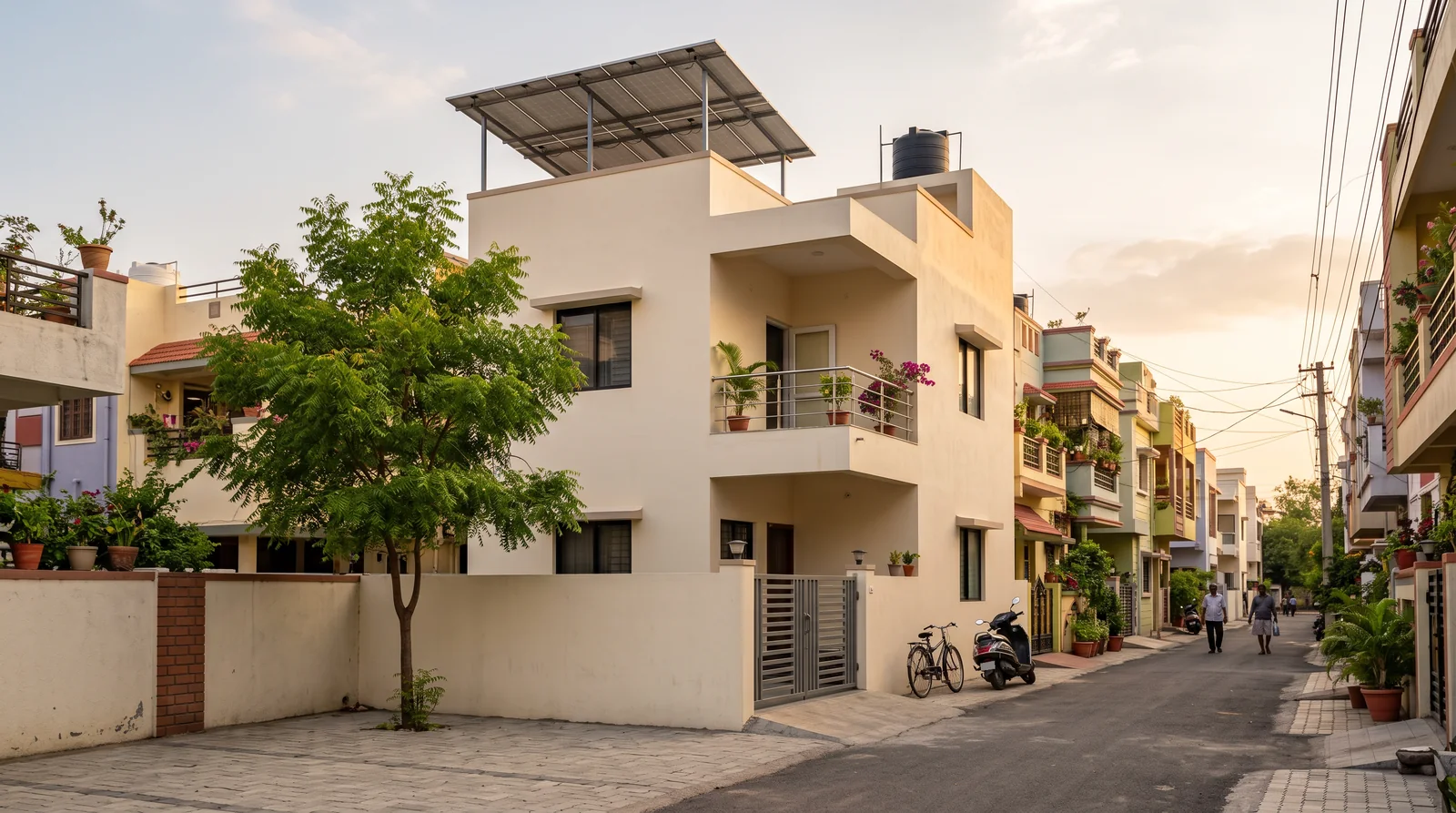
If you are about to build on your plot, PM Surya Ghar will pay a central subsidy of ₹30,000 per kilowatt for the first two kilowatts and ₹18,000 for the third, up to ₹78,000. The money is the easy part. Where the panels sit, and what shades them, is decided on the drawing, before the roof slab is cast.
What the scheme is, and who applies
PM Surya Ghar: Muft Bijli Yojana is a central scheme for rooftop solar on people's own homes. Launched on 13 February 2024 and approved by the Cabinet on 29 February 2024, it runs to the end of 2026–27 and aims at up to 300 free units a month for one crore households. By June 2026 over 40 lakh households had been solarised; Indore had over 27,100 rooftops by April 2026.
The applicant is the household on a residential electricity connection, with its consumer number, registering on the scheme's national portal for a grid-connected system on its own roof, terrace or balcony. In Indore the discom is MP Paschim Kshetra Vidyut Vitaran Company, the West Discom.
What the subsidy pays, by system size
The central financial assistance rises with the size of the system until three kilowatts, then stops rising.
| System | Central subsidy |
|---|---|
| 1 kW | ₹30,000 |
| 2 kW | ₹60,000 |
| 3 kW | ₹78,000 |
| 4 kW or more | ₹78,000 (the cap) |
Larger systems are allowed; the extra panels earn no extra subsidy. Special-category states get more; Madhya Pradesh is not one. Amounts can change, so confirm them on the portal before you budget.
The guidance sizes the system by monthly use:
| Monthly use | Suitable size | Subsidy |
|---|---|---|
| Up to 150 units | 1–2 kW | ₹30,000–60,000 |
| 150–300 units | 2–3 kW | ₹60,000–78,000 |
| Above 300 units | Above 3 kW | ₹78,000 |
For a house not yet built, start from your present bills.
सब्सिडी तीन किलोवाट पर रुक जाती है, ज़रूरत वहीं नहीं रुकती।
Subsidy teen kilowatt par ruk jaati hai, zaroorat wahin nahin rukti.
From portal to credit: six steps, in order
- Register on the portal with your consumer number; you get an application ID.
- Choose a vendor registered on the portal, and agree design and price in writing.
- Feasibility from the discom. Up to 10 kW it is deemed approved under the consumer-rights rules where the state has brought them into force; otherwise upload the papers.
- Installation, then upload of the system details and geo-tagged photographs. The only step on the roof.
- Inspection and net meter. The West Discom inspects, signs the metering agreement and fits the meter.
- Redeem the e-token. The subsidy is processed within 15 days of discom approval, to your bank, or to your solar loan.
Collateral-free loans at about 7 per cent are available for systems up to 3 kW.
Before the slab: tell your architect now
A roof designed for panels is cheaper and generates more than one adapted later. Three things belong in the drawing.
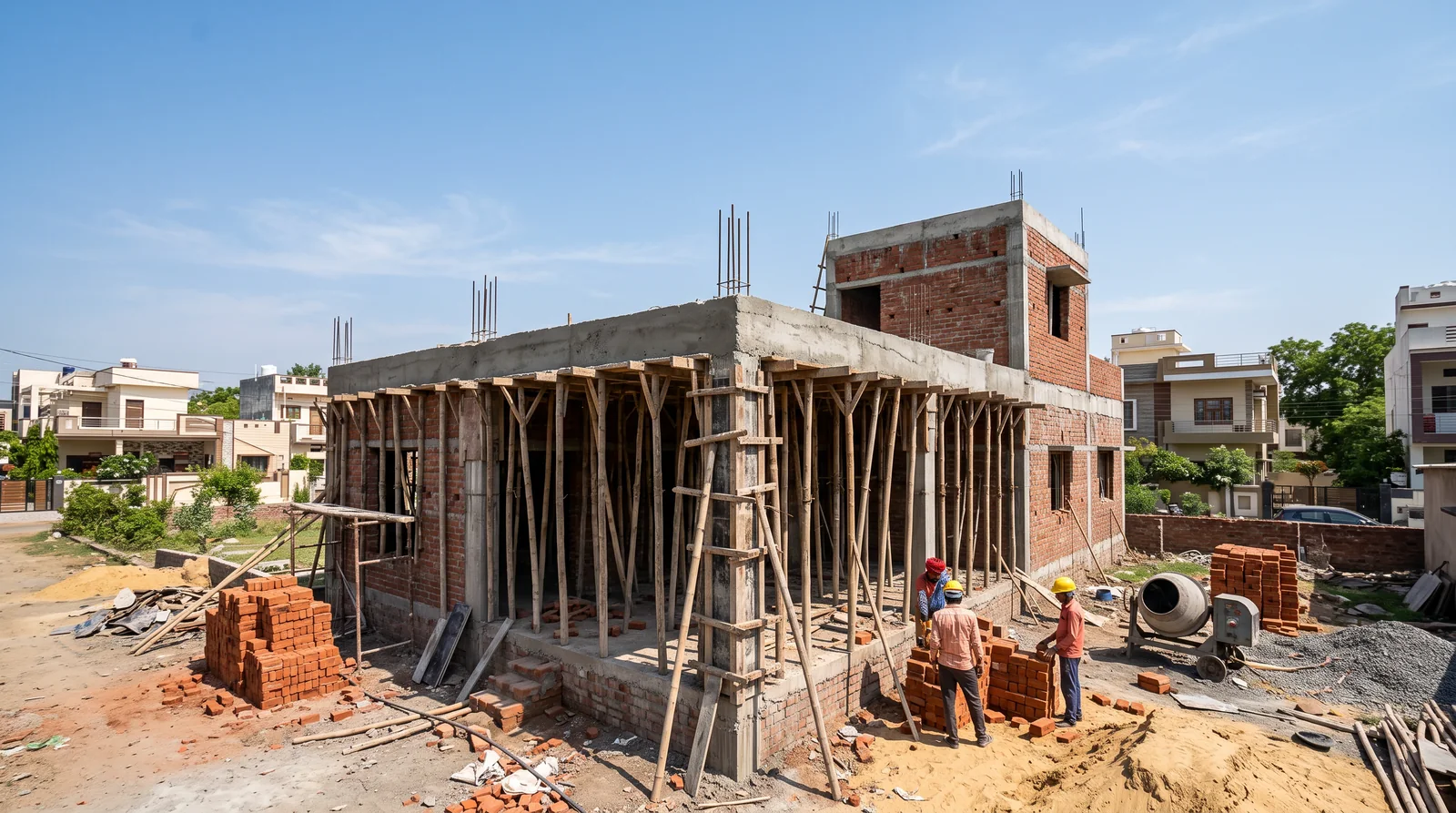
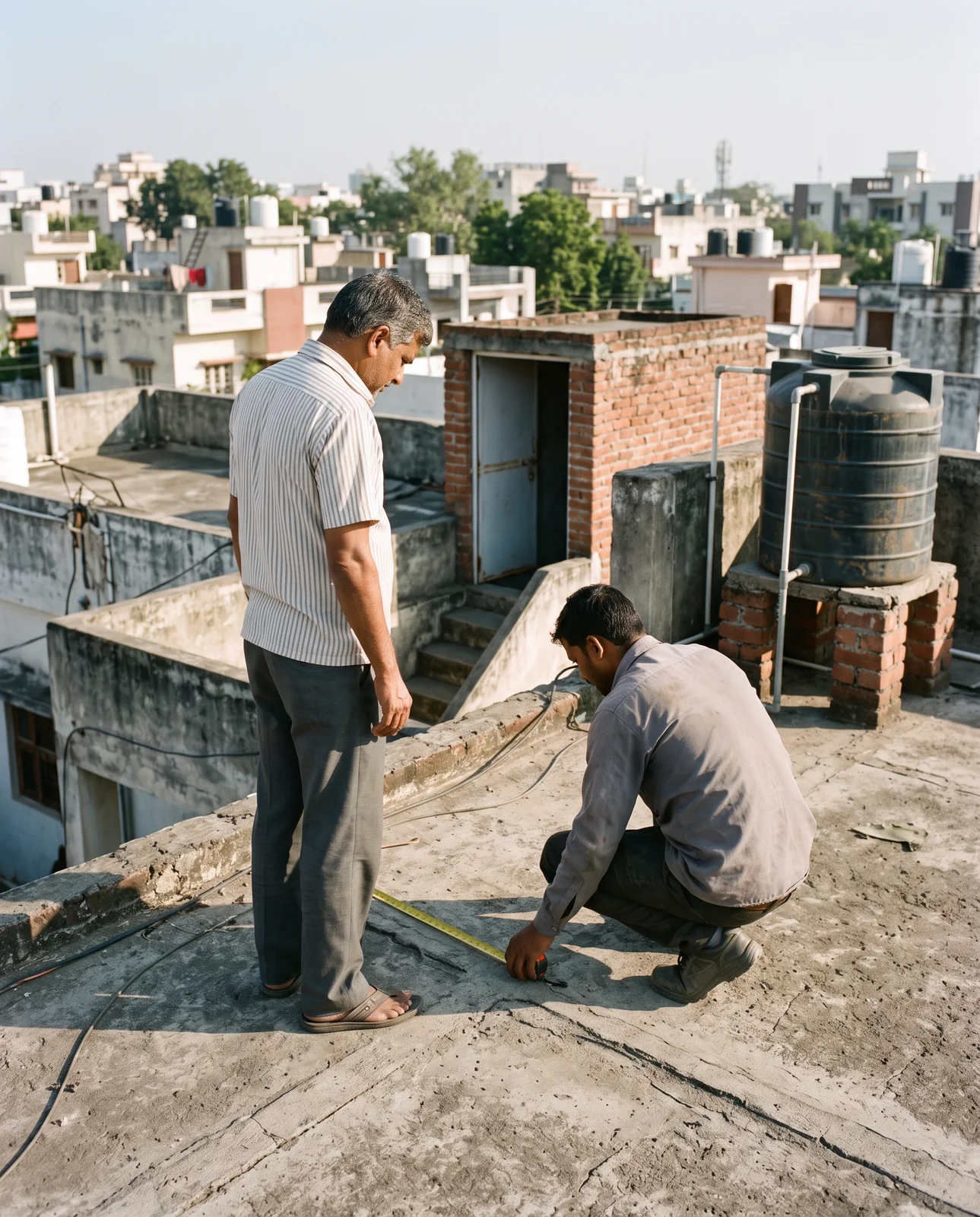
Area. MNRE puts it at 10 to 12 square metres of shadow-free roof per kilowatt, so a 3 kW system wants roughly 30 to 36 square metres.
Structure. Panels sit on a frame at least 600 mm clear of the roof, designed for wind. Tell the structural engineer the frame is coming.
Layout. Our planning advice, not a rule: put the tank and the stair room (mumty) to the north, so their shadows fall away from the panels, and plan the cable's route down to the meter rather than chasing walls later.
Shade is the quiet loss
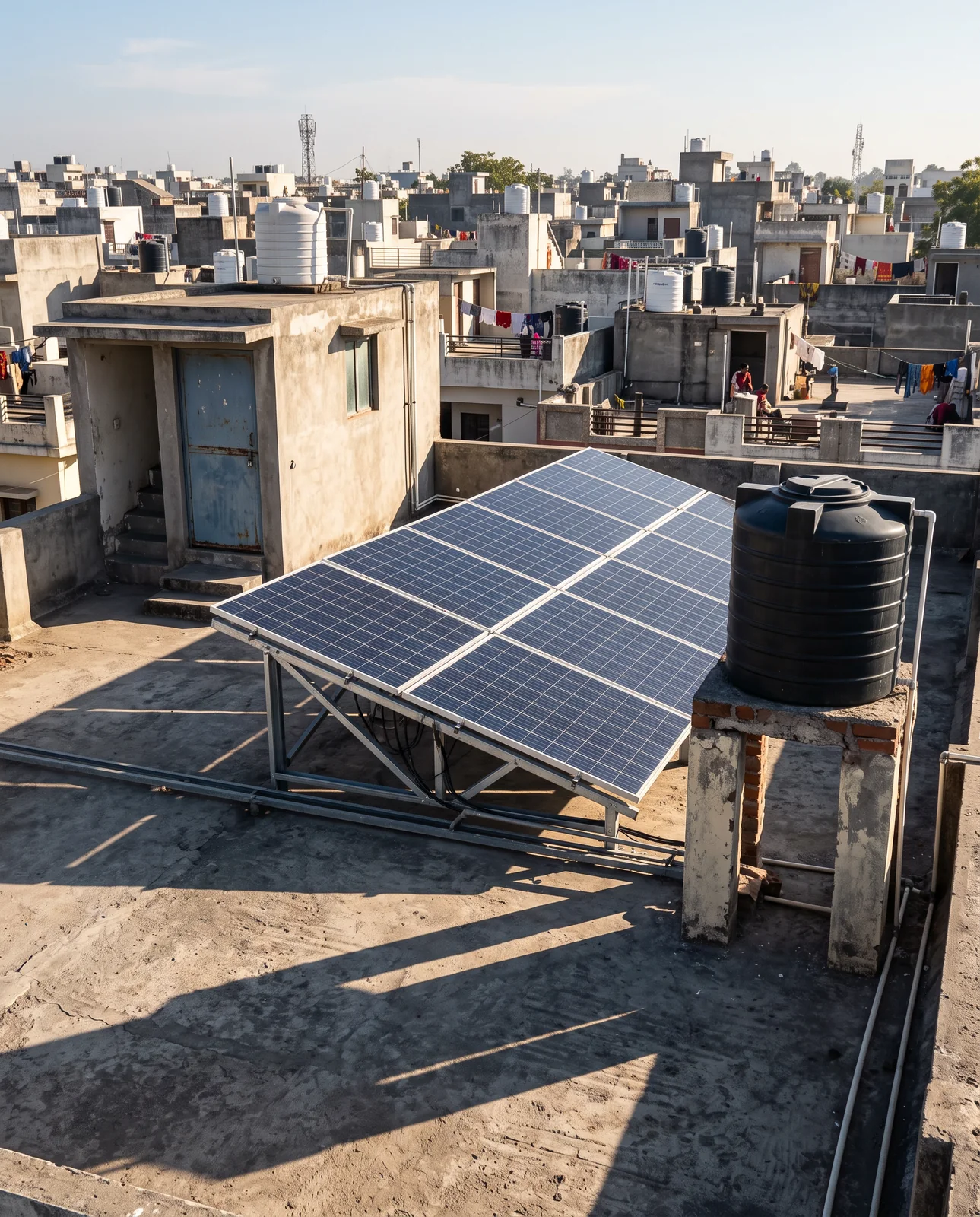
The guidelines ask for panels free of shadow through the generating hours. Most shade is chosen: a tank, a stair room, a tall parapet, a tree. Some is not, like the floor a neighbour adds later. The plot's orientation and the road beside it decide how much of that risk you carry.
जहाँ छाँव, वहाँ यूनिट कम — छत का नक़्शा पहले सोचिए।
Jahaan chhaanv, wahaan unit kam — chhat ka naksha pehle sochiye.
Net metering: one meter, counting both ways
By day the surplus goes out to the grid; after sunset the grid supplies the house. A net meter counts both ways, and you pay for the net units. How surplus is carried and settled is set by the state regulator, and an amendment was proposed in 2026, so ask the West Discom for the version in force. A 3 kW system makes over 300 units a month on average; your bill depends on your use.
Five questions for the vendor
- Registered on the national portal? Only a registered vendor's installation earns the subsidy.
- DCR panels? Indian-made modules from Indian-made cells, or the subsidy is lost.
- Five years of free maintenance, in writing? The scheme requires it of registered vendors.
- Who does the paperwork? Uploads, photographs, inspection, net meter.
- What is extra? A raised frame or special structure can be billed separately.
Start with the plot
Which way the plot faces and the road beside it shape the roof. Read them on the sanctioned layout before the architect draws.
See it for yourself on the map — boundaries, plans and paperwork on one screen.
Check your plot's orientation, road and layout before the roof is drawn →Questions people ask
How much subsidy is there for a 3 kW rooftop solar system under PM Surya Ghar?
₹78,000: ₹30,000 a kW for the first two kilowatts and ₹18,000 for the third. That is also the cap, so a larger system gets the same amount. Confirm the current figure on the scheme's national portal.
How much roof area is needed for a 3 kW solar system?
MNRE puts it at about 10 to 12 square metres of shadow-free roof per kilowatt, so roughly 30 to 36 square metres for 3 kW.
How long does the PM Surya Ghar subsidy take to come?
It is processed within 15 days of the discom approving the installation, after the inspection and the net meter.
Where the facts come from. The facts and figures in this post come from verified government sources and verified RERA-registered brokers.
Indori Zameen is a private platform. It is not a government body and is not affiliated with one — always confirm a record with the concerned authority before you commit money.
Share this post
Related posts
 Maps & plans8 min read
नक्शा पास कराए बिना नींव मत डालिए।
Maps & plans8 min read
नक्शा पास कराए बिना नींव मत डालिए।
Building permission: getting the city's approval to build your house
Owning a plot in Indore does not let you build on it. How building permission works on ABPAS, what goes in the file, the fees, and the clock.
3 Oct 2026 Buying guides8 min read
कोना और दिशा
Buying guides8 min read
कोना और दिशा
Corner plot, east-facing: what actually changes
A corner gives you two open sides and a bill for them; a facing decides where the sun and the gate go. What is measurable, what is preference, what matters.
8 Sep 2026 Maps & plans8 min read
नक्शा पढ़ना सीखिए।
Maps & plans8 min read
नक्शा पढ़ना सीखिए।
How to read a sanctioned layout plan
Plot numbers, road widths, open space, the reserved series and boundary lengths: how to read each one off a sanctioned layout plan before you pay.
8 Sep 2026 Money8 min read
प्लॉट पर लोन
Money8 min read
प्लॉट पर लोन
Plot loans are not home loans
Less of the value funded, fewer years, sometimes a deadline to build, a tax break that waits — and a bank that checks the ground before it checks you.
8 Sep 2026Tagged plot, how-to, checklist, instagram-series.
Read it. Then check it on the map.
Every colony's boundary, its approved layout, its zoning and its paperwork — on one screen. Signing in is free.